House Prices Unchanged at 500 Million Won for 16 Years? Government Data Shows Daejeon Apartment Prices Rose 55%
- Input
- 2026-07-29 07:00:00
- Updated
- 2026-07-29 07:00:00
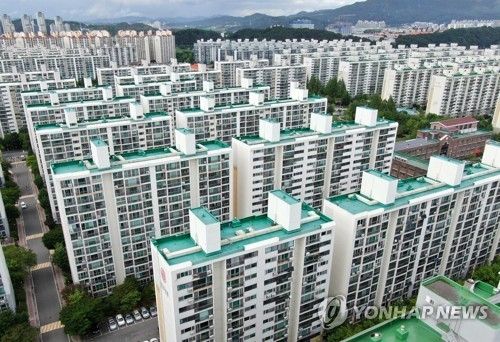
[Financial News] A remark made by one participant at a recent real estate forum hosted by the president has drawn attention. He said he bought a house in Daejeon for 500 million won in 2010, and it is still worth 500 million won today. The comment was an indirect way of arguing that unearned gains from Seoul’s property market should be blocked. What does official government data show about Daejeon home prices over the past 16 years?
An analysis of monthly apartment price data from the Korea Real Estate Board (KREB) on the 29th found that apartment prices in Daejeon rose 55.84% over the 16 years from January 2010 to June this year. Compared with other regions, that is a fairly steep increase.
By comparison, apartment sale prices nationwide rose 30.42% during the same period. Seoul gained 39.01%, while the Capital Region rose 29.23%. Based on average growth alone, Daejeon outpaced both Seoul and the Capital Region.
Some areas in the Capital Region saw apartment prices fall during this period. In Seoul, Dobong District posted a change of -0.57%. In outlying and northern areas of the Capital Region, including Gwangju Metropolitan City (-1.96%) and Dongducheon-si (-23.51%), apartment prices also declined. One expert said the stronger rise in Daejeon appears to have been influenced by the spillover effect of Sejong City’s development.
Daejeon also posted a solid increase in villa prices. From January 2010 to June 2026, villa sale prices in Daejeon rose 33.30%. Over the same period, the nationwide increase was 8.89%, and Seoul saw a 17.93% gain. Once again, the average villa price increase in Daejeon surpassed that of Seoul and other parts of the Capital Region.
What about the prices of individual flagship apartment complexes? According to actual transaction data from the Ministry of Land, Infrastructure and Transport and data from Asil, the highest sale price for a 84-square-meter unit at Smart City Complex 2 in Doryong-dong, Yuseong District, was 450 million won in 2010. In the case of CrovA in Dunsan-dong, the highest recorded transaction price was 350 million won. Based on the top prices at the time, Daejeon’s leading 84-square-meter apartments were priced in the 300 million to 400 million won range.
Looking at the highest prices for 84-square-meter units traded so far this year, Smart City Complex 2 reached 1.2 billion won. A 84-square-meter unit at CrovA sold for 1.15 billion won. Based on these complexes, 84-square-meter apartment prices have risen from 300 million to 400 million won to 1.1 billion to 1.2 billion won over the past 16 years.
There are limits to both average housing price growth and the rise in prices of flagship apartments. Mid- and low-priced complexes may remain unchanged, while prices in prime complexes alone can climb. That is also a limitation of statistics. The problem is judging the market by looking at only one side.
One expert advised that "judging market conditions based on a specific complex can easily lead to misguided policy" and added that "this should be approached with even greater caution, especially as polarization continues to deepen."
[email protected] Lee Jong-bae Reporter