'Black Tuesday' KOSPI Falls More Than 9%, Retreats to the 6,100 Level... Sell Sidecar and Circuit Breaker Triggered (Roundup)
- Input
- 2026-07-28 11:11:20
- Updated
- 2026-07-28 11:11:20
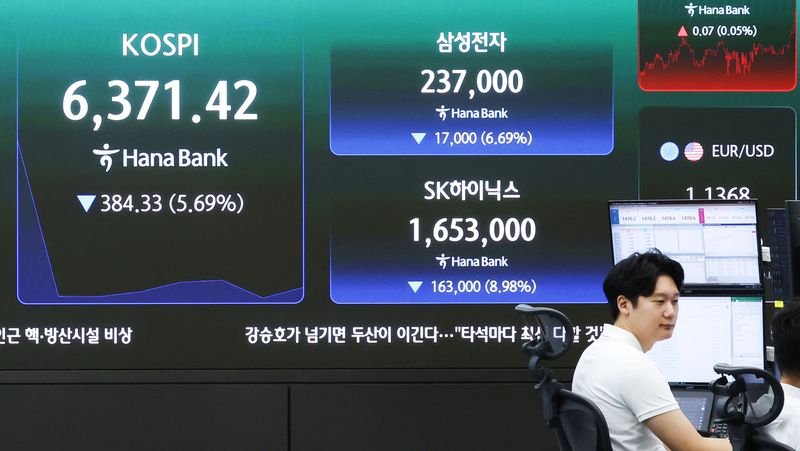
A sell sidecar and a circuit breaker mechanism were triggered one after another in the morning. As of 11:05 a. m.
48%, from the previous session. 26%, and widened its losses. KOSPI plunged more than 5% right after the market opened, triggering a sell sidecar at 9:06 a.
m. KOSDAQ also saw its losses deepen early in the session, and a sell sidecar was triggered around 9:14 a. m.
It was the 42nd sidecar this year and the 22nd sell sidecar. A circuit breaker mechanism, which halts trading for 20 minutes when KOSPI falls more than 8%, was triggered around 10:13 a. m.
A securities industry official analyzed that the main reasons for the sharp decline in the market today were weakening investor sentiment toward the global AI and semiconductor sectors, along with the side effects of the accumulated concentration of funds and leverage structures. He said that concerns have recently grown in global markets over capital flows in the AI ecosystem, including NVIDIA, with some questioning whether the system is not driven by organic demand but by a structure in which suppliers such as big tech and semiconductor companies fund investment and then book it again as revenue. He added that this has sent key semiconductor stocks, including NVIDIA, sharply lower and frozen investor sentiment.
He also noted that in the domestic market, buying had been extremely concentrated in specific large-cap stocks such as Samsung Electronics and SK hynix, as well as related leveraged ETF products. Once profit-taking began, the leverage structure amplified volatility, creating a vicious cycle in which falling prices fueled further declines and deepening supply-demand imbalances. In addition, foreign investors adjusted their positions and sold shares, taking into account the cyclical nature of the semiconductor industry, which increased downward pressure on the index.
Kim Seok-hwan, a researcher at Mirae Asset Securities, analyzed that related stocks fell amid concerns over diversification in the competitive landscape of the semiconductor and semiconductor equipment sectors. He pointed out that the core of the market's anxiety was a 'structural change' in the global supply chain.
6 billion won worth, respectively. 91% were in decline.
Samsung Electronics and SK hynix, the No. 1 and No.
94%, respectively, from the previous session. 49%, from the previous session.
97%.
97%.
[email protected] Kim Hyun-jung Reporter