Justice Minister Jung Sung-ho Reaffirms Resignation Intent; Ruling Party Hints at July 30 Plenary Vote on Bill to Abolish Supplementary Investigation Rights
- Input
- 2026-07-27 18:20:47
- Updated
- 2026-07-27 18:20:47
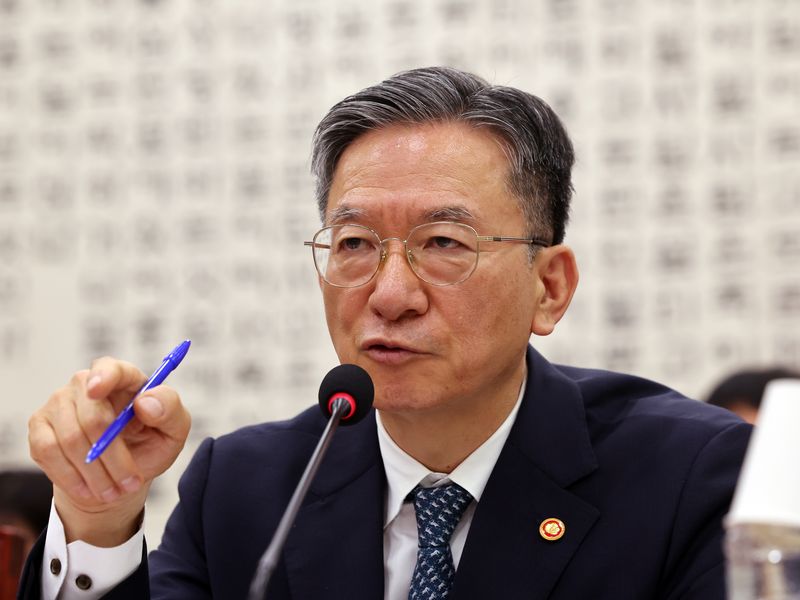
Jung appeared before the National Assembly's Legislation and Judiciary Committee on the 27th and reaffirmed his resignation, which had been reported shortly after the DPK adopted its party line to abolish the supplementary investigation rights. He said the issue was unrelated to the controversy, but repeated his intention to step down, saying, "New wine must be put into new wineskins."
When DPK lawmaker Park Ji-won urged him at the committee to remain in office until the Public Prosecution Office and the Serious Crime Investigation Agency launch on Oct. 2, Jung replied that he was dealing with health problems, including insomnia. He then said the prosecution reform issue had now been handed over to the National Assembly.
Jung also rejected criticism from the People Power Party that the abolition of supplementary investigation rights had been rushed through under pressure from the DPK's internal leadership race. He stressed that he had fully conveyed his position to the Prosecutorial Reform Task Force under the Prime Minister's Office and that, since the task force concluded that the matter should be decided by the National Assembly, it would be inappropriate for him to say anything different as minister. In doing so, he underscored that he had expressed opposition to abolishing the rights.
Despite Jung's stance, Cheong Wa Dae said again on the same day that it had not confirmed any resignation, making clear that President Lee Jae Myung had not accepted it. The statement came from Cheong Wa Dae while Lee was on a trip to Brazil. It was seen as an attempt to calm the situation, amid concerns that Jung's future is further fueling the controversy over abolishing supplementary investigation rights.
In the same vein, the DPK moved quickly, saying it would pass the amendment to the Criminal Procedure Act that abolishes supplementary investigation rights at the National Assembly plenary session on the 30th. As a result, the first subcommittee of the Legislation and Judiciary Committee is expected to complete its review on the 28th.
A special counsel bill on the NEC, which both parties had also designated as a party line issue, was referred to a subcommittee of the committee that day. The biggest point of contention, the right to recommend a special counsel, was settled at the floor leader level by agreeing to form a public recommendation committee, but differences remain over the scope of the investigation.
The bill proposed by Han Byung-do, acting leader and floor leader of the DPK, focuses on allegations of dereliction of duty and abuse of power by the NEC and other related agencies over the shortage of ballots in local elections and poor election management. By contrast, the bill proposed by People Power Party lawmaker Yoo Sang-bum defines the entire range of alleged election fraud as the subject of investigation and includes all matters identified during the probe. It also emphasizes determining whether there was intent to manipulate the election, including the recently raised allegations of computer tampering at the NEC.
[email protected] Kim Yun-ho Reporter