[Editorial] Labor policies that ignore users' views are deepening conflict
- Input
- 2026-07-27 18:12:39
- Updated
- 2026-07-27 18:12:39
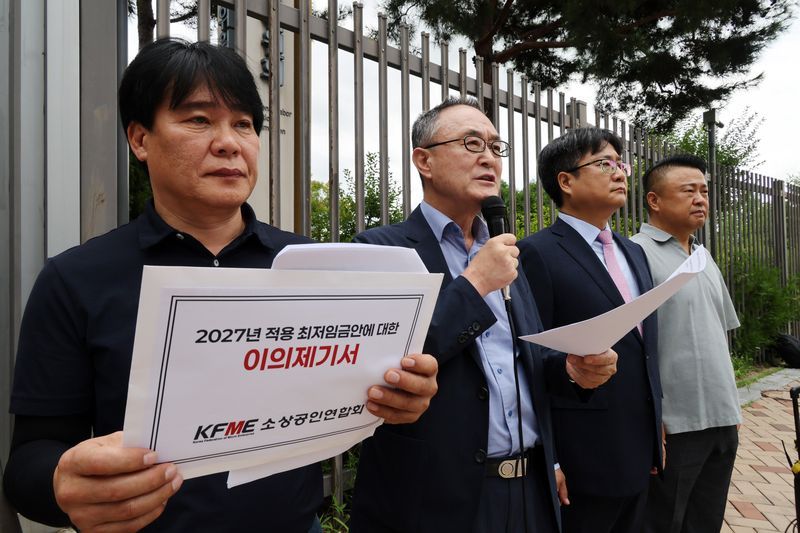
The two cases may appear unrelated, but they stem from the same source. Frustration has boiled over at the government and labor authorities, which are supposed to mediate conflict in the workplace but have failed to establish clear standards and have instead repeated only formal procedures. It shows that trust in the system is breaking down.
Small business owners say their views have not been reflected in the annual minimum wage debate. Even though their difficulties are well known, they have always been left out of the decision-making process. KFME's move to formally challenge this year's final minimum wage plan is an expression of frustrations that had long been suppressed.
In fact, the situation facing small business owners and the self-employed is extremely difficult. They have complained that if the minimum wage rises too sharply, they will have no choice but to give up their businesses. They have asked every year for differentiated application by industry, but the request has been rejected each time, and this year was no different. The Minimum Wage Commission has operated like a mere formality, with labor and management pushing and pulling until they reached a compromise at an acceptable level. Small business owners and the self-employed have always borne the brunt of that process.
Hanwha Ocean's administrative lawsuit should also be viewed in the same context. Since the Yellow Envelope Act took effect, disputes over employer status in prime contractor-subcontractor relationships have intensified. This is happening because the law does not clearly define the scope of employer status. As a result, inquiries over employer status are pouring in, and concerns are being raised that the labor commission's standards for judgment vary from case to case.
From a company's perspective, it would be preferable to seek a reasonable ruling through an administrative lawsuit rather than simply accept the labor commission's decision. Because this is effectively the first such case, similar challenges are likely to follow. Legal and institutional instability is making the labor market even more chaotic.
If such unstable systems are left unchecked, they will lead to broader distrust in government institutions. Minimum wage deliberations fail to reflect the views of key stakeholders, even after annual brinkmanship. Employer-status rulings made after the Yellow Envelope Act took effect are inconsistent. If these uncertain practices continue, both labor and management will respond with objections and lawsuits rather than accepting the outcome. That burden will ultimately amount to a waste of administrative resources that should be used to mediate conflict. Moreover, if conflict and confrontation continue in the workplace, productivity will inevitably decline.
The government should quickly overhaul outdated labor-related systems that are out of step with current realities. When applying the minimum wage, it must carefully review industry-specific payment methods and properly assess the impact on small business owners and the self-employed. It is no time to leave employer-status determinations in prime contractor-subcontractor relations entirely to the labor commission. The practice of creating a system and then handling everything routinely according to that law must be abandoned. Repeating formal reviews while leaving conflict unresolved will only deepen confusion. Unless clear principles are established now, the costs will be borne by the labor market as a whole.