Retail investors remain uneasy ahead of the super week: "So earnings reports really do affect stock prices, right?" [World of Retail Investors]
- Input
- 2026-07-28 06:00:00
- Updated
- 2026-07-28 06:00:00
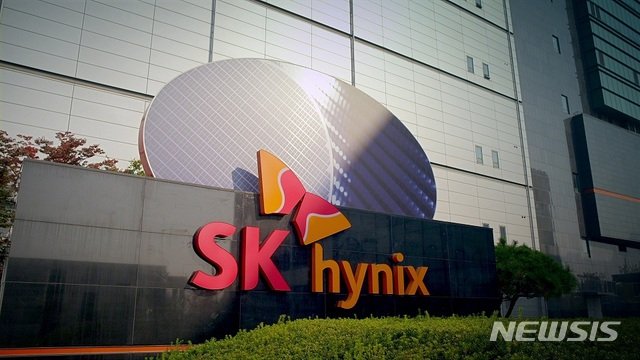
[Financial News] "Earnings announcements now feel like bad news."Ahead of SK hynix's second-quarter earnings release on the 29th, Ahn, 41, said he felt more anxiety than anticipation. He added that expectations for a stock-price rebound are effectively at rock bottom, even with the so-called super week approaching, when earnings from global big tech and semiconductor companies are lined up one after another, starting with SK hynix, followed by Samsung Electronics and Meta Platforms and Microsoft on the 30th, and Apple, Amazon and KIOXIA Corporation on the 31st.
Yonhap Infomax, which compiled consensus estimates from 14 brokerages that issued reports within the past month, said SK hynix is expected to post second-quarter sales of 84.597 trillion won and operating profit of 64.889 trillion won.
That would not only exceed last year's operating profit of 47.2 trillion won by about 17 trillion won, but also far surpass the previous quarter's record of 37.6103 trillion won.
Even so, Ahn is not excited. He said the memory of Samsung Electronics' share price falling after its preliminary earnings announcement earlier this month still lingers. Ahn, who said he has steadily bought shares in Samsung Electronics and SK hynix over the past few years, gave a bitter smile and said, "I wish earnings reports were only released once a year."
If the results are good, why are stocks falling?
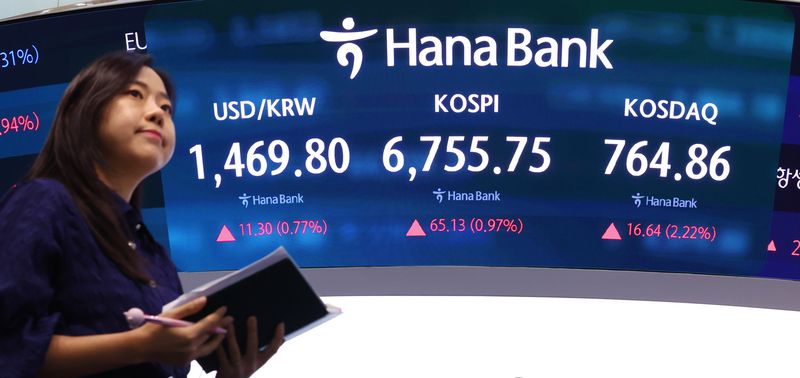
On the 7th, Samsung Electronics announced its preliminary second-quarter results. The company posted record-high consolidated sales of 171 trillion won and operating profit of 8.94 trillion won, drawing praise as a positive surprise. But the market opened to a very different picture. The KOSPI (Korea Composite Stock Price Index) plunged more than 8% intraday, sinking to the 2,400 level, and the Korea Exchange Main Board saw both a sidecar and then a circuit breaker mechanism that temporarily halted trading.
As a result, retail investors are growing worried that SK hynix's earnings release could trigger another drop in share prices. Their concerns are twofold: even if SK hynix posts strong second-quarter sales, operating profit and net profit, the elevated expectations could still lead the market to judge the results as an earnings miss; and once the numbers are confirmed, a wave of selling could follow.
Behind that anxiety is weakened investor sentiment, worn down by the extreme volatility in the domestic stock market. Korean equities have recently swung between sharp losses and sudden gains, and from the 10th to the 24th, sidecars were triggered on alternating trading days for 10 sessions, creating what many described as a dizzying market. Added worries over rising oil prices and interest rates, along with concerns about a slowdown in the NAND flash memory sector, have made even major earnings announcements fail to move retail investors.
How the securities industry views the super week
In the securities industry, there is a sense that the second-quarter earnings releases from Samsung Electronics and SK hynix could ease market anxiety over the semiconductor cycle, provide direction, and help reduce volatility.
Kim Dae-jun, a researcher at Korea Investment & Securities, said in a report on the 27th, "The market is worried that even if SK hynix's earnings improve, the stock could still fall on sell-on news, as happened with Samsung Electronics, but past data and the large-scale investment announcements now emerging are lowering the likelihood of that scenario." He added, "The semiconductor investment weighting should still be maintained."
Some also believe that the real driver of gains for the KOSPI will not be SK hynix's earnings themselves, but additional AI demand from U.S. hyperscalers.
Lee Kyung-min, a researcher at Daishin Securities, said, "In the earnings releases from Samsung Electronics and SK hynix, we need to check long-term supply contracts, memory demand and profitability. In the big tech earnings releases, we need to confirm expanded AI CAPEX and actual revenue improvement."
There is also an opinion that the key point to watch is not the earnings figures themselves, but the conference call.
Seo Sang-young, a researcher at Mirae Asset Securities, said, "This earnings season is a process of checking the investment cycle across the entire AI supply chain, starting with big tech and extending to memory, semiconductor equipment and power semiconductors." He added, "After earnings are released, sector differentiation and volatility in individual stocks could widen, so investors should look not only at the results but also at guidance and the conference call."
Lee Min-hee, a researcher at BNK Securities, told Financial News on the same day, "AI investment is shifting away from large-scale spending and toward greater cost efficiency." She added, "What matters more than the earnings figures is how companies present their outlook and direction for the second half. Investing based only on earnings expectations can be risky, so investors need to judge the overall direction carefully."
I don't want to become someone who keeps saying, "I should have bought, I should have sold, I should have held..." Stocks, real estate and all kinds of personal finance seem to be working out for everyone except me. The world of investing is hard no matter how much you study, so if you want to receive stories you can clap along with and relate to more easily,[World of Retail Investors]please subscribe to the reporter page.We also welcome tips from retail investors who have investment stories they would like to share.
[email protected] Kim Hee-sun Reporter