"Once Given, Property Cannot Be Taken Back"... Constitutional Court Says Gifts Cannot Be Revoked Even If No Support Is Provided
- Input
- 2026-07-27 14:41:38
- Updated
- 2026-07-27 14:41:38
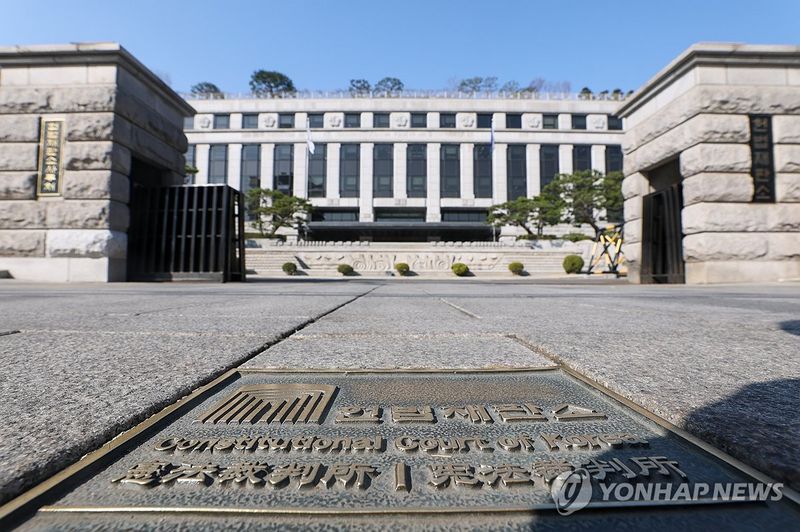
[Financial News] The Constitutional Court of Korea has ruled that a provision of the Civil Act barring the cancellation of a completed gift contract, even if the recipient did not support their parents, does not violate the Constitution.
The court said legal stability after a gift should be given priority. However, four justices dissented, saying gifted property should be recoverable from children who fail to fulfill their duty of support.
According to the legal community on the 27th, the court on the 23rd upheld the constitutionality of Article 558 of the Civil Act, which prevents rescission from taking effect for gift contracts that have already been performed.
The court unanimously upheld the restrictions on rescinding gifts not made in writing and on rescission based on changes in the donor's financial condition. The restriction on rescission for failure to provide support was upheld by a 5-4 vote.
The petitioner, identified as A, gifted land to his son in 2008 and lived with him for about 15 years. After a conflict arose, he filed a lawsuit in 2023 seeking to cancel the transfer of ownership registration.
A argued that his child had failed to fulfill the duty of support and that his own financial condition had worsened. He cited the Civil Act's gift-cancellation provisions, but the court rejected the claim, saying Article 558 does not allow rescission to affect gifts that have already been fully performed.
The key issue was whether Article 558 of the Civil Act excessively restricts a donor's property rights.
The court held that if rescission were allowed for gifts not made in writing, even for portions already performed, the donor's unilateral intent could destabilize legal relationships.
It also noted that once a gift has been completed, the recipient conducts economic life on that basis. Allowing return of the property solely because of the donor's circumstances could cause unexpected harm or threaten the recipient's livelihood.
The court stated, "The recipient's financial condition could instead deteriorate significantly, and their ability to maintain a livelihood could face a serious threat."
The justices split over the issue of failure to provide support.
The majority said allowing cancellation even of gifts that have already been performed could make legal relationships complicated and unstable because of the donor's unilateral intent. They also considered that donors already have other means of protection, such as claims for support payments and the system of conditional gifts.
The court said, "A recipient's failure to fulfill a duty of support may be subject to moral and ethical criticism, but there are various legislative approaches to how that should be reflected in the realm of legal responsibility." It added, "It is difficult to conclude that the provision is highly unreasonable."
In contrast, Justices Kim Sang-hwan, Kim Hyeong-du, Ma Eunhyeok, and Justice Oh Young-joon of the Constitutional Court of Korea expressed dissent. They said allowing gifted property to be returned by children who fail to provide support "aligns with the legal sentiment and ethical values of the general public."
They added, "The current provision prioritizes only the legal interests of recipients who fail to fulfill their duty of support, while disregarding the donor's legal interests after the trust underlying the gift has collapsed and the donor is struggling to maintain a livelihood. It therefore violates the balance of legal interests."
[email protected] Choi Eun-sol Reporter