Ruling Party to Scrap Supplementary Investigation Rights on the 30th; Justice Minister Jung Sung-ho Reiterates Resignation Intent
- Input
- 2026-07-27 11:18:54
- Updated
- 2026-07-27 11:18:54
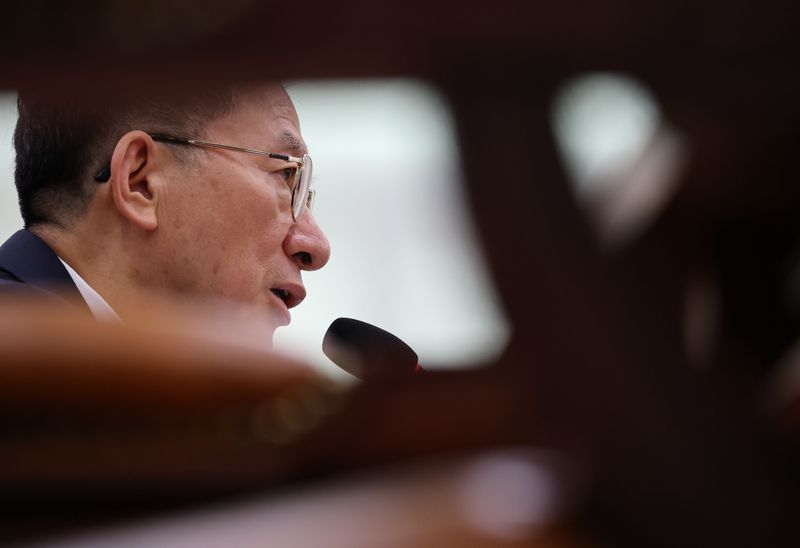
[Financial News] The Democratic Party of Korea (DPK) said on the 27th that it will push through a revision to the Criminal Procedure Act of the Republic of Korea on the 30th at the plenary session of the National Assembly, which would abolish the Public Prosecution Office's supplementary investigation rights. On the same day, Justice Minister Jung Sung-ho appeared before the Legislation and Judiciary Committee and again said he intended to resign, as reported by the media.
After a Supreme Council meeting that day, the DPK decided to pass the revision at the plenary session on the 30th. The move follows the party's decision at a policy lawmakers' meeting on the 24th to make the abolition of supplementary investigation rights its party line. Concerns about protecting victims were reflected in the plan to establish a dedicated unit for supplementary investigations within the Serious Crime Investigation Agency.
Jung also appeared before the committee that day. He was reported to have expressed his intention to resign shortly after the DPK adopted the party line to abolish supplementary investigation rights. Since Jung had repeatedly raised concerns about the abolition, political circles interpreted his move as a protest against the policy.
At the committee, Jung indirectly indicated that his resignation intention was still in effect. When DPK lawmaker Park Ji-won urged him to remain in office until the Public Prosecution Office and the Serious Crime Investigation Agency are launched on Oct. 2, Jung replied that he was dealing with health difficulties, including insomnia. He also said that prosecution reform was 95% complete and added, "New wine should be put into new wineskins," signaling that he did not want to remain as minister.
The People Power Party argued that the debate over abolishing supplementary investigation rights is being used in the DPK's internal race for party leadership. It pointed out that candidate Jung Chung-rae had advocated the move since his tenure as party leader, while Kim Min-seok, despite the government's earlier view during his time as prime minister that supplementary investigation rights were necessary, settled on supporting abolition. The party said the issue was rushed to a conclusion because of the August party convention, even though the debate was still ongoing.
Jung denied any link to the party convention, but emphasized that he had conveyed the ministry's position to the prosecution reform task force at the Prime Minister's Office and concluded that it would be best for the National Assembly, which holds legislative authority, to make the decision. He said it would not be appropriate for him to say otherwise as minister, underscoring that he had already delivered his opposition to abolishing supplementary investigation rights.
[email protected] Kim Yun-ho Reporter