Supreme Court of Korea says courts cannot rule a law unconstitutional before the Constitutional Court does; case sent back on remand
- Input
- 2026-07-27 10:42:00
- Updated
- 2026-07-27 10:42:00
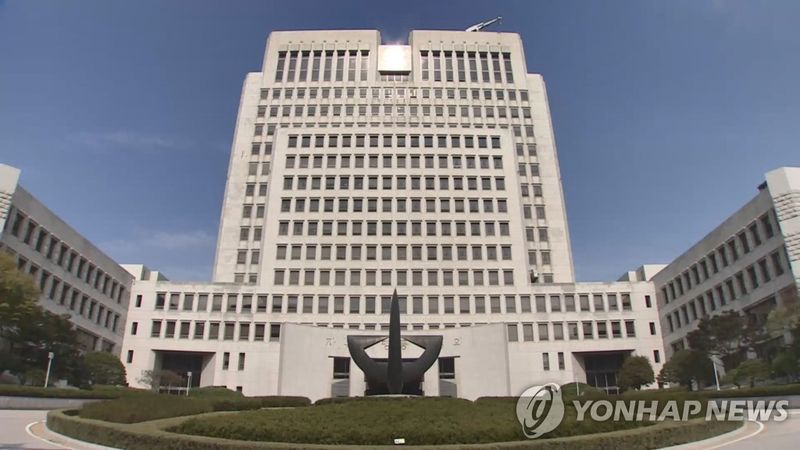
[Financial News] The Supreme Court of Korea has ruled that, before the Constitutional Court of Korea issues a decision, a court cannot independently determine that a law is unconstitutional and issue a ruling on that basis.
According to the legal community on the 27th, the First Petty Bench of the Supreme Court of Korea, presided over by Justice Chun Dae-yup, overturned a plaintiff victory in a lawsuit filed in May by A medical corporation against the Mokpo mayor over the suspension of medical care benefit payments and sent the case back to the Gwangju High Court.
A medical corporation, established in 2007 and operating nursing hospitals and other facilities in Mokpo, was referred to prosecutors in December 2019 on suspicion of violating the Medical Service Act after its founders allegedly set up the corporation and opened medical institutions despite not being medical professionals.
After being notified of the matter, Mokpo City suspended payment of A medical corporation's medical care benefits in January 2020 under the Medical Care Assistance Act.
At the time, Mokpo City cited Article 11-5, Paragraph 1 of the former Medical Care Assistance Act, which allowed payment to be suspended if an investigation confirmed a violation of the Medical Service Act provision banning the unlawful establishment of medical institutions.
A medical corporation filed an appeal, arguing that suspending payment solely on the basis of an investigation violated the presumption of innocence and infringed on the property rights of medical institution operators, making it unconstitutional.
The first trial ruled against the plaintiff in November 2020, saying there were no procedural defects in the city's action.
However, the appeals court sided with A medical corporation, saying the former Medical Care Assistance Act Article 11-5, which served as the basis for the city's action, was unconstitutional and that the action was therefore illegal. It cited the Constitutional Court of Korea's decision that provisions with the same content in Article 47-2 of the National Health Insurance Act were incompatible with the Constitution during the appellate trial.
At the time, the Constitutional Court said it was reasonable to allow payment to be suspended based only on the results of an investigation, but it was unconstitutional that there was no rule requiring the suspension order to be canceled and the principal and delayed damages to be paid once a not-guilty verdict became final.
In June 2024, after the appellate ruling, the Constitutional Court issued the same decision incompatible with the Constitution regarding the former Medical Care Assistance Act provision.
The Medical Care Assistance Act was later revised in April last year to state that if a final not-guilty ruling is issued on charges related to the unlawful establishment of a medical institution, the suspension of medical care benefit payments must be canceled and late-payment interest must be paid to the medical institution.
The Supreme Court of Korea, however, found an error in the appellate court's ruling in favor of A medical corporation.
The court said that when the constitutionality of a law becomes an issue in a trial, a court may only request constitutional review from the Constitutional Court of Korea and cannot decide on its own that the law is unconstitutional.
The Supreme Court of Korea said, "The appeals court ruled that the city's action was illegal on the premise that the former Medical Care Assistance Act provision was unconstitutional, without waiting for the Constitutional Court's decision," adding, "It erred in its understanding of the legal principles governing who has the authority to review the constitutionality of a law, and that error affected the judgment."
However, it added that because the founders of A medical corporation were later acquitted by the court of the Medical Service Act charges during the appeal process, Mokpo City should cancel the suspension of payment under the revised Medical Care Assistance Act and pay late-payment interest to A medical corporation.
[email protected] Jung Kyung-soo Reporter