DPK to Push for Abolition of Supplementary Investigation Rights and NEC Special Prosecutor Act on the 30th
- Input
- 2026-07-27 10:34:41
- Updated
- 2026-07-27 10:34:41
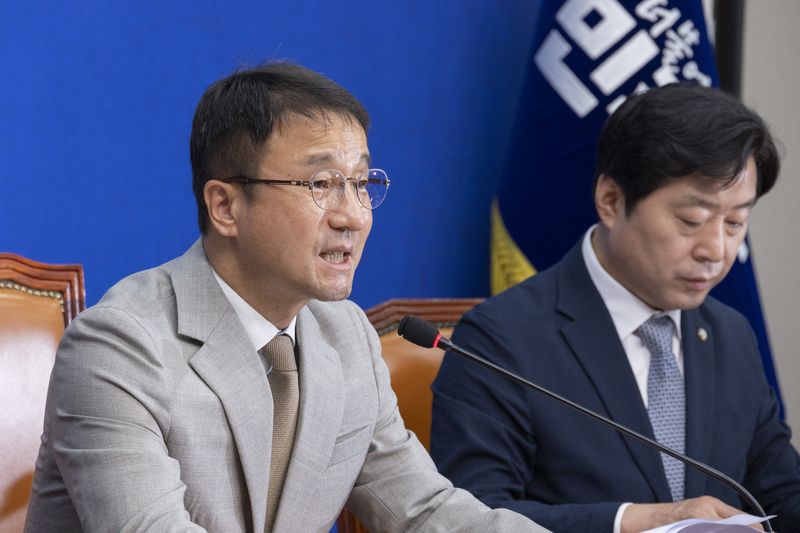
[Financial News] The Democratic Party of Korea (DPK) announced that it plans to pass an amendment to the Criminal Procedure Act that would abolish the supplementary investigation rights of the Public Prosecution Office, along with a Special Prosecutor Act for the National Election Commission (NEC), at the National Assembly plenary session on the 30th. The Legislation and Judiciary Committee of the National Assembly began reviewing the NEC special prosecutor bill on the 27th and plans to complete its review of the Criminal Procedure Act amendment on the 28th.
Kang Jun-hyun, the DPK's chief spokesperson, told reporters after the Supreme Council meeting on the 27th that the party's goal is to pass the Criminal Procedure Act amendment and the NEC special prosecutor bill at the plenary session on the 30th.
The amendment to the Criminal Procedure Act reflects the party's decision, made at a policy lawmakers' meeting on the 24th, to abolish supplementary investigation rights as its official stance. Concerns raised inside and outside the party about possible side effects were reflected in a plan to create a dedicated unit for supplementary investigations within the Serious Crime Investigation Agency, which is set to launch on October 2 alongside the Public Prosecution Office. The committee is expected to finish review in its first subcommittee on the 28th and then seek approval at a full committee meeting.
The NEC special prosecutor bill stems from the shortage of ballots during the June 3 local elections, and both ruling and opposition parties adopted it as party policy. The committee put the bill on the agenda for its full meeting that day and referred it to a subcommittee. The biggest point of contention, the power to recommend special prosecutors, was settled through an agreement between the floor leaders of the ruling and opposition parties to form a recommendation committee. However, disagreements are expected over the scope of the investigation. The People Power Party is calling for the probe to be expanded to include recent allegations of computer manipulation at the NEC.
The People Power Party has agreed to the NEC special prosecutor bill but opposes abolishing supplementary investigation rights. If the DPK submits both bills to the plenary session on the 30th, the People Power Party is likely to file a filibuster.
[email protected] Kim Yun-ho Reporter