Japanese Public Turns Its Back on Inflation and the Imperial Family, Takaichi Approval Ratings Hit Record Lows
- Input
- 2026-07-27 08:28:01
- Updated
- 2026-07-27 08:28:01
[Financial News, Tokyo = Reporter Seo Hye-jin] Approval ratings for Sanae Takaichi's cabinet have fallen sharply across major opinion polls, dropping to their lowest level since the administration took office in October last year. Public frustration over the government's response to high prices has spread even to the ruling bloc's core supporters, while backlash is also mounting over revisions to the Imperial House Law that sideline a female emperor and the forced passage of key bills.
A roundup of major Japanese media polls released on the 27th showed approval for the Takaichi cabinet at 57% in the Yomiuri Shimbun survey, 58% in the Nikkei and TV Tokyo poll, and 53.7% in the Kyodo News poll. Although the methods and figures differ, all were the lowest since the cabinet launched in October last year.
In a nationwide poll conducted by Yomiuri Shimbun from the 24th to the 26th, cabinet approval stood at 57%, down 12 percentage points from 69% in June. Disapproval rose 13 points, from 21% to 34%. It was the first time the Takaichi cabinet's approval rating had fallen into the 50% range in a Yomiuri survey.
A telephone survey by Nikkei and TV Tokyo, conducted over the same period among 924 men and women aged 18 and older nationwide, also showed approval falling 10 points from the previous month to 58%. Disapproval rose 10 points to 37%.
In a nationwide telephone poll by Kyodo News on the 25th and 26th, approval came in at 53.7%, down 2.1 points from the previous month. Disapproval rose 5.8 points to 33.7%.
Including the Asahi Shimbun and Mainichi Shimbun polls released last week, the Takaichi cabinet's approval ratings have been falling broadly across the board.
In an Asahi Shimbun survey conducted on the 18th and 19th, cabinet approval fell 7 points from a month earlier to 53%. In a Mainichi Shimbun poll conducted during the same period, approval plunged 10 points to 41%. In the Mainichi survey, disapproval at 44% surpassed approval for the first time.■ 71% Disapprove of Inflation Measures, Even Supporters Are Turning AwayThe most direct reason for the drop in approval is dissatisfaction with the government's response to high prices.
In the Yomiuri survey, 71% said they did not approve of the government's inflation measures, up 15 points from the previous month. The share saying they approved fell from 35% to 21% over the same period.
In the four previous surveys since the Takaichi cabinet took office, negative views of its inflation policy had remained in the 50% range. This time, however, they surged into the 70% range for the first time.
Notably, the negative sentiment has spread beyond opposition supporters and undecided voters to the government's core base. Even among cabinet supporters, 56% said they did not approve of the inflation measures. Among LDP supporters, negative views stood at 50%, exceeding the 41% who approved.
For a new wage system for low- and middle-income workers promoted by the government and opposition parties, 49% were in favor and 28% were opposed. Another proposal, which would cut the food consumption tax rate to 1% for two years and then provide low- and middle-income households with an amount equal to 1% so the effective tax rate becomes 0%, drew 48% support and 41% opposition. Support fell 4 points from the previous month.
In the Kyodo News poll, the most common response on the food tax cut plan was 47.1% for the view that "1% is fine if the implementation period can be shortened." Another 25.1% said, "It should be lowered to 0% even if it takes time," while 25.6% said no tax cut was needed.
Although the government has been rolling out tax cuts and cash handouts one after another, even supporters are increasingly saying those measures are not enough to reverse the worsening sense of economic pain caused by rising prices.
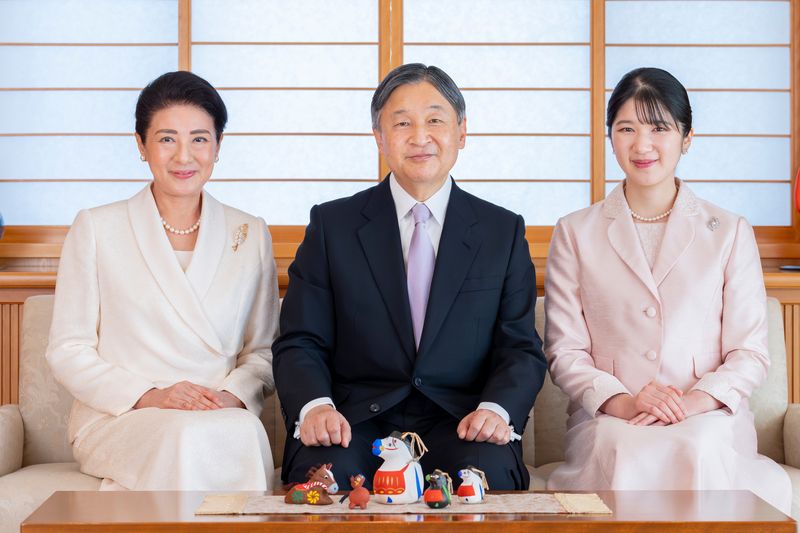
The Takaichi cabinet revised the Imperial House Law to allow female members of the imperial family to retain their status after marrying commoners, while also permitting male descendants from the 11 former imperial branches that left the imperial register in 1947 to be adopted into the family. The revised bill passed the National Diet of Japan on the 17th.
The adopted individuals themselves would not have succession rights, but their sons born later would be eligible to inherit the throne. By contrast, Princess Aiko, Emperor Naruhito's only daughter, and her children still would not be recognized as eligible successors.
In the Yomiuri survey, 62% said Prime Minister Takaichi's explanation of the major bills and policies, including the Imperial House Law revision, was insufficient. Only 29% said the explanation was adequate.
On the plan to bring male descendants of former imperial branches into the imperial family through adoption, 45% said they did not approve, compared with 40% who approved. According to the Imperial Household Agency, the blood relationship between descendants of the former imperial branches and the current emperor is roughly 36th to 38th cousins.
Public support for a female emperor, however, was overwhelming. In the Yomiuri poll, 85% said they supported allowing a female emperor, while only 8% were opposed.
The Nikkei poll also found 84% in favor of recognizing a female emperor. Of those, 59% said both female emperors and emperors from the maternal line should be allowed, while 25% said only a female emperor should be permitted.
In the Kyodo News survey, 81.0% supported allowing a female emperor, far outnumbering the 16.1% who opposed it. Another 75.0% backed a plan that would allow female imperial family members to retain their status after marriage.
The same trend was confirmed in last week's polls. In an Asahi Shimbun survey, 60% of respondents said the latest revision to the Imperial House Law had not won public understanding. On the current system that prevents women from becoming emperor, 62% said it was unacceptable.
Analysts say the backlash against ignoring public opinion in the 80% range in favor of a female emperor, while opening the path to succession for male descendants of former imperial branches who are 36th to 38th cousins removed from the current emperor, is feeding into the decline in support for the Takaichi cabinet.■ Support Among Undecided Voters Plunges 16 Points, Diet Management Seen as "Heavy-Handed"The loss of public support was most visible among undecided voters.
In the Nikkei poll, cabinet approval among voters with no party preference plunged 16 points from a month earlier to 36%. Disapproval rose 15 points to 51%, overtaking approval.
Among LDP supporters, who made up about 40% of all respondents, cabinet approval remained high at 87%, but that was still down 7 points from the previous month. Even among Sanseitō supporters, who had been relatively favorable toward the Takaichi cabinet, more respondents said they did not support it than said they did.
By age group, approval among those 39 and younger fell 11 points to 67%. It dropped 10 points to 51% among those 60 and older, and 6 points to 66% among people in their 40s and 50s.
Public evaluation of the cabinet's handling of the Diet also worsened. In the Kyodo News poll, 57.5% said the Takaichi administration's management of the Diet was "heavy-handed," far above the 35.0% who said it was cautious.
Another 66.9% said discussion in the Diet on the proposed secondary capital law was insufficient. Meanwhile, 58.6% said the prime minister had not adequately explained allegations that her camp produced smear videos during the LDP leadership race.
Nikkei quoted an LDP official as saying, "The cause may be that the administration pushed ahead with policies that are disconnected from people's daily lives." The remark suggests that policies the government had touted as achievements, including the Imperial House Law revision and the secondary capital law, may instead have widened the gap with voters.
[email protected] Seo Hye-jin Reporter