U.S. and Iran Resume Talks After Nearly Two Weeks of Fighting...Decision Rests With Trump
- Input
- 2026-07-27 07:37:36
- Updated
- 2026-07-27 07:37:36
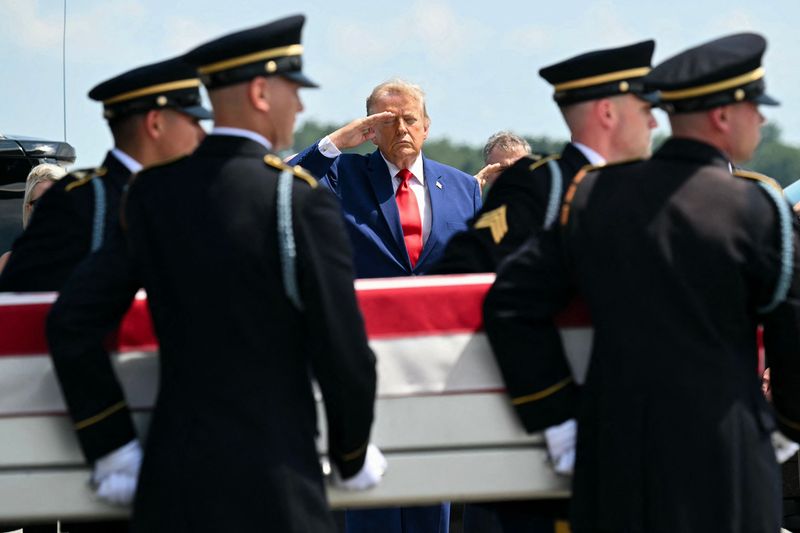
[Financial News] The United States and Iran, which had stopped attacking each other for two days, have resumed communication.
According to Iran's state-run IRNA news agency, Esmaeil Baghaei, spokesman for Iran's Foreign Ministry, said in an interview with Austria's public broadcaster ORF on the 26th, local time, that Iran is exchanging messages with the United States and that the mediators involved in ending the conflict remain active.
The United States and Iran resume talks after a two-week pause in fighting
Baghaei stressed that the memorandum of understanding signed on the 17th of last month was "not a long and complicated document, but a short memorandum consisting of just 14 articles." He added, "Everyone around the world expected that, at least this time, the United States would keep its promise." He condemned Washington, saying, "However, the actions the United States has shown are a blatant and serious violation of multiple provisions of this agreement, and by doing so, they have committed a third diplomatic betrayal." He also accused the United States of failing to lift the freeze on Iran's overseas assets, contrary to the memorandum.Earlier, U.S. President Donald Trump said on the 24th that airstrikes on Iran had been halted. Speaking at The White House, he said, "We are having serious talks with Iran, but if there is no agreement this time either, we will move immediately to military action." Trump added the same day, "I am willing to listen to [Iran's proposal]."
Mike Waltz, the U.S. ambassador to the United Nations, said in an interview with NBC on the 26th that "what the president is doing now is giving some room to dialogue, as we have seen so far," adding, "Negotiations are under way. Talks are taking place at every level, from working-level officials to the highest level."
The two sides, which signed a memorandum of understanding with Iran on the 17th of last month and agreed to a 60-day ceasefire, are now effectively back at war. After U.S. strikes on Iran on the 26th and 27th of last month, the United States bombed Iran again on the 7th and 9th of this month, then carried out daily airstrikes from the 11th through the 23rd. Trump had already notified the U.S. Congress of the resumption of combat as of the 7th.
On the 26th, Mohammad Akraminia, spokesman for Iran's military, said, "U.S. attacks continued until the night two days ago, but they have stopped over the past two days," adding, "Our military strategy is fundamentally aimed at retaliation, so we have also suspended our retaliatory operations."
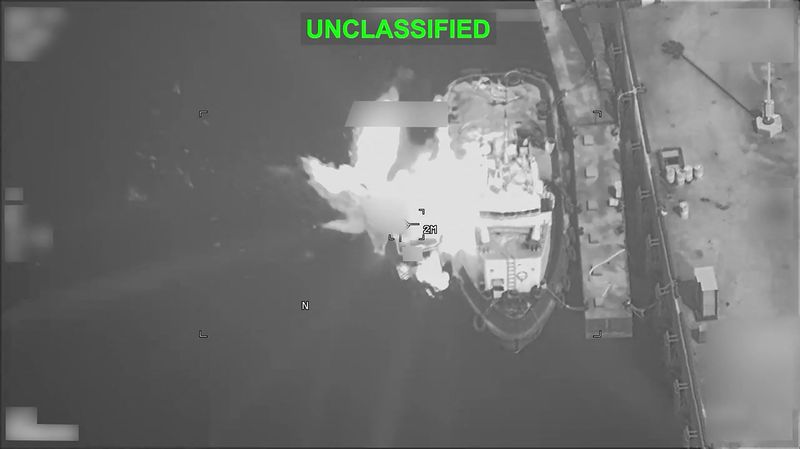
Limits of the Iran operation...Attention on Trump's decision
Local media outlets, including The New York Times, reported on the 25th, citing officials, that Trump decided to halt the airstrikes after being briefed on the shortage of air defense munitions the previous day. Axios, a U.S. political news outlet, reported on the 26th, citing two officials, that Brad Cooper, the CENTCOM commander in charge of the Iran operation, had recommended that the Trump administration stop the airstrikes around the Strait of Hormuz. The outlet said Cooper's recommendation influenced Trump's decision to halt the strikes. Cooper had already advised the U.S. Department of War, the Joint Chiefs of Staff, and The White House early last week to stop the attacks, explaining that the military operation had already reached its limits. He said two weeks of airstrikes around the Strait of Hormuz had already significantly reduced Iran's ability to attack ships and that most of the designated bombing targets had been exhausted.In a statement sent to The Wall Street Journal on the 26th, Trump rejected claims of a munitions shortage, saying, "We have far more ammunition than any other country in the world, and far more than we need." That same day, Waltz also said in an NBC interview, "People who leak such absurd claims should go to prison," referring to the allegations that weapons stocks were running low.
Meanwhile, Israeli Prime Minister Benjamin Netanyahu, whose country has been fighting the Iran war alongside the United States for nearly five months, plans to visit the United States on the 27th to discuss the future direction of the war with Trump. In an interview with Fox News on the 26th, he said of the conditions for ending the war, "The regime must be weakened enough to realize on its own that it has to change or stop its nuclear program and change course." He added that if Trump can do it, "if he can do it without a violent military clash, that's fine."
Netanyahu said the future course of the Iran war depends on Trump's decision. He warned, "If Iran or its proxies attack Israel, that would be a big mistake," adding, "Our response, Israel's response, will be very, very strong."
[email protected] Park Jong-won Reporter