U.S. WSJ Warns of Premium on SK hynix ADRs: "AI Trade Is Overheated"
- Input
- 2026-07-27 05:24:36
- Updated
- 2026-07-27 05:24:36
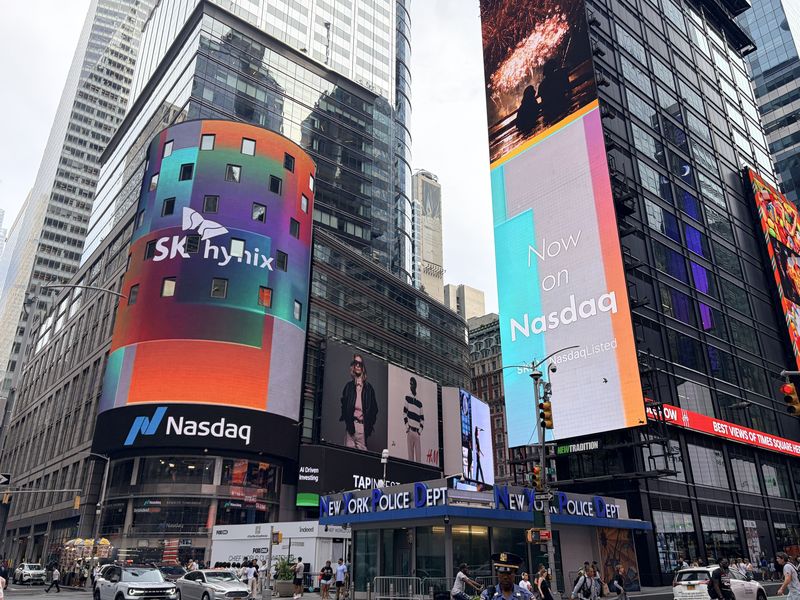
[Financial News] About two weeks after SK hynix shares began trading on Nasdaq in the form of American Depositary Receipts (ADRs), a local media outlet said the ADR price was too high. It argued that the gap between the Korean shares and the ADRs is another example of overheating in artificial intelligence (AI)-related stocks.
James Mackintosh, a senior markets columnist at The Wall Street Journal (WSJ), made that argument in a column on the 26th local time. He said, "The huge premium on SK hynix ADRs over the company’s listed shares in South Korea is something that should not happen in the market," adding that it is "another sign of AI trade overheating."
According to WSJ, SK hynix ADRs have traded at a 16% to 51% premium to the company’s shares listed in South Korea since they began trading on the New York stock market on the 10th. ADRs are alternative securities that allow a company’s shares issued in its home market to be held by a U.S. bank and used as collateral for trading on U.S. exchanges.
Mackintosh said the supply of SK hynix ADRs in the U.S. market is limited relative to demand. He noted that while ADRs can be converted into SK hynix shares listed in South Korea, the reverse is difficult because of regulatory constraints. For that reason, he said, "there is no safe arbitrage between Korean shares and U.S. shares." He added that if investors in the United States could buy relatively cheap SK hynix shares in South Korea, convert them into ADRs, and then resell them at a higher price, the current premium would not be sustainable.
He also said transaction costs, currency risk, and tax differences are contributing to the premium on SK hynix ADRs, but argued that the current level is excessive. Mackintosh said, "This shows that demand for semiconductor stocks in the United States is out of control, even more so than in South Korea, the home of FOMO-style trading, where people treat it like a game."
He explained, "If the premium narrows as Korean shares catch up, ADR buyers will be fine." Mackintosh added, "But if the company uses U.S. shares like a piggy bank, they will take a hit. And if semiconductor stocks plunge in both South Korea and the United States, wiping out the premium, the damage will be much greater."
Meanwhile, ADR premiums for AI-related semiconductor companies are also quite high in the case of Taiwan's TSMC, which was previously listed on the U.S. stock market in ADR form. According to WSJ, TSMC's ADR premium was stable at around 3% from 2010 to 2020, but surged to an average of 15% after ChatGPT was released in 2022.
[email protected] Park Jong-won Reporter