President Lee Arrives in Brazil for State Visit, Also Inspects C-390 Transport Aircraft
- Input
- 2026-07-27 02:41:49
- Updated
- 2026-07-27 02:41:49
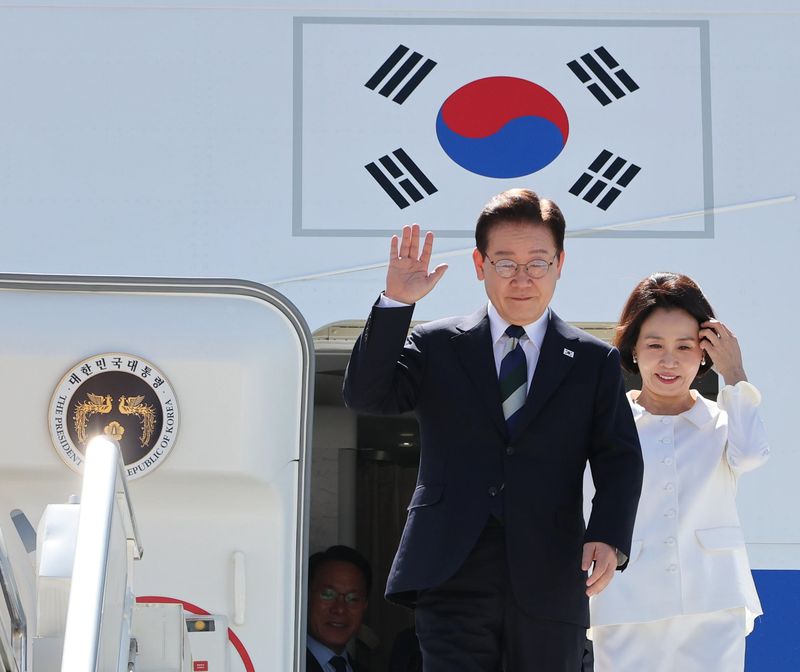
The presidential couple stepped out of the door of Code One at around 1:03 p.m. that day and waved to greet the crowd.
Trumpet music filled the air as they arrived. The guard commander saluted them, and President Lee shook hands one by one with the welcoming officials, smiling as he spoke with them. He also showed his warmth by patting South Korean ambassador to Brazil Choi Young-han on the shoulder.
The presidential couple then walked to a Brazilian-made C-390 transport aircraft parked beside Code One. Along the way, they continued greeting the welcoming officials before entering the aircraft at around 1:08 p.m. to inspect it.
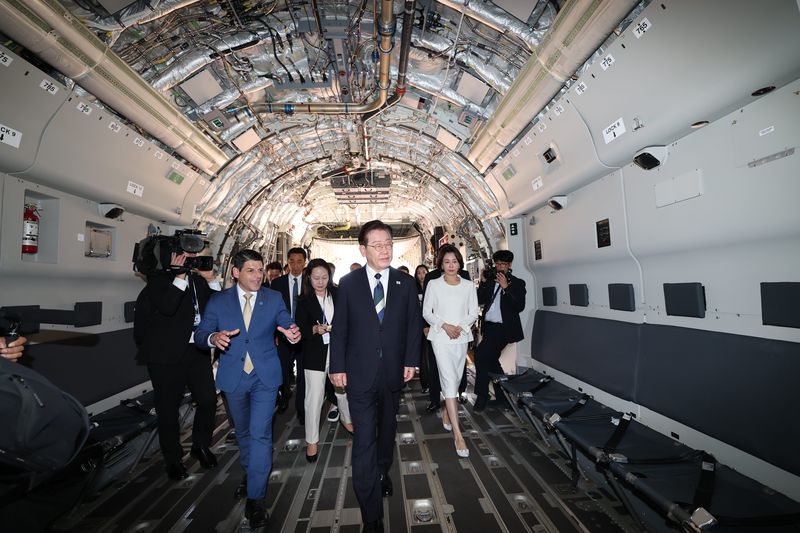
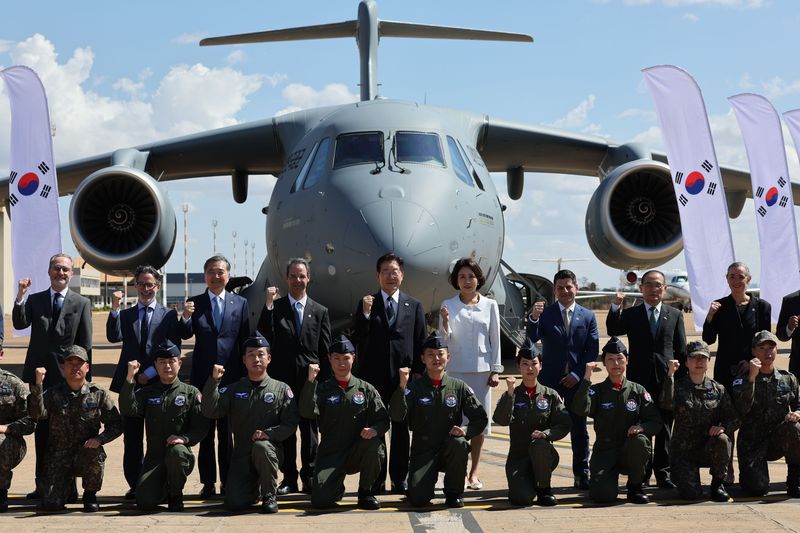
The Brazilian side explained that the C-390 is the first aircraft to be sent to Asia and said it is a multipurpose platform that can be used not only for transport but also for firefighting and humanitarian assistance. It also emphasized that Korean companies are participating in global supply chains and that cooperation could later expand into the civil aviation sector.
After asking about flight time and aerial refueling capabilities, President Lee said, "It is highly meaningful because this is also the first step in defense cooperation with Brazil," and added, "Let's create even more cooperation in the future."
The C-390 purchased from Embraer is a large transport aircraft being introduced to strengthen the Air Force's airlift and peacekeeping capabilities. The government plans to spend a total of 883.0 billion won from 2022 to 2028 to acquire three aircraft. It completed the aircraft selection and contract in December 2023, and plans to receive the first aircraft this December, followed by the remaining two in stages by the end of 2027.
The C-390 measures 35.2 meters in length and 35.1 meters in wingspan, and is operated by 10 countries, including Brazil, Portugal, and the Netherlands. The government selected the C-390 because it offers performance similar to Lockheed Martin's C-130J while being more cost-competitive and offering better offset trade conditions.
In particular, Korean small and medium-sized companies are also forming a consortium to take part in the production of key components such as the rear fuselage and in depot maintenance work for the aircraft. The participation scale is about $135 million, and the government views the project as a mutually beneficial model for aviation and defense cooperation between the two countries.
President Lee also encouraged 13 Air Force personnel, including pilots, loadmasters, and maintenance technicians, who are receiving training locally for the aircraft's delivery. The government plans to use the C-390 introduction as a springboard to expand bilateral cooperation not only in other defense sectors, such as tanks and armored vehicles, but also in joint aircraft development.
[email protected] Choi Jong-geun Reporter