[Editorial] If the government pushes to reform holding taxes targeting the 'one prized home,' it should also leave an exit route
- Input
- 2026-07-26 18:30:35
- Updated
- 2026-07-26 18:30:35
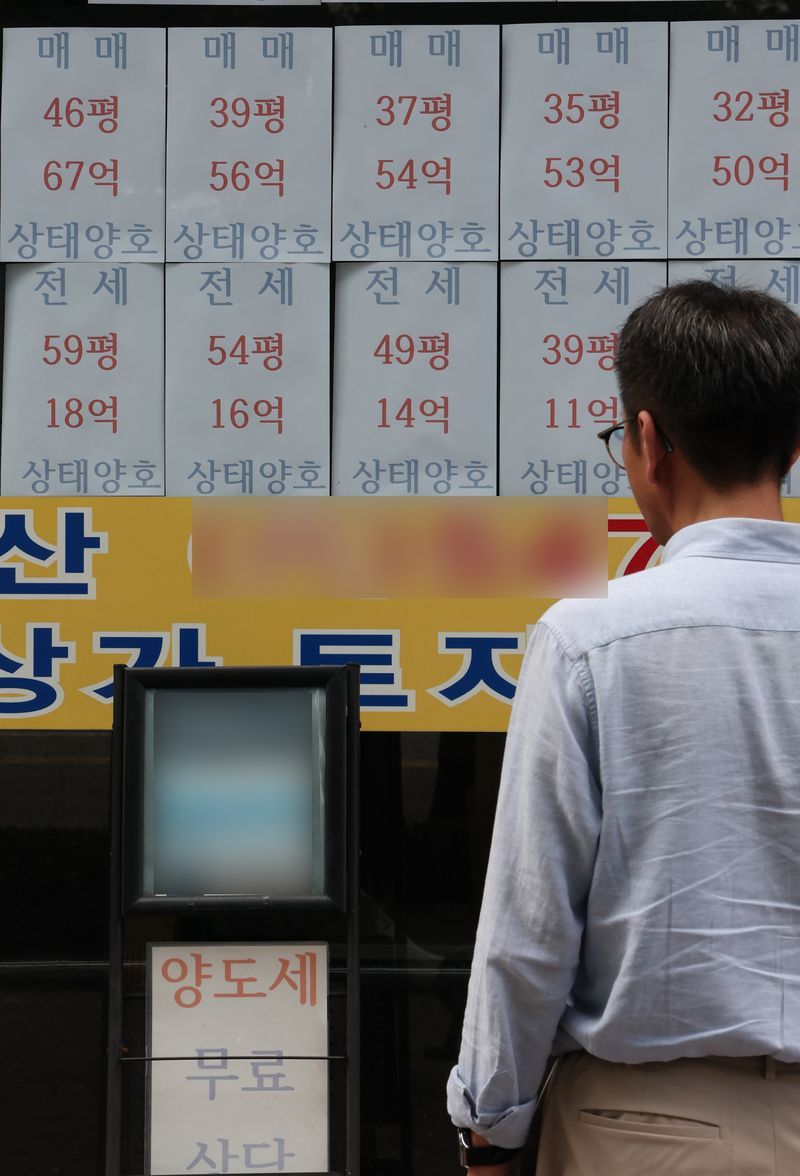
The government's plan to raise holding taxes appears to be aimed at the so-called "one prized home" in Seoul's Gangnam area. The idea is to take owner-occupancy into account as much as possible, while increasing the Comprehensive Real Estate Holding Tax burden on ultra-expensive homes even if they are owned as a single residence. This is also in line with what President Lee Jae-myung has said. The government is expected to enter final review over where to set the threshold for ultra-high-priced homes.
The direction of giving consideration to single-home owner-occupiers is reasonable. It is not right to impose excessive taxes on people who own one home bought long ago and have no assets or income other than pension income. That said, if the goal is to reduce tax benefits and impose higher taxes on ultra-expensive homes, such as those with officially assessed land values above 3 billion won, then an exit route should also be provided so owners can sell within a certain period.
The "one prized home" phenomenon is the result of regulations on multi-home owners. It is true that a structure in which someone with three homes pays less in taxes than someone with one home helped drive up prices for ultra-expensive homes in parts of Seoul's Gangnam area and elsewhere. The upcoming reform of the Comprehensive Real Estate Holding Tax is intended to correct that. But many people have lived in a single prized home for decades. Raising their tax rate and cutting tax benefits could affect their livelihoods.
For example, people whose only income is a pension of just a few million won a year already struggle to pay the Comprehensive Real Estate Holding Tax. If the burden rises further, it will become even harder for them to remain in those apartments. They would need to sell and move elsewhere, or rent the property out, and that opportunity should be opened up sufficiently. As Commissioner Lim noted, if the long-term holding special deduction has been excessive and is to be raised in the future, then an exit must be guaranteed even more firmly.
It appears the government's calculation is that ultra-expensive homes are driving prices in the Capital Region, and that this tax reform will help restrain the market. But whether higher tax rates and reduced benefits will actually bring down top-end home prices and create a ripple effect that stabilizes the broader market remains uncertain. In the process, ordinary buyers who have lived their entire lives in one home must not be harmed.
In the long run, it would be more effective for housing stability to raise holding taxes while lowering capital gains taxes, so that people can move in and out more freely. Experience shows that simply raising holding taxes and capital gains taxes at the same time does not lead to a flood of listings. First, the view that capital gains should be treated uniformly as unearned income needs to be debated. If holding taxes are raised, some preferred neighborhoods in Gangnam could turn into cartels of the wealthy who do not feel the tax burden. The tax reform should reflect a comprehensive review of various cases and circumstances.