Investors Bet on Fed Rate Hike as Oil Prices Rise
- Input
- 2026-07-27 04:30:00
- Updated
- 2026-07-27 04:30:00
[Financial News] As geopolitical tensions in the Middle East intensify and global oil prices surge, expectations are spreading rapidly that the U.S. Federal Reserve could raise its benchmark interest rate as early as this week.
On the 25th (local time), the Financial Times reported, citing the CME FedWatch Tool, that financial markets see a 38% chance the Federal Reserve will raise rates by 0.25 percentage point on the final day of the Federal Open Market Committee meeting scheduled for the 29th. That is nearly three times higher than just a week earlier, when the probability stood at 13%.
The shift began after U.S. President Donald Trump suggested the possibility of a "major attack" on Iran, and Brent Crude Oil futures topped $100 per barrel for the first time since May. Oil prices have jumped 25% since the June FOMC meeting, pushing up gasoline and diesel costs and adding to the burden on U.S. consumers and businesses.
Mark Cabana, head of U.S. rates strategy at Bank of America (BoA), said, "Oil prices are rising again at a time when it is even questionable whether monetary policy is restrictive." He added that the July FOMC meeting has become one in which a rate hike is on the table.
Robert Schein, chief economist at asset manager PGIM, also said the chance of a Fed rate hike after this meeting is "essentially a 50-50 probability."
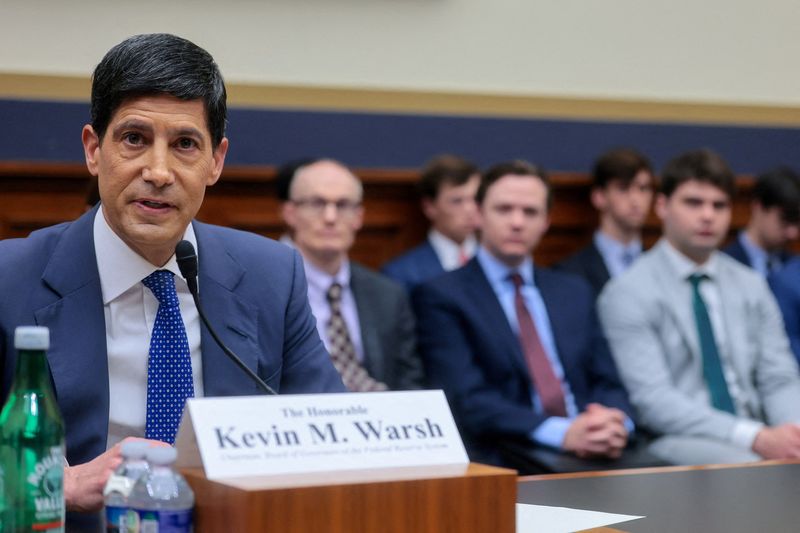
Market participants say Kevin Warsh, who took office in May after Jerome Powell, is under pressure to prove his commitment to curbing inflation. In congressional testimony earlier this month, Warsh took a hard line, saying, "I will not tolerate persistent high prices," but he has been cautious about laying out a specific policy direction. The Fed's preferred core Personal Consumption Expenditures Price Index rose 4.1% in May, more than double the 2% target.
Hawks within the FOMC are also gaining influence. Lorie K. Logan, president of the Federal Reserve Bank of Dallas, and Beth Hammack, president of the Federal Reserve Bank of Cleveland, have argued that the Fed should no longer delay action to stabilize prices. There is also speculation that Neel Kashkari, president of the Federal Reserve Bank of Minneapolis, could support a rate hike.
On the other hand, some are urging caution, pointing to the fact that the June Consumer Price Index rose 3.5%, a somewhat softer reading. They argue that the situation should be monitored until September. Influential figures including John Williams, president of the Federal Reserve Bank of New York, are reportedly in favor of waiting longer to see how inflation develops over the summer.
Experts say that beyond higher oil prices, the Trump administration's tariff policy, rising semiconductor component costs driven by the artificial intelligence boom, and stubborn service-sector inflation are all structural factors fueling price instability in the U.S. economy.
Joe LaVorgna, chief economist at SMBC Nikko Securities, said, "If Warsh raises rates now, it could send a strong signal to the market that he is serious about fighting inflation." He added that if a short-term rate hike can actually help lower long-term borrowing costs, the political burden may be easier to overcome.
LaVorgna, who also served as an economic adviser to U.S. Treasury Secretary Scott Bessent, suggested that Warsh must persuade the public that aggressive action against inflation now could lower rates over the long term, in order to avoid the kind of criticism over high rates that Powell faced from Trump.
He also advised that Warsh should emphasize that, in the short term, households could benefit in a "win-win" scenario by earning higher interest on their savings.
[email protected] Yoon Jae-jun Reporter