Why Did Trump Halt the Iran Strikes? With 100 Days Left Until the Midterm Election, Did He Choose Negotiation Over Escalation?
- Input
- 2026-07-26 17:30:52
- Updated
- 2026-07-26 17:30:52
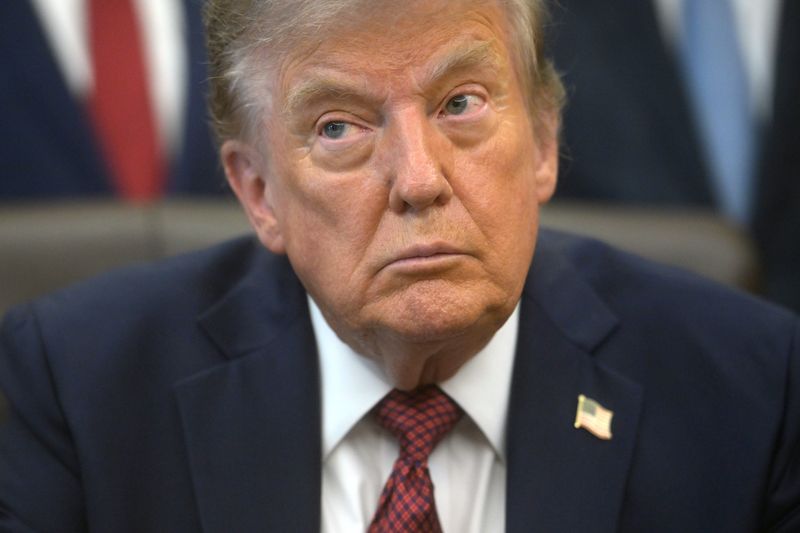
Lame-duck period or comeback? A 100-day showdown
In a speech at a House Republican retreat on Jan. 6, Trump vowed to win the midterm election and said, "If we don't win, the Democrats will find a reason to impeach me. I will be impeached." In practice, depending on how power is divided in Congress, he could gain more momentum to push his policy agenda through the rest of his term, or he could quickly fall into a lame-duck period.The Republican Party currently holds narrow majorities in both chambers, but the outlook is mixed. According to analysis by election site Decision Desk HQ, Democrats have a 60% chance of winning the House of Representatives, while Republicans have a 60% chance of winning the Sangwon. Based on projected seat counts, Democrats were expected to win 225 House seats, compared with 210 for Republicans.
If the current trend holds, the two parties could split control of the House and the Sangwon and maintain a balance of power. But with plenty of time left before the election, many observers say the final outcome is still impossible to predict. As the race enters its final stretch, both sides tend to rally their supporters, and there are many variables that could still shake up the contest.
Against this backdrop, Democrats are campaigning by linking the economic burden of a prolonged war with Iran, including high inflation and rising energy prices, to what they call Trump's responsibility. They have effectively made "affordability" their central midterm slogan. The Trump administration's violent crackdown on undocumented immigrants, deployment of the military in the name of domestic security, and repression of sexual minorities are also major lines of attack for Democrats.
Trump, meanwhile, is focusing on rallying his base by highlighting tax cuts, increased investment in the United States, and border security gains. He has also revived Cold War-era anti-communist rhetoric by labeling the rising Democratic socialism camp within the Democratic Party as "communism." At the same time, he is spreading conspiracy theories that Democrats have long engaged in election fraud and is urging passage of the "Save America bill," which would tighten voter ID requirements at the polls.
A negotiation card instead of the war strike button
Regarding the midterm outlook, experts say that if the war with Iran ends and global oil prices stabilize, that could help the Republican Party. On the other hand, if the conflict escalates and oil and consumer prices become unstable again, it could create a significant political burden for the Trump administration ahead of the midterm election.In that context, Trump appeared to put more weight on negotiations. According to Axios on the 25th, Trump received a report from the U.S. military on a planned strike against Iran on the 24th, but he did not approve it and instead ordered the strike to be halted. As a result, U.S. airstrikes, which had continued for 13 straight days, stopped for the day.
Over the past two weeks, Trump had approved most of the strike plans submitted by the military, and the attacks were carried out within hours. This time, however, he emphasized the possibility of talks instead of strikes. The day before, he told reporters at The White House, "We are talking seriously with Iran." Then at the White House Correspondents' Association (WHCA) dinner that same day, he said, "I don't think Iran is ready to negotiate right now, but I am willing to listen."
Diplomatic moves are also continuing. According to Axios, Trump's order to halt the strikes came just hours after an Omani negotiating team arrived in Iran to discuss reopening the Strait of Hormuz. Regional sources said, "The talks are making progress, and an agreement between Oman and Iran could be reached over the weekend."
The Patriot shortage is also a problem
Another reason for the halt is said to be the military burden on the U.S. military. On the 25th, The New York Times reported that Trump suspended a large-scale strike plan after being briefed on concerns that U.S. air defense assets were running low. According to the report, Chairman of the Joint Chiefs of Staff Dan Caine warned the previous day that "operations can resume, but they could deplete air defense missile stocks in the Middle East to dangerous levels." In particular, with stocks of MIM-104 Patriot surface-to-air missile system interceptors running low, continued Iranian retaliation could place a serious strain on the defense of U.S. bases in Jordan, Kuwait, Bahrain, and the United Arab Emirates (UAE).In April, The New York Times also reported that since the outbreak of the war with Iran, the United States had used more than 1,200 Patriot missiles, leaving weapons inventories at worryingly low levels. Each Patriot missile costs more than $4 million.
Skepticism about escalation is also growing within the Trump administration, according to reports. One senior official raised concerns that "a large-scale strike is unlikely to bring Iran to the negotiating table and could instead backfire by strengthening internal unity in Iran."
[email protected] Hong Chaewan Reporter