Owners of ultra-high-priced homes paid less in taxes... Comprehensive Real Estate Tax benefits at their highest level in four years
- Input
- 2026-07-26 10:51:42
- Updated
- 2026-07-26 10:51:42
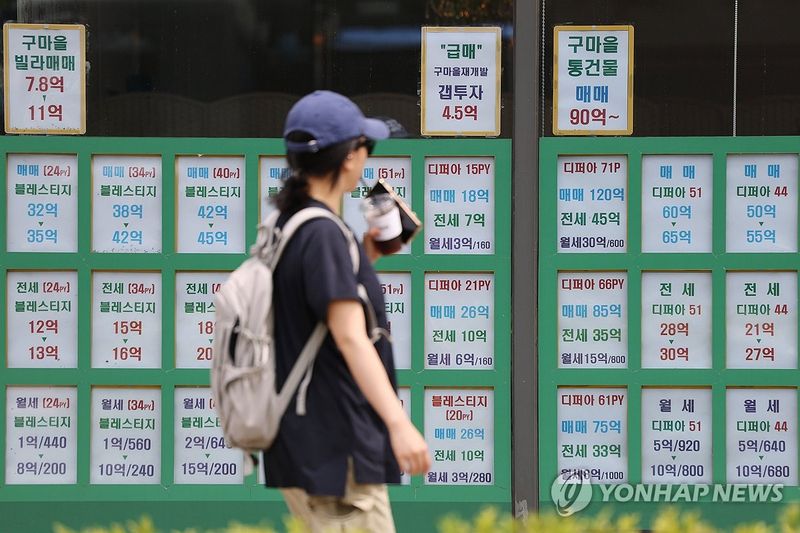
Tax-saving benefits concentrated in Seoul. Tax burden decreases the higher the price of the home. 1 billion won.
2 billion won), marking the largest amount since 2021. The Comprehensive Real Estate Tax credit is a system available to single-home owners who have held their home for five years or more or are aged 60 or older.By combining the long-term ownership deduction and the senior citizen deduction, taxes can be reduced by up to 80%, and it applies regardless of actual residency. 5 billion won under current standards.Tax-saving benefits concentrated in Seoul. Tax burden decreases the higher the price of the home. 1 billion won.
Tax-saving benefits concentrated in Seoul. Tax burden decreases the higher the price of the home. 1 billion won.6% of the total. 1 billion won).
The benefits of the tax credit were concentrated in Seoul. 9% of the comprehensive real estate tax credits applied to homes located in Seoul.
This is attributed to the high number of single-home owners who have held their properties for a long period, such as ultra-high-priced apartments in the Gangnam area. The tax-saving effect was also more pronounced for ultra-high-priced homes.
2% last year. 2% decrease from the previous year.
59 million won. 4 billion won.
6% increase from the previous year, marking the largest surge in the past four years. 5 billion won or more.
Tax-saving benefits concentrated in Seoul. Tax burden decreases the higher the price of the home. 1 billion won.
Centering 'Housing Price' Instead of 'Number of Homes'. Comprehensive Real Estate Tax Reform Announced The current Comprehensive Real Estate Tax applies different tax rates and deduction benefits depending on the number of homes owned.
Tax-saving benefits concentrated in Seoul. Tax burden decreases the higher the price of the home. 1 billion won.2 billion won and a tax credit of up to 80%, whereas multi-home owners have their basic deduction reduced to 900 million won and cannot receive deductions for long-term ownership or the elderly. The structure is such that the tax burden is lower for single-home owners even for homes of the same price.
65 million won higher than that of single-home owners. 94 million won in the 3-5 billion won bracket.
To address this structure, the government is considering a plan to apply differential taxation to the Comprehensive Real Estate Tax by dividing it into three groups: those eligible for basic deductions, those with intermediate burdens, and ultra-high-priced homes. While the basic deduction threshold is being raised slightly to reflect recent increases in housing prices, the most likely options being discussed are raising tax rates or subdividing tax brackets for ultra-high-priced homes valued at 3 to 5 billion won or more.
Discussions are also underway to shift the taxation system to focus on housing value rather than the number of homes owned. Currently, there have been persistent criticisms that a person owning three homes worth 1 billion won each could be subject to a higher tax rate than a person owning a single home worth 3 billion won.
The government is considering a plan to determine the tax burden based on housing prices to enhance tax equity. The tax credit system is also subject to overhaul.
Currently, deductions of up to 80% are available depending on long-term ownership and age, but discussions are underway to reflect actual residency, protecting single-home owners for actual residence while reducing benefits for those holding properties for investment purposes. However, the scale of the basic deduction, the criteria for ultra-high prices, the extent of tax rate adjustments, and the deduction method have not yet been finalized.
The government plans to gather additional opinions at a public debate presided over by Prime Minister Han Sung-sook on the 27th and include the final reform plan in the tax law amendment bill to be announced early next month.
Tax-saving benefits concentrated in Seoul. Tax burden decreases the higher the price of the home. 1 billion won.
[email protected] Jeong Sang-hee Reporter