'From 1.5 Trillion Won to 500 Billion Won': KOSDAQ Trading Value Shrinks ... 'Samsung Electronics and SK hynix' Leverage Tops 392 Trillion Won in Two Months [KOSDAQ Is Disappearing 1]
- Input
- 2026-07-26 06:00:00
- Updated
- 2026-07-26 06:00:00
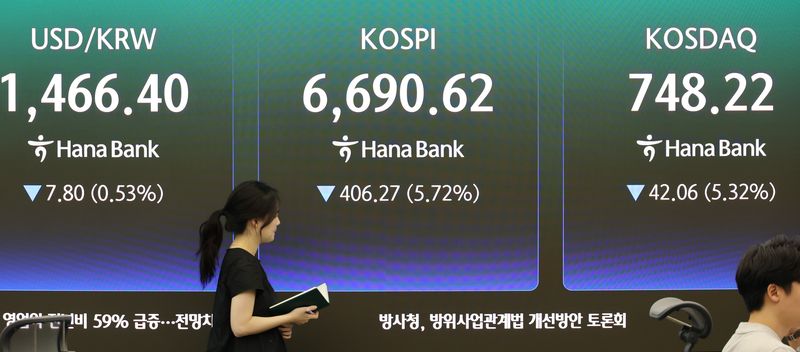
[Financial News] The KOSDAQ market, which once traded more than 1.5 trillion won a day, shrank to the 500 billion won range in just two months. Over the same period, 392 trillion won changed hands in 14 single-stock leveraged exchange-traded funds (leveraged ETFs) based on Samsung Electronics and SK hynix. Another 959 trillion won was traded in the two stocks themselves.
Even taking into account the decline in overall market liquidity, the concentration of trading is unusual. Since the launch of single-stock leveraged ETFs, the cumulative trading value of the 14 related products has exceeded that of the entire KOSDAQ market, which consists of more than 1,800 listed stocks. During the same period, the index, trading value, and margin loans in KOSDAQ all fell sharply.■ From 1.5 trillion won to 500 billion won ... even on a daily average, down 60%According to the Korea Exchange on the 26th, KOSDAQ trading value stood at 15.2784 trillion won on May 27, when the single-stock leveraged ETFs were listed. By the 24th, it had fallen to 5.177 trillion won. In less than two months, daily trading value dropped by 10.1014 trillion won, or 66.1%.
For the first five trading days after the launch of the single-stock leveraged ETFs, average daily KOSDAQ trading value was 12.7416 trillion won. The average for the most recent five trading days was 5.1042 trillion won, down 59.9%.
Over the same period, the KOSDAQ Index fell 34.0%, from 1,133.13 to 748.22. The drop in trading value was far steeper than the decline in the index. That means trading activity itself slowed faster than prices fell.
The outflow of funds from KOSDAQ was also pronounced in margin trading. KOSDAQ margin loans fell 29.9%, from 9.8563 trillion won on May 27 to 6.9106 trillion won on the 23rd of this month.
Over the same period, KOSPI margin loans declined only 3.7%, from 26.8337 trillion won to 25.8386 trillion won. Although margin trading weakened across the market amid the stock correction, the decline rate in KOSDAQ margin loans was about eight times that of KOSPI.
A securities industry official said, "It is hard to explain this simply as a drop in trading value caused by lower share prices. Market trading momentum has weakened very quickly."■ Trading value of 14 leveraged ETFs surpasses the entire KOSDAQ marketWhile trading in KOSDAQ weakened rapidly, the opposite trend emerged in products linked to Samsung Electronics and SK hynix.
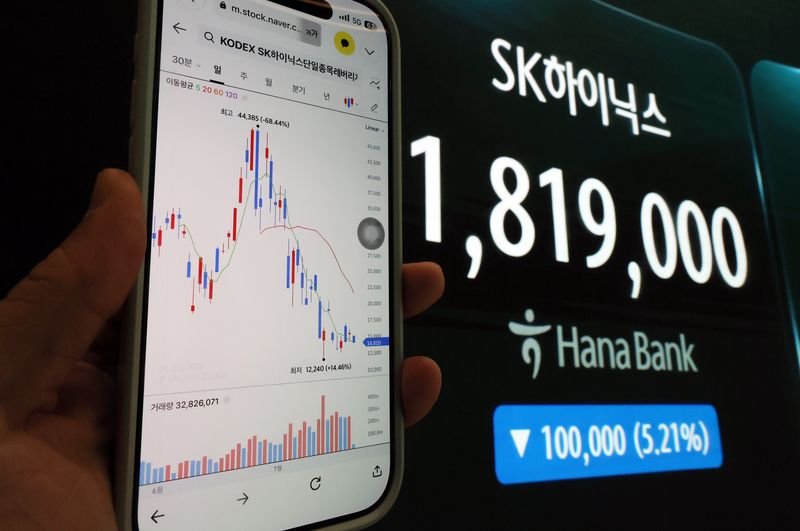
Financial News, based on Korea Exchange data, analyzed 14 single-stock leveraged ETFs tied to Samsung Electronics and SK hynix. The cumulative trading value for the 41 trading days from May 27 to July 24 came to 392.1284 trillion won.
During the same period, total trading value in the KOSDAQ market was 359.4237 trillion won. The 14 ETFs tracking the two stocks generated 32.7047 trillion won more trading, or 9.1% more, than the entire KOSDAQ market of more than 1,800 stocks. On a daily average basis, the 14 leveraged ETFs traded 956.41 billion won, while the entire KOSDAQ market traded 876.64 billion won.
The concentration in the underlying shares was even stronger. Samsung Electronics recorded 398.7849 trillion won in trading value, while SK hynix posted 560.4831 trillion won. Combined, that came to 959.268 trillion won, accounting for 51.5% of the KOSPI's total trading value of 1,861.4813 trillion won during the same period. In other words, out of every 1 million won traded on KOSPI, 515,000 won changed hands in just those two stocks.
If the underlying shares and leveraged ETFs are simply added together, related trading value over the two months reached 1,351.3965 trillion won.
An industry source said, "When overall market liquidity is shrinking, trading concentrated in a few stocks such as Samsung Electronics and SK hynix, as well as related products, inevitably hits KOSDAQ first." The source added, "We need to be wary of a vicious cycle in which falling trading volume drives investors away."
[email protected] Choi Doo-sun Reporter