How Will Chey Tae-won Raise 944 Billion Won in Property Division? Will He Turn to SK Siltron Instead of SK Shares?
- Input
- 2026-07-25 06:40:00
- Updated
- 2026-07-25 06:40:00
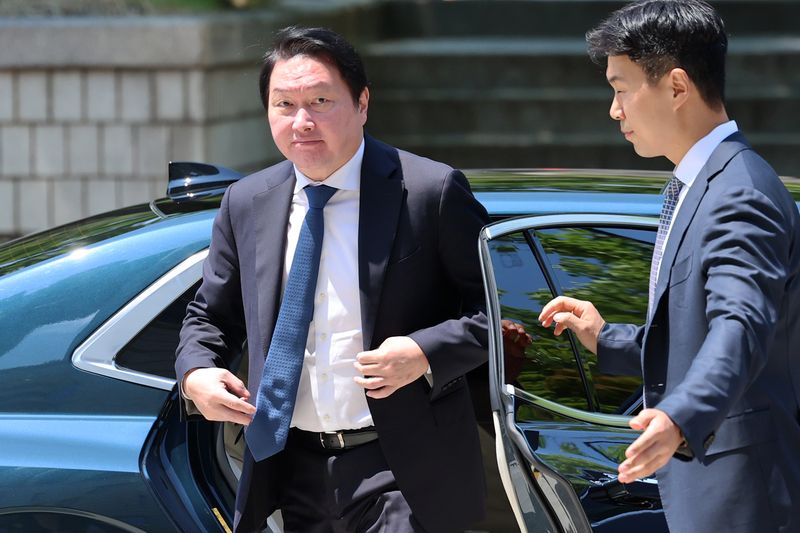
[Financial News] After a court ruled that Chey Tae-won, chairman of SK Group, must pay 944 billion won in property division to Art Center Nabi director Noh So-young, the market is watching closely to see how he will raise such a large amount of cash. With the possibility of a retrial still in play, a sale of SK Siltron shares, stock-backed loans and higher dividends are being discussed as likely funding options.
On the 24th, Seoul High Court Family Division 1 ruled in the remanded case that Chey must pay Noh 944 billion won in property division, plus late interest.
The court included SK shares in the property division, but ordered cash payment instead of a share transfer, citing the group's governance structure. It valued the shares as of April 16, 2024, and excluded 30 billion won in slush funds linked to former President Roh Tae-woo from the contribution calculation, following the Supreme Court's ruling.
In business circles, Chey is first expected to pursue a retrial. If that happens, the final ruling would be delayed, giving him more time to secure funding.
Among the cash-raising options, leveraging his stake in SK Siltron is seen as the most realistic. Chey holds about 19.4% of SK Siltron as a personal stake, while SK is currently negotiating the sale of its 70.6% holding. The industry values the company at 6 trillion to 7 trillion won, and if a deal is completed, Chey could secure about 700 billion won in cash.
However, the ruling could weaken his bargaining power and lead to a lower sale price.
Another likely option is to borrow against his SK shares. Chey currently holds a 17.9% stake in SK, though part of it has already been pledged as collateral. Additional borrowing would bring an annual interest burden of several tens of billions of won.
Expanding dividends from SK Telecom and SK hynix to increase SK's cash flow, and then channeling that into personal dividend income, is also being discussed as a long-term funding strategy.
Directly selling SK shares is seen as a lower-priority option. To raise 944 billion won, he would need to sell about 1.5 million shares, which could heighten concerns over overhang and place a burden on future control of the group.
Business circles say the most realistic scenario is to secure most of the funds through the sale of SK Siltron, then cover the shortfall with stock-backed loans, cash assets and dividends.
One business source said, "The burden has eased somewhat, as the property division amount has been reduced by about 430 billion won from the appellate ruling." The source added, "Since selling shares in SK, the holding company, would have a major impact on the group's control, it is likely to be the last resort."
[email protected] Seoyun Kyung Reporter