"Hair Can Grow Fuller Without Surgery"... The Future of 'Conquering Hair Loss' Brought by Epi Biotech CEO Sung Jong-hyuk [100 Hair Loss Experts Interview]
- Input
- 2026-07-28 09:00:00
- Updated
- 2026-07-28 09:00:00
When something that should normally be there is absent, it brings a sense of loss. Hair loss, which has emerged as a major issue of our time, is one such source of deep and heavy loss. To face hair loss head-on and overcome it, we are meeting 100 hair loss experts, starting with the medical doctor who pioneered first-generation hair loss treatment. Please look forward to the new stories that will unfold beyond the two letters of "hair loss." [Editor's note]

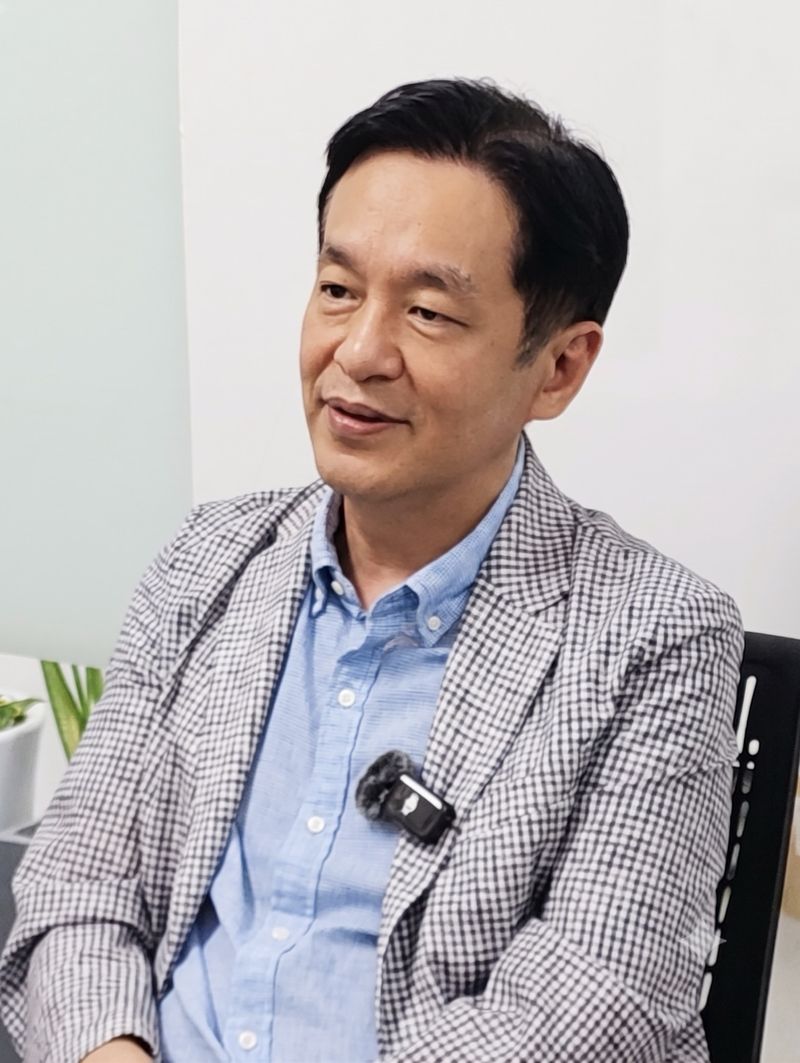
[Financial News] What if healthy hair could be transplanted without surgery? There is someone who has developed a non-surgical, cell-based hair transplant method, or more precisely, a treatment for hair loss through papilla cell transplantation. He is Sung Jong-hyuk, the CEO who oversaw everything from planning to clinical trials at Epi Biotech, the only biotech company in Korea specializing in hair loss. When we met him on the 23rd, Sung said confidently, "Hair loss is a symptom that can be conquered."
Only 20 healthy hairs are enough to break free from hair loss... Developing a 'papilla cell therapy'
The therapy comes in two forms: an autologous treatment called EPI-001, which uses the patient's own cells, and EPI-008, which uses donor cells. The autologous version has completed Phase 1 clinical trials in Korea and has moved into dose-escalation after passing the safety review committee. Safety has been confirmed, and the company now plans to begin Phase 2 to verify efficacy.— It's surprising that donor cells can also be used. Isn't autologous treatment better?▲ Using a patient's own cells has the advantage of allowing a personalized treatment. However, collecting cells from each patient and manufacturing the therapy takes a lot of time and money.
If donor cells are used, quality-verified cells can be standardized and supplied to many patients. That would improve our productivity and global scalability, while also reducing the cost burden for patients. In fact, our lab has secured a therapy based on papilla cells from a healthy female donor in her 20s that could treat more than 10,000 people. We plan to apply for clinical approval for that therapy in August.— There are many cells involved in hair growth besides papilla cells. Why did you choose papilla cells?▲ Papilla cells play the role of instructing the main cells that make up the follicle to produce hair. When there are many papilla cells in a follicle, hair grows well; when there are too few, hair becomes thinner. We culture papilla cells in large quantities outside the body and inject them into follicles, which activates the signals that promote hair growth and leads to thicker hair. We also tested other cells, such as adipose stem cells and bone marrow cells, but papilla cells showed the best results.
This effect is also reflected in the clinical results of EPI-001, the autologous therapy using papilla cells. Patients in the trial received a single injection of 100,000 papilla cells cultured outside the body after being collected from their own follicles, and satisfaction was evaluated three months later. The results showed high patient satisfaction in terms of reduced hair shedding and improved hair thickness. If all clinical trials, including Phase 3, are completed within the next three to four years, we expect the treatment will also be available in hospitals.
Analyzing 100,000 scalp cells one by one: the journey toward personalized hair loss treatment
— I heard that you are also researching ways to block the causes of hair loss, not just treat it.▲ The causes of hair loss differ from person to person. Yet the treatments are widely standardized. Common hair loss medications include finasteride and dutasteride, which act on male hormones, and minoxidil, which expands blood vessels. But for about 30% of people with hair loss, androgen receptor inhibitors do not work. That means some patients do not benefit from these treatments. I thought it was necessary to analyze the causes of hair loss more precisely and provide personalized treatment.To do that, we recruited people with different hair loss symptoms and collected part of their scalp for analysis using a single-cell technique. Single-cell analysis separates cells one by one to identify their characteristics and functions. Traditional cell analysis methods examine tissue containing many mixed cell types all at once, so the results can only be understood as an average. In school terms, it is like not being able to tell which student improved in which subject, and only seeing the class average. With single-cell analysis, we can identify which cells and which signals change as hair loss progresses.— How many scalp cells were analyzed with the single-cell technique? Did you find the cells that trigger hair loss among so many cells?▲ About 100,000 cells can be obtained from the scalp. After analyzing those 100,000 cells, we were able to classify the genes responsible for hair loss into 20 groups. After that, we checked how those cells expanded and which genes they expressed.
For example, immune cells cause alopecia areata by attacking cells around the follicle, while papilla cells decrease in number when attacked by androgen hormones, leading to androgenic alopecia. We also identified a link between dermal fibroblasts and hair loss. In the past, fibroblasts were thought to be beneficial because they produce collagen, which is involved in skin elasticity. But in the scalp, increased collagen production caused side effects such as skin hardening.— How are the findings from this analysis used in treatment?▲ We built a hair loss gene big data platform called EPIGene by steadily accumulating the results of our single-cell analyses. The goal is to analyze gene expression patterns and expression networks to find potential treatment methods that were overlooked in previous research.
As a result, we found that hair loss-causing genes can be neutralized through antisense oligonucleotide technology, a gene-targeted drug approach that blocks the transmission of genetic information in the middle of the process. This means we can move away from a one-size-fits-all treatment model and instead provide personalized therapy based on each patient's cell activity.
For example, in androgenic alopecia, if a patient shows increased levels of the proteins DKK3 and CKAP4 secreted by dermal fibroblasts, we use antisense oligonucleotide technology to block the DKK3-CKAP4 signaling pathway. This research was conducted with a team at Seoul National University, and the results were published in the international medical journal Theranostics this year, drawing attention.— A targeted treatment that has never existed before must have surprised people overseas as well. How was the response?▲ In fact, we have been generating revenue overseas since last year. [laughs] We do not yet have a commercialized treatment, but inquiries about technology transfer have increased. Contract research and joint research projects have also increased. We are also discussing the establishment of a joint venture with Beijing Nuosuland, a biotech company and listed firm in China that recently received approval for a new drug.— Aren't you getting too busy? What are your plans going forward?▲ I want to turn Epi Biotech into an internationally competitive biotech venture. We are currently focusing on technology transfers to domestic companies, but as I mentioned, revenue from overseas partners is growing. We also signed a contract worth 300 million won with companies in the United States and other countries in the first half of 2026, so I believe we can keep moving toward that goal. I hope that hair loss treatments and related technologies developed in Korea will lead to global clinical trials, co-development, and technology transfers, and ultimately surprise the world.
And I hope more people will study hair loss. Recently, more companies and researchers have entered the field, but I still feel it is not enough. I think the reason hair loss has not yet been conquered is also because research has been insufficient. If diverse research continues, perhaps hair loss can become manageable like other chronic diseases.
[email protected] Kim Hyun-sun Reporter