The United States Bombs Iran for 13 Straight Days... Will a "Massive Attack" Include Ground Warfare?
- Input
- 2026-07-24 10:52:12
- Updated
- 2026-07-24 10:52:12
[Financial News] The United States has pressed ahead with airstrikes on Iran for 13 consecutive days and warned of a new "massive attack." Iran's military said it has restored its air defense network and is ready for ground warfare.
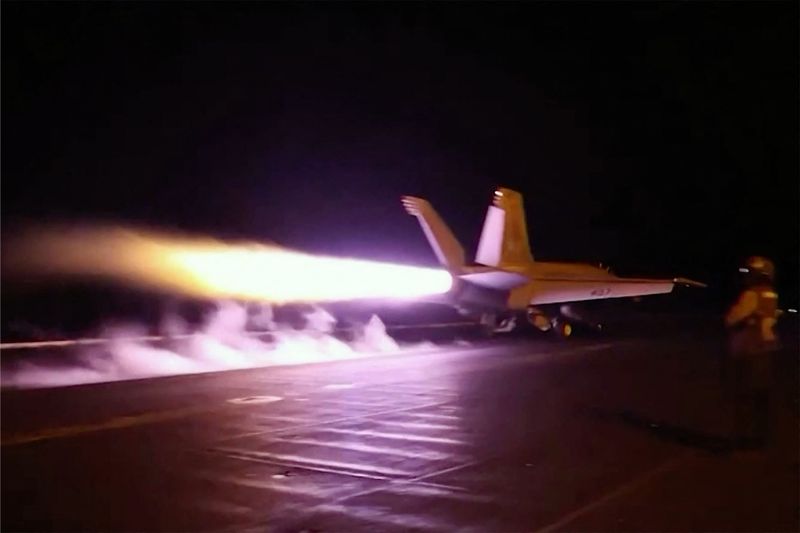
CENTCOM, which oversees the Iran operation, said on social media platform X on the 23rd local time that it had "launched additional nighttime airstrikes targeting Iranian military facilities at 6:45 p.m. Eastern Time." It added that the strikes were part of an operation "to hold Iran accountable and weaken the threats the Islamic Revolutionary Guard Corps (IRGC) poses to commercial shipping."
The two sides, which signed a memorandum of understanding to end hostilities on the 17th of last month and agreed to a 60-day ceasefire, are now effectively back at war. After airstrikes on Iran on the 26th and 27th of last month, the United States bombed Iran again on the 7th and 9th of this month, then carried out daily strikes from the 11th through the 23rd. President Donald Trump had already notified Congress of the resumption of combat on the 10th.
In an interview with U.S. political outlet Axios on the 23rd, Trump said, "We are considering a massive attack. We will make a decision soon on an attack far larger than anything before." He added, "Everything is ready." He claimed the operation could be even larger than the opening strike of the Iran war carried out with Israel on February 28. Trump also said Israel "will join within two minutes if I ask," stressing that he "does not need anyone's help" for the new Iran operation. He said Iran was not ready to reach a ceasefire agreement and added, "They have not suffered enough yet."
CNN reported the same day, citing two officials, that the Trump administration has begun to feel the limits of airstrikes. According to the officials, both the CIA and the DIA concluded that the current air campaign would not change Iran's negotiating stance. Axios reported in March that the U.S. Department of Defense was planning ground operations targeting key points in the Strait of Hormuz and Iran's nuclear facilities.
On the same day, Mohammad Akraminia, a spokesperson for the Islamic Republic of Iran Army Ground Forces, told the semi-official Fars News Agency that all air defense systems damaged since the outbreak of war in February had been restored and that newly deployed anti-aircraft equipment had been integrated into the military's combat order of battle. He said, "The airspace over southern Iran is no longer a safe zone for enemy aircraft," adding, "Almost every drone entering this area will be shot down immediately."
Akraminia also emphasized that Iran's ground forces are fully prepared for combat. He said, "The Iranian military is currently maintaining the highest level of operational readiness," and added, "There is no need to deploy reserve volunteers or civilian personnel for combat missions."
Meanwhile, Trump, who resumed fighting with Iran over attacks on ships in the Strait of Hormuz, posted on Truth Social on the 23rd that he would move to seize Iran's frozen overseas assets. He said, "From this point until further notice, any damage to ships, cargo, or anything related will be compensated with Iranian funds held and controlled by the United States." He did not specify the source of the "Iranian funds" or explain how compensation would be carried out. Iranian assets frozen around the world under U.S. and other Western sanctions are estimated at about $100 billion.
[email protected] Park Jong-won Reporter