85% of the Public Supports Pet Travel on Public Transportation, But Only If There Are 'Petiquette' Rules and Extra Fees
- Input
- 2026-07-24 09:26:24
- Updated
- 2026-07-24 09:26:24
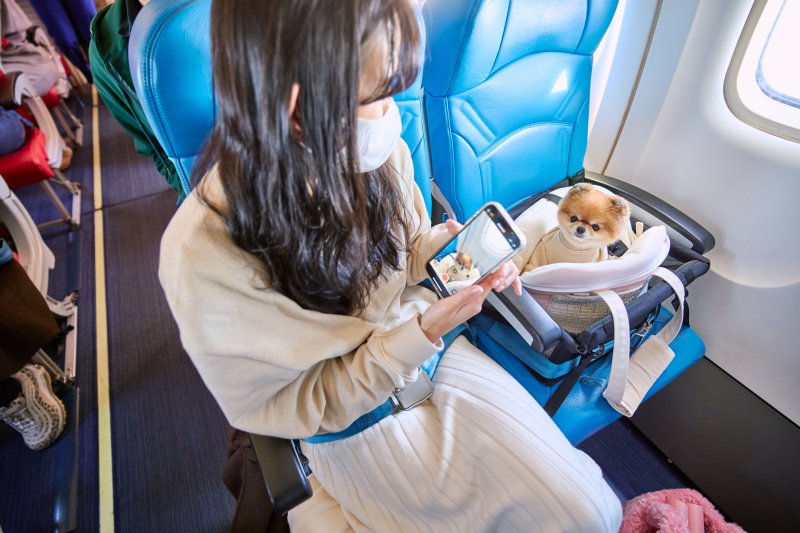
[Financial News] A survey has found that more than 8 in 10 people support expanding pets' use of public transportation, including airplanes, trains and buses, if certain conditions are met.
According to Yonhap News Agency on the 24th, about 85% of respondents said they supported the idea under conditions in a survey conducted by LOTTE Members through its in-house research platform Lime. Only about 15% said there was no need to expand access.
Among respondents, fewer than 30% were pet owners, while the rest did not have pets.
The share saying expansion was unnecessary was 11.3% among pet owners and 16.9% among non-owners, a gap of 5.6 percentage points.
The most commonly cited condition was pet owners' responsibility for safety management and compliance with petiquette, at 25.6%.
That was followed by dedicated seats, train cars or sections for pets at 23.3%, separate usage fees at 22.8%, and health checks such as vaccination records at 13.0%.
Nearly half of respondents, or 49.2%, agreed that pets should be recognized as family members. The figure was 70.2% among pet owners and 40.5% among non-owners.
The most serious pet-related social problem was a lack of petiquette, such as failing to clean up waste or keeping dogs on leashes, at 28.8%. Abandonment and animal abuse were close behind at 28.7%.
Safety incidents such as dog bites accounted for 16.0%, conflicts between neighbors over noise and use of public spaces for pets made up 13.7%, and illegal or unethical breeding and sales came in at 12.8%.
Pet owners, however, viewed abandonment and animal abuse as the most serious issue, while non-owners pointed to a lack of petiquette, highlighting a difference in perspective.
The policy measure respondents most wanted to see first was stronger management of the pet registration system, at 27.6%.
That was followed by tougher penalties for animal abuse at 22.9%, stronger petiquette campaigns and education for non-owners as well at 19.2%, lower medical costs at 17.7%, and expanded support for rescuing and adopting abandoned animals at 12.6%.
On policy priorities as well, pet owners chose lower medical costs first, while non-owners selected stronger registration management.
The survey was conducted on 1,000 adult men and women in their 20s to 60s from the 16th to the 17th, with a margin of error of plus or minus 3.1 percentage points at a 95% confidence level.
[email protected] Seong Min-seo Reporter