[New York Market] Oil at $100 and AI 'cash-burning monster' fears send Nasdaq tumbling 2.15%
- Input
- 2026-07-24 07:25:46
- Updated
- 2026-07-24 07:25:46
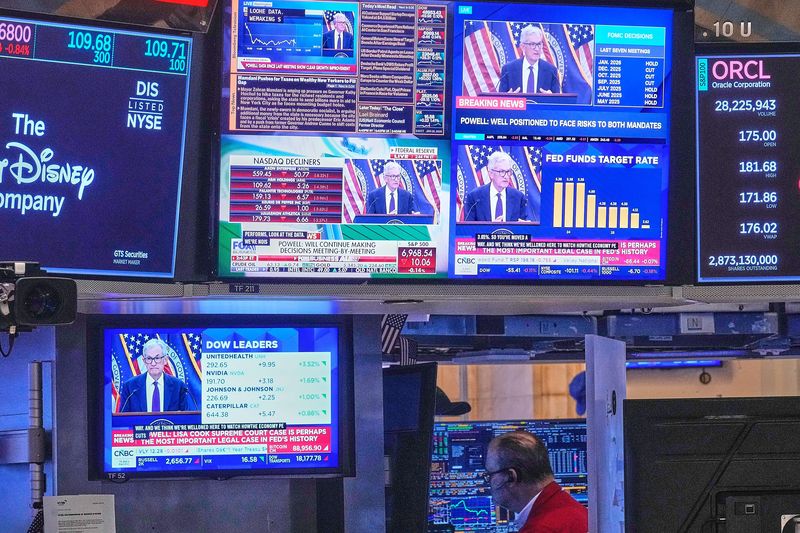
[Financial News] U.S. stocks fell across the board as fears of a wider conflict in the Middle East pushed international oil prices above $100 a barrel and concerns grew over the heavy artificial intelligence (AI) spending burden facing Big Tech. As worries mounted that higher oil prices could drive up both inflation and interest rates, Tesla and Alphabet plunged on cash-burn concerns, sending the tech-heavy Nasdaq down more than 2%.
On the 23rd local time, the Dow Jones Industrial Average (DJIA) closed at 51,711.65, down 506.93 points, or 0.97%, from the previous session at the New York Stock Exchange.
The S&P 500 Index fell 90.66 points, or 1.21%, to 7,408.30, while the NASDAQ Composite Index, which is centered on technology stocks, dropped 553.21 points, or 2.15%, to finish at 25,137.69.
The biggest market mover of the day was crude oil. Brent Crude Oil futures for September delivery rose 7.04% from the previous session to settle at $100.69 per barrel, or about 148,600 won. Brent crude topped $100 a barrel for the first time in about two months, since May 22.
West Texas Intermediate crude oil (WTI) futures for September delivery also climbed 6.17% to $92.19 per barrel, or about 136,000 won, marking their highest level since June 4.
Supply disruption fears spread rapidly as instability extended from the Strait of Hormuz, a key route for global oil shipments, to the Red Sea. Yemen's Iran-backed armed group Ansar Allah (Houthis) declared a blockade of the Red Sea targeting Saudi Arabia. Two Saudi oil tankers were attacked, and the Houthis claimed responsibility.
Saudi Arabia has been using an alternative route to bypass a possible Iranian blockade of the Strait of Hormuz by moving crude produced at eastern oil fields through pipelines to the western Red Sea coast for export. If Houthi attacks continue, even that alternative route could come under threat, raising fresh concerns.
The possibility of a broader clash between the United States and Iran also dampened risk appetite. The United States has carried out airstrikes on Iran for 12 straight days, and U.S. President Donald Trump said he is considering attacks on a much larger scale than before.
The surge in oil prices fueled fears of a renewed inflationary wave. The 10-year U.S. Treasury yield rose 4 basis points, or 0.04 percentage point, from the previous session to 4.70%. It was the first time the 10-year yield had moved above 4.7% in about 1 year and 6 months, since January last year.
Stronger-than-expected labor market data also added to expectations that the Federal Reserve could raise its benchmark rate again to tame inflation. Weekly initial jobless claims in the United States, released that day, fell to their lowest level since 1969.
The decline in jobless claims suggests that layoffs remain limited and the labor market is still solid. But strong labor demand could push up wages and service prices, making it a factor that heightens concerns over tighter policy in financial markets.
If oil prices and interest rates were weighing on stocks from the outside, earnings from major technology companies were stoking internal doubts about the AI investment boom.
Tesla shares plunged 14.5% after the company said its cash flow turned negative for the first time in two years. That means the company has begun burning cash as spending on facilities and business expansion has outpaced the cash generated by operations.
Alphabet, Google's parent company, also beat market expectations for second-quarter results, but its stock fell 6.8%. Investors were rattled by the fact that free cash flow (FCF) turned negative after the company poured huge sums into AI data centers and related equipment.
Expectations remain that AI investment will become a future growth engine, but concerns are growing that it may be consuming enormous capital now while delaying the point at which it starts generating profits. When interest rates rise, the present value of future earnings falls, so tech stocks that have risen on high growth expectations take a bigger hit.
Morgan Stanley's Daniel Skelly said, "The surge in oil prices amid geopolitical uncertainty and concerns over the Magnificent Seven's capital spending expansion are putting significant pressure on the market," adding, "Unless AI companies can prove sustained upside momentum, stock volatility could continue for some time."
[email protected] Kim Kyung-min Reporter