'Subdivision' to Capital-Free Gap Investment... Structural Problems Fueled 'Villa Phobia' [The 'Bottom' of the Housing Ladder · 4]
- Input
- 2026-07-24 07:30:00
- Updated
- 2026-07-24 07:30:00

/ Photo = Newsis Non-apartment housing, represented by villas, is not a preferred residential area that people want to live in, but rather a residential area driven by demand where people have no choice but to live. Non-apartment housing, often called the very end of the housing ladder, is a place where residents and experts are contemplating how to make it a preferred residence.
They have raised their voices toward the government, urging them to share this concern. [Financial News] "I checked everything, including the Certified Copy of the Land Registry and the Building Register, but I never imagined I would become a victim of Jeonse fraud." This is a common sentiment expressed by victims of non-apartment Jeonse fraud. Ahn Ji-soo (pseudonym, 34), who moved into a newly built officetel near her company in 2024 with a Jeonse deposit of 180 million won, discovered that the house had been provisionally seized when she checked the Certified Copy of the Land Registry ahead of renewing her contract.The landlord stated, "I cannot return the deposit because my business is struggling," and the house Ahn was living in was eventually put up for auction. Ahn, who hurriedly completed the registration of her leasehold rights, is looking for a new home but is facing a double burden as not only her deposit but also part of her loan is tied up.Lee Cheol-bin, Co-chair of the National Committee for Victims of Jeonse Fraud and 'Empty-can' Jeonse, also became a victim of Jeonse fraud five years ago, despite having meticulously checked the relevant documents before signing the contract. Although he was confident after working in housing rental management at a real estate startup, he could not avoid being scammed.The cases of these two individuals are cited as challenges that the government, grappling with housing supply issues, must resolve. At the grand national debate on real estate policy held on the 23rd presided over by President Lee Jae-myung, opinions were raised that private rental housing must be revitalized to resolve the housing supply shortage.
/ Photo = Newsis Non-apartment housing, represented by villas, is not a preferred residential area that people want to live in, but rather a residential area driven by demand where people have no choice but to live. Non-apartment housing, often called the very end of the housing ladder, is a place where residents and experts are contemplating how to make it a preferred residence.Professor Jin Mi-yoon of Myongji University's Graduate School of Real Estate, who presented on the supply sector at the event, mentioned Jeonse scams after explaining the situation where the link in housing supply has been broken as building permits and construction starts have declined since 2022. Professor Jin stated, "Tenants' trust in non-apartment housing has significantly decreased following Jeonse scams.Non-apartment housing is a housing option accessible to young people, single-person households, and newlyweds due to lower deposits and monthly rents compared to apartments, but they are currently facing difficulties. " Experts believe that to restore the broken link in supply, fundamental measures to prevent Jeonse scams are necessary before increasing the supply of new housing units.At the same time, the starting point of non-apartment Jeonse fraud was identified in the supply structure, which differs from that of apartments. 20 registered units, 30 approved units.
A supply structure different from apartments At the National Debate on Real Estate Policy held on the 23rd, Professor Jin Mi-yoon of Myongji University's Graduate School of Real Estate explained the situation where the link in the housing supply chain has been severed, stating, "Following Jeonse fraud, tenants' trust in non-apartments has significantly decreased, and they are also facing difficulties in choosing housing options. " /Photo = Captured from YouTube MBC Channel Although both apartments and villas are multi-unit dwellings where people reside, the management systems applied during the supply process are not the same.
To understand the supply structure of non-apartments, one must distinguish between 'housing construction business registration' and 'business plan approval. ' Large-scale apartments are supplied by registered housing construction businesses after going through procedures such as business plan approval, supervision, and tenant recruitment.
On the other hand, multi-family and row houses below a certain size can be supplied through the building permit procedure under the Building Act instead of the project plan approval under the Housing Act. Article 4 of the Housing Act mandates registration as a housing construction business operator for those intending to carry out housing construction projects exceeding a certain scale annually.
According to Article 14 of the Enforcement Decree of the Housing Act, the registration applies to business operators constructing 20 or more single-family homes or 20 or more multi-unit dwellings annually, or 30 or more units annually for urban residential housing. Registered business operators must possess capital of at least 300 million won for corporations and an asset valuation of at least 600 million won for individuals, and must secure at least one technical expert in the construction field and an office necessary for carrying out the business.
Project plan approval is a separate procedure from business operator registration. According to Article 15 of the Housing Act and Article 27 of the Enforcement Decree of the Housing Act, multi-unit dwellings must, in principle, obtain project plan approval when constructing 30 or more units.
However, cluster-type row houses and cluster-type multi-family houses with an exclusive area of 30m2 or more per household and meeting requirements prescribed by Presidential Decree, such as access roads, are subject to project plan approval starting from 50 households or more. Therefore, small-scale multi-family housing that does not meet the project plan approval criteria may be supplied through the building permit method.
While regulations regarding building permits, occupancy permits, and structural safety apply, they do not undergo the same business plan review and supply procedures as large-scale housing projects.
/ Photo = Newsis Non-apartment housing, represented by villas, is not a preferred residential area that people want to live in, but rather a residential area driven by demand where people have no choice but to live. Non-apartment housing, often called the very end of the housing ladder, is a place where residents and experts are contemplating how to make it a preferred residence.
Multi-unit housing of a scale that does not fall under the category of business plan approval is supplied through the building permit procedure under the Building Act instead of business plan approval under the Housing Act.
/ Photo = Newsis Non-apartment housing, represented by villas, is not a preferred residential area that people want to live in, but rather a residential area driven by demand where people have no choice but to live. Non-apartment housing, often called the very end of the housing ladder, is a place where residents and experts are contemplating how to make it a preferred residence.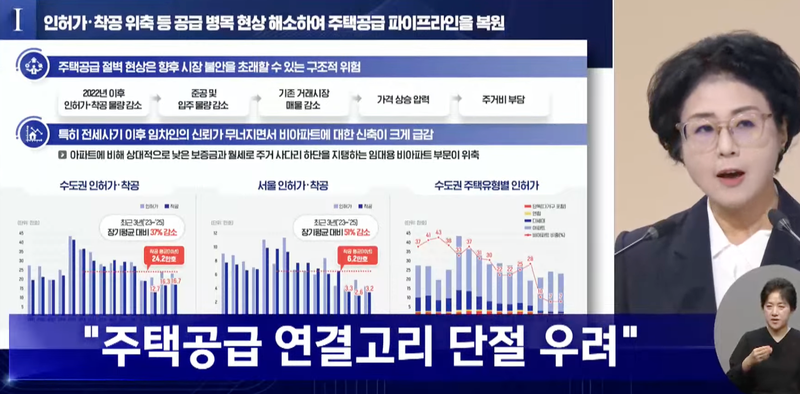
" 'Splitting into 19-unit units' and ownership dispersion On-site, the so-called 'supply of 19 units,' where the project scale is split to circumvent registration standards, is also pointed out as a problem.
According to a legal interpretation released by the Ministry of Government Legislation in response to a petitioner's inquiry in 2023, the registration standard under the Housing Act is based on the annual volume supplied by the developer, not on a single individual building.
In principle, if the same developer supplies 19 units of multi-unit housing multiple times, constructing 20 or more units annually, they are subject to registration.
However, in practice, there are many cases where it is difficult to identify the actual project owner because separate legal entities are established for each project site, or the names of the building owner and land owner differ.
Real estate experts state that even if a developer who experienced problems in one project re-enters the market under a different legal entity, it is difficult to verify their past supply records or accident history.
Research Fellow Kim stated, "It is necessary to manage supply records, defects, and security deposit accident history in an integrated manner at the developer level, rather than at the project site level.
" The low barrier to entry has amplified risks, coupled with business methods that rely on Jeonse security deposits.
/ Photo = Newsis Non-apartment housing, represented by villas, is not a preferred residential area that people want to live in, but rather a residential area driven by demand where people have no choice but to live. Non-apartment housing, often called the very end of the housing ladder, is a place where residents and experts are contemplating how to make it a preferred residence.
Some developers repaid loans and construction costs using proceeds from presales or Jeonse security deposits after purchasing land and completing construction.
/ Photo = Newsis Non-apartment housing, represented by villas, is not a preferred residential area that people want to live in, but rather a residential area driven by demand where people have no choice but to live. Non-apartment housing, often called the very end of the housing ladder, is a place where residents and experts are contemplating how to make it a preferred residence.The problem arises when projects are pursued based on high Jeonse security deposits while having almost no equity capital.
If housing prices fall or new tenants cannot be found, the security deposits of existing tenants cannot be returned.
Some newly built villas were traded by matching the sale price with the Jeonse deposit, then transferring ownership to buyers without equity.
This is the background that made so-called "capital-free gap investment" possible.
Yoo Seon-jong, a professor of real estate at Konkuk University, explained, "As Jeonse deposits effectively served as the final source of funds for housing projects, 'villa kings' and capital-free gap investment emerged.
" Risks Unidentifiable Even from the Registry Jin Mi-yoon, a professor at Myongji University's Graduate School of Real Estate, is giving a presentation on the topic of "Measures to Expand Housing Supply and Stabilize the Jeonse and Monthly Rent Markets" regarding supply at the National Debate on Real Estate Policy held at the KBS Annex in Yeouido, Seoul, on the 23rd.
Cheong Wa Dae Press Photojournalists.
/Photo=Newsis Although the government has strengthened the obligation of real estate agents to verify and explain details as cases of Jeonse fraud have increased, there are limitations to tenants identifying all risks solely through the Certified Copy of the Land Registry and the Building Register.
/ Photo = Newsis Non-apartment housing, represented by villas, is not a preferred residential area that people want to live in, but rather a residential area driven by demand where people have no choice but to live. Non-apartment housing, often called the very end of the housing ladder, is a place where residents and experts are contemplating how to make it a preferred residence.
This is because it is impossible to verify the landlord's total debt, the risk of security deposit returns for other properties, or the financial status of the actual business entity and related corporations.
/ Photo = Newsis Non-apartment housing, represented by villas, is not a preferred residential area that people want to live in, but rather a residential area driven by demand where people have no choice but to live. Non-apartment housing, often called the very end of the housing ladder, is a place where residents and experts are contemplating how to make it a preferred residence.
" As Professor Jin mentioned earlier, Jeonse fraud has gone beyond the crimes of a few landlords and has led to distrust of non-apartment housing as a whole.
According to the Korea Institute for Human Settlements, damage from Jeonse fraud was concentrated in multi-unit housing and officetels.
2% from 2014 to 2024.
In particular, from 2020 to 2022, contracts were widely signed where the return of security deposits would be difficult even with a slight drop in housing prices, exceeding 90%.
Consequently, a vicious cycle continues where tenants avoid villa jeonse, and actual buyers are reluctant to purchase due to concerns about future price declines and sluggish transactions.
Experts unanimously agree that to normalize the supply of non-apartment housing, the supplier management system must be overhauled before financial support.
Research Fellow Kim stated, "We cannot apply the same standards to large construction companies, but neither can we leave small-scale operators outside the management network," adding, "Market confidence can only be restored by managing, at the operator level, who built the houses with what funds and what accidents they have caused in the past.
"
[email protected] Seo Yoon-kyung Kim Hee-sun Reporter