[Editorial] Growth Above Expectations Calls for Bold Solutions to Youth Joblessness and Polarization
- Input
- 2026-07-23 18:25:48
- Updated
- 2026-07-23 18:25:48
The quality of growth has also improved. Private consumption rose 0.4% as both goods and services increased. Investment in intellectual property products, including research and development and software, also grew 3.3%, a positive sign for expanding the foundation for future growth.
As semiconductor prices rose and the terms of trade improved, real gross national income (GDI) jumped 15.6% from a year earlier. That was the fastest increase in more than 38 years, since the first quarter of 1988. If this trend continues, it could boost companies' investment capacity and households' purchasing power, helping domestic demand recover as well.
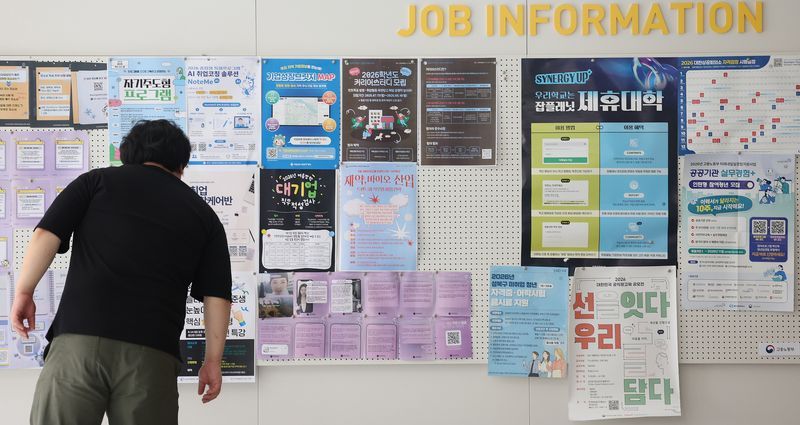
The question is whether the warmth of growth is reaching all citizens evenly. Youth employment statistics released the same day showed the opposite reality. As of May, among young people who had graduated from their final school but still had not found a job, the share who had been unemployed for at least one year stood at 48.6%, the highest since 2009, during the Global Financial Crisis, when it was 51.7%. The share who had gone more than three years without a job also reached 19.4%, the highest since the statistics began. The average time needed to graduate from college rose to about four years and six months, the longest on record. More young people are taking leave from school to prepare for jobs or qualification exams, but the share who had ever experienced employment after graduation fell to 84.8%, the lowest since the data began.
This cannot simply be blamed on young people's expectations or a lack of effort. As companies have shifted to hiring experienced workers and recruiting on an as-needed basis, the door to entry-level hiring has narrowed further. That is also why the share of people preparing for the civil service exam has risen again for the first time in five years.
The real solution is bold structural reform that corrects the concentration of growth gains in a limited group and restores vitality to society as a whole. It is necessary to closely examine why the government's youth-focused measures have failed to produce meaningful results. For companies to expand hiring of young workers, rigid across-the-board annual salary systems, unreasonable demands to extend retirement ages, and the risks of excessive bonus disputes must first be resolved.
As the economy undergoes a sweeping shift driven by Artificial Intelligence (AI) across all sectors, young people are the most vulnerable in the labor market. Recent employment data have confirmed the analysis that AI is taking away young people's first chances. Youth employment support policies must therefore become more specific and more sophisticated. Reducing polarization is also an urgent task that can no longer be put off. It is worth noting the criticism that indiscriminate wage battles by large-company unions deepen the sense of deprivation among workers at partner firms and small businesses. If vulnerable groups continue to suffer from employment and inflation shocks, the improved growth figures will not last long. The government must do everything it can to ensure that the warmth of semiconductor-led growth leads to first jobs for young people and better lives for the public.