Gold and silver prices face an uphill battle to regain early-year highs
- Input
- 2026-07-23 16:01:32
- Updated
- 2026-07-23 16:01:32
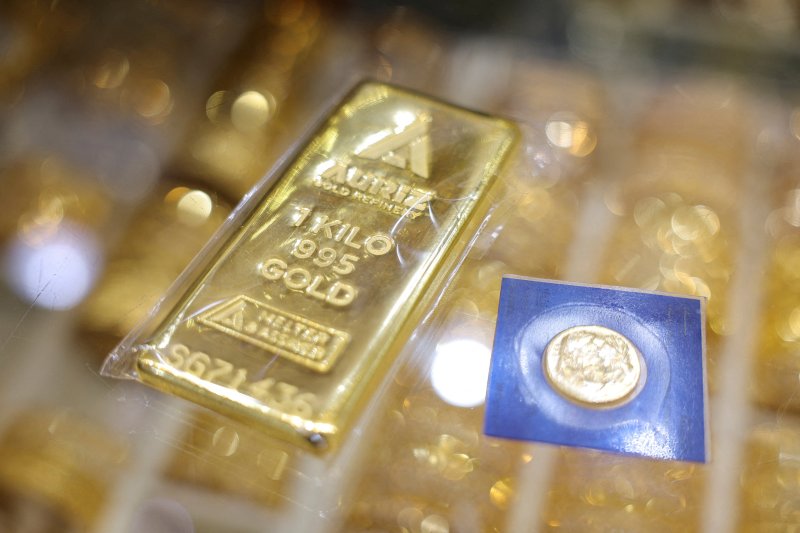
[Financial News] Prices of precious metals such as gold and silver, which have recently been rebounding, will likely face a difficult path before returning to the all-time highs set in January, CNBC reported on the 23rd, local time.
In trading at 6:33 a.m. Eastern Time on the 23rd, 7:33 p.m. on the 22nd in Korea, spot silver rose about 6.3% from the previous week’s close to $59.47 per ounce, or 31.3 grams. Over the same period, spot gold also gained 2.4% and traded at about $4,119.04 per ounce.
Warren Patterson and Iwa Mantei, commodity strategists at Dutch multinational bank ING Group, said in a report that the latest rally was "more the result of bargain hunting after recent weakness than a meaningful shift in the geopolitical or macroeconomic backdrop."
Gold and silver had extended a sharp rally through 2025 and into early this year, before setting fresh record highs at the end of January at $5,589.38 and $121.67 per ounce, respectively. Since then, however, upward momentum has slowed as the Federal Reserve System (FRS) has kept interest rates high, the dollar has strengthened, and oil prices have risen on the Iran war.
ING analysts added that "tensions in the Middle East are supporting precious metal prices, but the market is also weighing slowing U.S. economic data against inflation risks from higher energy costs." They said that "gold will be sensitive to energy markets and the outlook for U.S. monetary policy, while silver could outperform gold as improving sentiment toward industrial metals such as copper combines with safe-haven demand."
By contrast, analysts at Bank of America said gold could fall further. They pointed to the fact that the gold market posted its worst quarter in 13 years in the second quarter, from April to June, and said risks in the market remain.
In a report, BofA warned that "the emergence of a death cross, a technical bearish signal in which the 50-day moving average falls below the 200-day moving average, and excessively large net long positions show similarities to past major market tops, raising the risk of a longer and deeper correction."
Swiss investment bank UBS also expressed skepticism about silver’s rebound potential. UBS advised investors to delay entry into silver and lowered its target entry price from around $55 per ounce to the $48-$50 range.
Dominic Schneider, a strategist at UBS, said that "short-term headwinds will continue as heightened tensions in the Middle East, rising opportunity costs and a strong dollar weigh on investor sentiment," adding that "silver has not yet found a solid floor."
Still, there is no shortage of arguments that the long-term fundamentals for precious metals remain solid. Diane Garrett, CEO of U.S. mining developer Hycroft Mining, told CNBC in an interview that the recent price decline was "a normal correction in a bull market."
Garrett said that "the fundamentals for commodities remain very strong, and gold in particular has overtaken U.S. Treasuries to become the top asset class, forming a core pillar of the financial system." She added that central bank gold buying has continued for 17 consecutive months amid a trend in which countries do not want to hold assets backed by other nations’ debt.
She also said silver is "more than just a monetary metal" and called it an indispensable industrial metal for the AI Revolution and supercomputer manufacturing, forecasting stronger long-term demand.
[email protected] Yoon Jae-jun Reporter