Surge in Ship Attacks and Houthi Declaration of Red Sea Blockade Send Strait of Hormuz Traffic Tumbling
- Input
- 2026-07-23 13:02:41
- Updated
- 2026-07-23 13:02:41
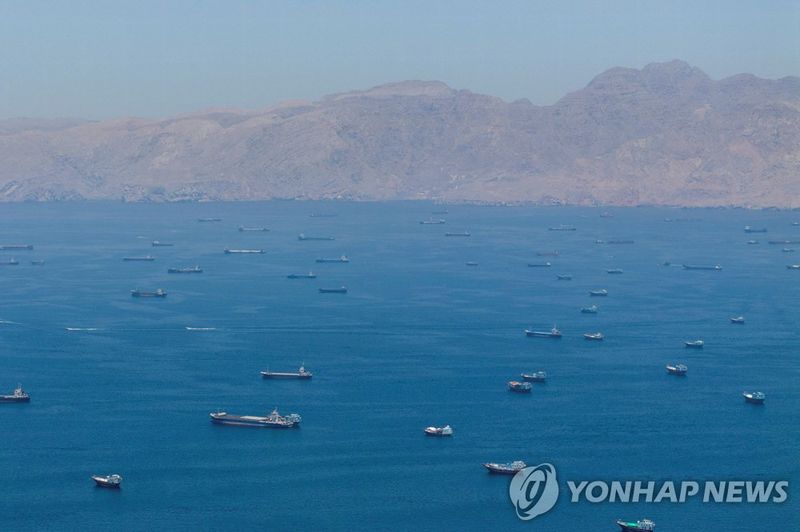
[Financial News] Ship attacks in the Strait of Hormuz have risen again, sending traffic through the waterway sharply lower. The likelihood of higher shipping and fuel costs is also increasing once more.
According to the Korea Maritime Institute (KMI) on the 23rd, the institute published its "International Supply Chain Risk Monitoring Report for the Third Week of July" on the 22nd.
The report showed that weekly vessel traffic in the Strait of Hormuz in the third week of July fell to 120 ships, down 52.2% from the previous week, or 131 ships. That is only 14% of last year's normal weekly traffic of 845 ships, underscoring the renewed slowdown.
The risk premium has also widened again. The Middle East-China crude freight index (BDTI TD3C) stood at 373 as of the 17th, up 11.7% from the previous week. That is 78.3% higher than the week before the war began.
As attacks on ships in the Strait of Hormuz increase, rerouted exports through Yanbu Port in the Red Sea are also surging. However, that route is now under threat as well, because the Houthis have declared a maritime blockade of the Red Sea.
In the third week of July, crude tanker traffic in the Gulf of Aden rose 38.3% from the previous week to 83 vessels, indicating that rerouted shipments via the Red Sea and the Gulf of Aden are increasing. But the situation changed abruptly on the 20th, when the Houthis declared a maritime blockade on Saudi Arabia and warned they would block traffic through the Bab-el-Mandeb Strait.
As a result, the VLCC Jinlongyanghao, a COSCO vessel carrying 2 million barrels of crude oil from Yanbu Port to China, reportedly made a sudden U-turn in the southern Red Sea on the 21st. The ship chose a route that bypasses the Gulf of Aden and instead goes through the Suez Canal, the Mediterranean Sea, and around the Cape of Good Hope, deepening concerns that shipping costs will rise further.
An official from the KMI Hormuz emergency response task force said, "We are now facing a 'double chokepoint' situation, with the Bab-el-Mandeb in the Red Sea threatened after the Strait of Hormuz." The official added, "If a Red Sea blockade becomes reality, there are concerns about disruptions to cargo moving through the East–West Crude Oil Pipeline."
[email protected] Byun Ok-hwan Reporter