Will the U.S. Help Saudi Arabia Go Nuclear? Doubts Mount Over Atomic Agreement
- Input
- 2026-07-23 11:56:47
- Updated
- 2026-07-23 11:56:47
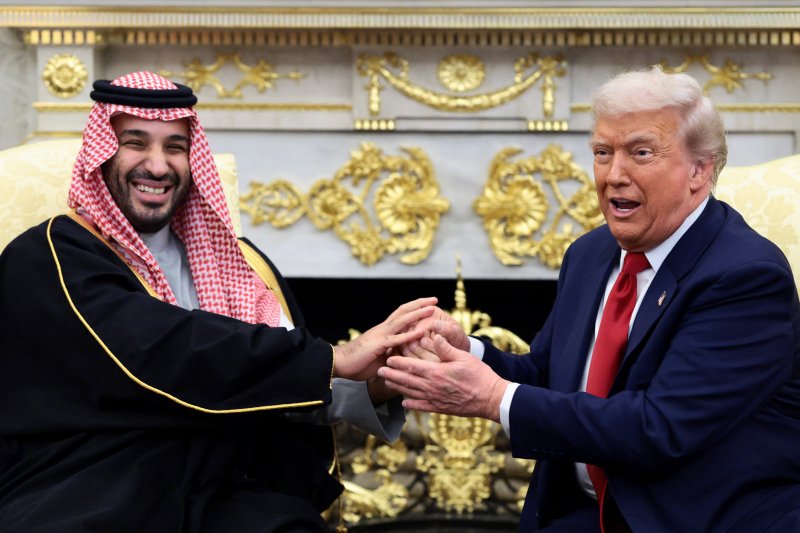
[Financial News] As the United States approves nuclear-related exports to its close ally Saudi Arabia, concerns are growing that a second nuclear-armed state could emerge in the Middle East. Foreign media outlets have argued that the agreement lacks safeguards to prevent nuclear development.
No nuclear 'safety pin' in the atomic agreement
According to foreign media outlets including The Wall Street Journal (WSJ), the United States and Saudi Arabia's energy ministries each issued statements on the 22nd (local time) saying the two countries had signed a "peaceful nuclear cooperation agreement." Under Section 123 of the U.S. Atomic Energy Act of 1954, the U.S. government first concludes a basic agreement that defines the scope and obligations when transferring U.S. nuclear equipment, technology and nuclear materials to a foreign country. It is commonly known as a "123 agreement." The "Korea-U.S. atomic energy agreement," signed with the United States in 1956 and repeatedly extended since then, is also one of the many 123 agreements the U.S. has concluded.The U.S. Department of Energy said the agreement "maintains high standards for nuclear safety, security and nonproliferation," but did not disclose the specific terms. The department said it will send the agreement to the U.S. Congress, which will review it for 90 days before deciding whether to approve it.
Foreign media outlets, citing officials, said this agreement differs from other 123 agreements. Standard 123 agreements include provisions requiring recipient countries to forgo domestic uranium enrichment and spent nuclear fuel reprocessing. This is often called the "gold standard." Enriching uranium beyond a certain level and reprocessing spent fuel can produce highly enriched uranium and plutonium, both of which are materials used in nuclear bombs.
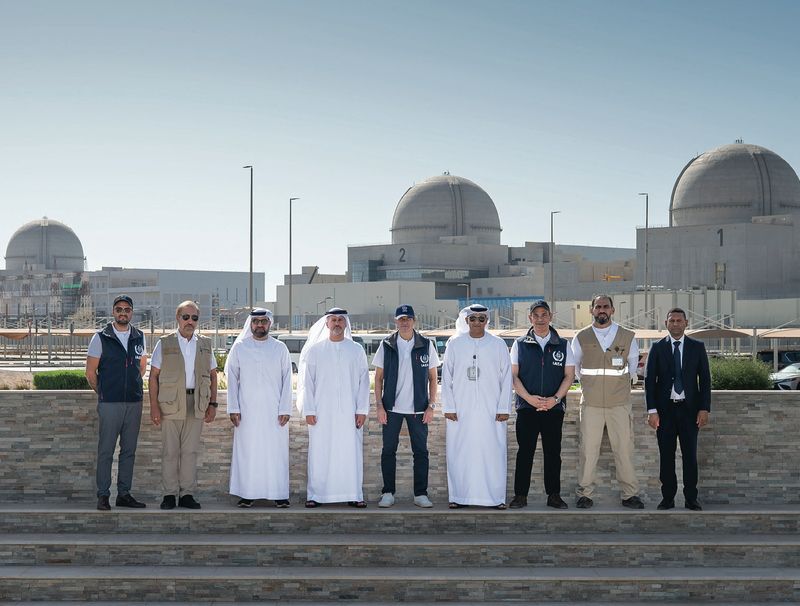
In the case of the United Arab Emirates (UAE), which signed a 123 agreement with the United States in 2009, it accepted the gold standard. The UAE also signed an additional protocol allowing broad inspections and verification by the International Atomic Energy Agency (IAEA). Foreign media reported on the 22nd that both the gold standard and the additional protocol were omitted from the U.S.-Saudi agreement. That could become an issue when the U.S. Congress reviews the deal.
The WSJ said the agreement would allow the United States to help Saudi Arabia build nuclear power plants and transfer uranium enrichment and spent fuel reprocessing technology for reactor fuel. The Associated Press (AP) reported that the agreement is valid for 30 years and that, depending on the results of a joint investigation, U.S. companies may be allowed to build uranium enrichment facilities in Saudi Arabia.
It may also be one of Trump's cards to win over Saudi Arabia
Rosemary Kelanic, director of the Middle East program at the U.S. think tank Defense Priorities, said it would be "very shocking" if the agreement really includes a clause allowing Saudi Arabia to build uranium enrichment facilities. She stressed, "The United States has never done this before. The U.S. has never helped another country enrich uranium on its own."U.S. Secretary of State Marco Rubio said at the Association of Southeast Asian Nations (ASEAN) foreign ministers' meeting in Manila, the Philippines, on the 22nd that "the United States will not enter into any agreement with any country in the world that leads to nuclear proliferation risks."
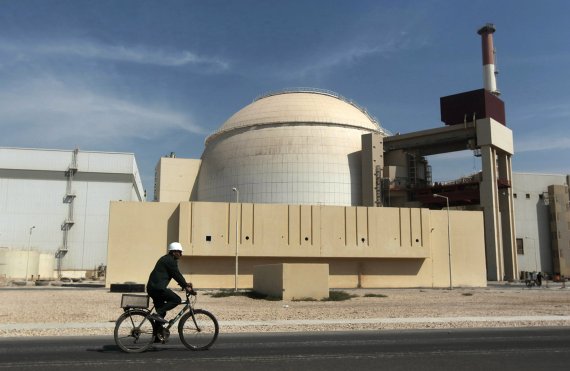
In response, Democratic Senator Edward Markey of Massachusetts criticized Rubio and U.S. President Donald Trump in a statement, calling the move "as reckless as it is hypocritical." He said, "The Trump administration is starting a war with Iran under the pretext of preventing Iran from obtaining nuclear weapons, while allowing Saudi Arabia, an aggressive and authoritarian state, to develop nuclear weapons technology."
The U.S. decision may also be linked to Trump's Middle East strategy. During his first term in 2020, he brokered the Abraham Accords, which sought to normalize relations between Israel and Middle Eastern countries, and tried to build a pro-U.S. bloc against Iran. During the negotiations, Saudi Arabia drew a line by pointing to Israel's nuclear weapons capability, which is widely believed to make it a de facto nuclear power, and said it would not give up nuclear-related technologies such as uranium enrichment. At the same time, Crown Prince Mohammed bin Salman Al Saud, who holds the real power in Saudi Arabia, is pushing to build nuclear power plants to improve the kingdom's power generation structure, which relies on natural gas for 68% and oil for 32% of electricity production. In a 2018 interview with CBS, he declared, "If Iran develops a nuclear bomb, Saudi Arabia will follow suit."
Meanwhile, Israel, which is watching Washington closely amid the war with Iran, has so far refrained from any official backlash. Nir Barkat, Israel's economy and industry minister, said in a radio interview, "If they want it for peaceful purposes, meaning energy needs, we can live with that."
[email protected] Park Jong-won Reporter