Automakers say new car prices are likely to rise as memory chip prices surge sixfold
- Input
- 2026-07-23 09:56:05
- Updated
- 2026-07-23 09:56:05
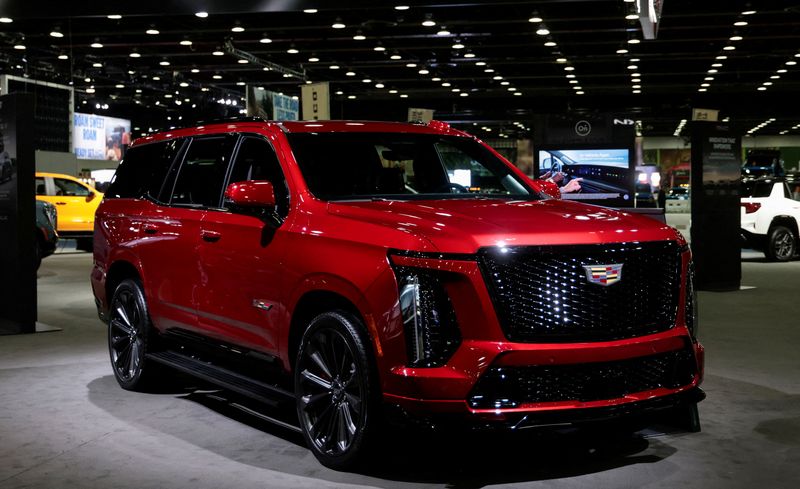
[Financial News, Tokyo = Seo Hye-jin, correspondent] Nikkei Asia reported on the 23rd that the global automaking industry is facing pressure to raise new car prices as the AI investment boom pushes up memory semiconductor prices. The impact stems from memory makers shifting production capacity toward high-performance chips for AI, which has reduced supply of automotive DRAM and sent prices up sixfold over the past year.
General Motors (GM) expects additional costs of $1.5 billion to $2 billion this year from higher raw material prices, excluding the impact of tariffs. Paul Jacobson, GM's Chief Financial Officer (CFO), said during an earnings call on the 22nd that "the cost burden will grow even heavier in the second half of the year."
GM did not disclose a detailed breakdown of the costs, but cited the sharp rise in DRAM prices as one of the main factors. According to Morgan Stanley, DRAM prices have climbed about sixfold over the past year on the back of stronger AI demand.
Rising memory use in each vehicle is also adding to cost pressures. As electronic features such as Advanced Driver Assistance System (ADAS), smart cockpits and AI chatbots expand, memory is taking up a growing share of vehicle manufacturing costs.
According to AlixPartners, AI accounted for 32% of total DRAM demand last year, and that share is expected to rise to 48% by 2028. Automotive demand makes up only about 10%, but if AI and data centers absorb half of total supply, price pressures on other industries are bound to intensify.
Concerns about supply shortages are also mounting. As global memory makers concentrate production capacity on high-performance semiconductors for AI, supply for automotive memory is tightening relative to demand.
A purchasing manager at a Japanese auto parts company said, "Global memory output is increasing, but very little of it is making its way to the automotive industry."
Automakers are moving to secure long-term contracts in preparation for supply shortages next year and beyond. GM and Ford Motor Company signed long-term supply agreements with U.S. memory maker Micron this month. Seven auto parts companies, including Denso and Astemo, also signed long-term contracts with Micron last week.
The burden is even greater for China's auto industry. According to Huatai Securities, as of November last year, the memory cost in a Chinese-made vehicle exceeded $70, the highest level in the world. That is more than twice the roughly $30 seen in Japanese vehicles.
Chinese automakers are increasing memory use as they rapidly expand smart cockpits, AI chatbots and advanced driver assistance features. Although the Chinese government is pushing for domestic semiconductor production, automotive memory still depends heavily on suppliers in South Korea and the United States. Safety validation alone takes two to three years, making it difficult to switch supply chains quickly.
Zhang Xinghai, chairman of Seres Group, said last month that "the surge in memory prices is the biggest challenge facing the auto industry" and added that "automotive memory prices have recently risen fivefold."
Chinese electric vehicle maker BYD Company Limited (BYD) raised the price of its driver-assistance features, sold separately from the vehicle, by 20% in May. BYD said the move was intended to maintain high quality amid global memory price increases. Even BYD, which had recently led price competition in China's auto market, has now moved to raise prices.
In South Korea, efforts to strengthen supply chains are also gaining momentum. Hyundai Mobis Company Limited (Hyundai Mobis) has proposed cooperation on domestic production of automotive semiconductors and supply chain strengthening to 23 major semiconductor-related companies in South Korea, including Samsung Electronics.
Industry watchers say that if memory prices continue to rise next year and beyond, automakers will ultimately have no choice but to raise new car prices.
GM expects average new vehicle prices in North America to rise 0.3% this year. That is an upward revision from its previous forecast of flat prices or a 0.3% decline. After 2028, the company plans to expand sales of large gasoline-powered vehicles, where passing on costs is relatively easier, instead of low-margin electric vehicles.
New car prices in the United States are already high. According to market research firm Edmunds, the average new car price in the U.S. last year was $48,000, about 30% higher than in 2019. By contrast, the share of new cars priced at $25,000 or less has fallen to about one-fifth of the 2019 level.
[email protected] Seo Hye-jin Reporter