"Down 39% — Is This the Bottom?" Samsung Electronics and SK hynix Draw in 3 Trillion Won in Foreign Buying... Even Morgan Stanley Changes Its Tune
- Input
- 2026-07-23 07:14:04
- Updated
- 2026-07-23 07:14:04
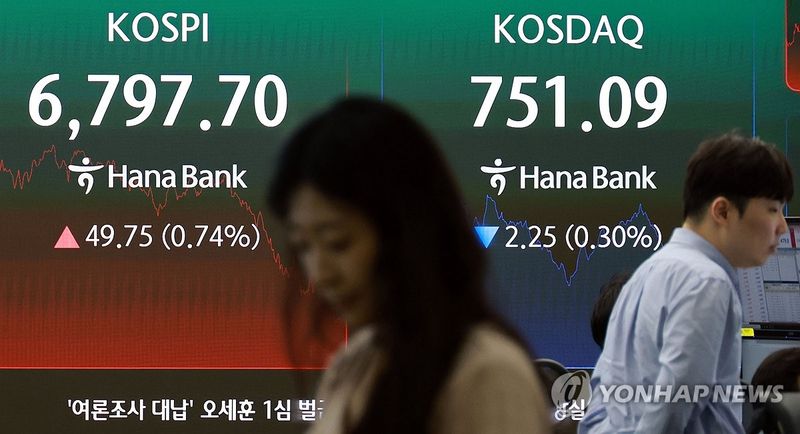
[Financial News] After the country’s leading semiconductor stocks plunged 30% to 40% in just one month, foreign investors stepped in to buy the dip, snapping up more than 4 trillion won worth of shares. Even Morgan Stanley, a global investment bank that had urged investors just two weeks ago to cut semiconductor exposure, has changed its stance, calling it a "buying opportunity."
Foreign investors absorb retail and institutional selling, signaling a subtle shift
According to the Korea Exchange on the 23rd, foreigners were net buyers of 457.71 billion won on the Korea Exchange Main Board over the past three trading days. Their purchases were concentrated in Samsung Electronics, with 156.38 billion won, and SK hynix, with 148.19 billion won.
In particular, they bought 262.11 billion won worth of shares in a single day the previous day, the largest amount in more than two months. On the same day, individuals and institutions were net sellers of 121.77 billion won and 139.61 billion won, respectively.
Backed by foreign buying, the KOSPI briefly recovered the 7,000 level during intraday trading. But it gave back most of those gains in the afternoon as profit-taking orders flooded in, closing 0.74% higher at 6,797.70 from the previous session.
SK hynix also rose more than 9% during the day and briefly reclaimed the 2 million won level, but it fell sharply in the afternoon and ended trading down 0.33% at 1.83 million won. Since hitting a closing high on March 22 last month, SK hynix has fallen 39.57%, while Samsung Electronics has dropped 31.94% over the same period. Market attention is now focused on whether the foreign capital flow has turned into a lasting trend.
"Cut exposure" recommendation from Morgan Stanley turns into a "buying opportunity" in two weeks
Meanwhile, Morgan Stanley said in a report on the 5th (local time) that the narrow rally centered on semiconductors was ending and that market leadership was broadening, recommending a short-term reduction in semiconductor exposure and an increase in hyperscaler holdings.
But on the 20th (local time), Morgan Stanley analyst Joseph Moore said the current memory cycle is unusual and different from past cycles because it is being driven solely by demand from AI data centers. He added that he sees the recent weakness in share prices as "an excellent buying opportunity."
[email protected] Sung Min-seo Reporter