Stocks That Halved in a Month: Even After Upgrades, Some Fell as Much as 54% [Why the Market Moves]
- Input
- 2026-07-23 06:10:00
- Updated
- 2026-07-23 06:10:00
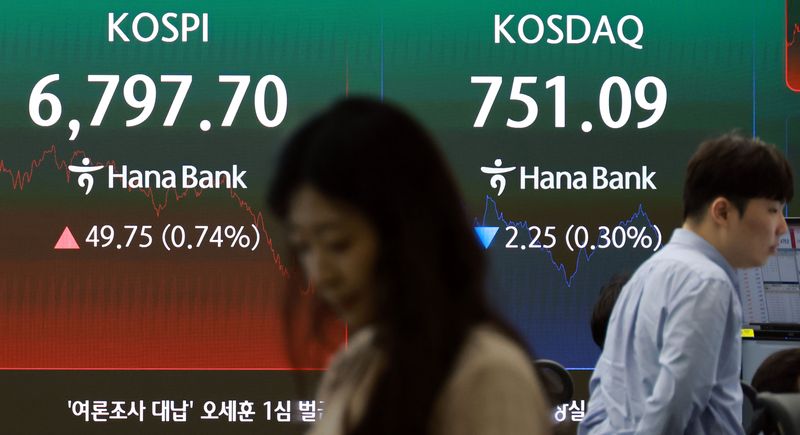
[Financial News] Over the past month, the KOSPI's biggest losers were largely the market leaders from the first half of the year. Analysts say profit-taking was concentrated in stocks that had surged on expectations for new businesses, the value of their holdings, and shareholder returns.
According to the Korea Exchange on the 23rd, the biggest decliners on the KOSPI from June 22 through the previous day included Kolon Group (-53.65%), Hyundai AutoEver (-39.35%), Samsung Life Insurance (-35.61%), Hanwha Ocean (-34.66%), and SK hynix (-33.79%). Preferred shares such as Jinheung Construction 2 Preferred B (-61.86%), CJ Food 1 Preferred (-57.10%), and KleanNara Preferred (-50.41%) also appeared on the list in large numbers.■ A correction after rosy forecastsHyundai AutoEver's decline was especially dramatic. The stock had risen rapidly after emerging as a key beneficiary of Hyundai Motor Group's software-defined vehicles (SDVs), smart factories, AI data centers, and robotics businesses. But it fell 39.35% over the past month as expectations for when those new businesses would begin contributing to earnings weakened.
On the 9th, Korea Investment & Securities maintained its target price at 950,000 won, citing the Saemangeum AI data center, graphics processing unit (GPU) infrastructure, and robot systems integration (SI) business. Yet just 12 days later, on the 21st, NH Investment & Securities cut its target price for Hyundai AutoEver from 770,000 won to 640,000 won. In the end, the stock was driven more by the timing of earnings contributions from new businesses than by growth potential itself.
Kolon Group fell 53.65% over the past month, marking the steepest drop among common shares. Just two months ago, Hanwha Investment & Securities had raised its target price from 90,000 won to 100,000 won on expectations of a recovery in Chinese consumption, but profit-taking later piled in.
Samsung Life Insurance also rose mainly on the value of its Samsung Electronics stake rather than on its core insurance business. NH Investment & Securities raised its target price to reflect the increase in the value of its holdings as Samsung Electronics climbed, but Samsung Life Insurance later widened its losses as Samsung Electronics corrected.■ Preferred shares gave back their 'expectation premium' firstPreferred shares were no exception. Because they trade less actively, their bid prices can fall quickly during market selloffs, making them more volatile.
During the earlier rally, hopes that revisions to the Commercial Act would narrow undervaluation helped lift preferred shares. Kim Soo-hyun, head of the research center at DS Investment & Securities, said, "As the revision to the Commercial Act strengthens shareholder rights, the price gap between preferred shares and common shares could also narrow." But once the stock market correction began in earnest, low liquidity came into focus more than hopes of closing the valuation gap, and preferred shares saw steeper declines.
An industry official in the securities sector said, "The stocks that fell the most recently were not companies whose business conditions suddenly worsened, but rather those whose future growth potential had already been priced in during the rally." The official added, "When market volatility rises, the first thing to be reversed is not earnings, but the expectation premium that had been reflected in share prices ahead of time."
[email protected] Choi Du-seon Reporter