Prosecutors Shed the Stigma of Being a "Handmaiden of Power" and a "Lapdog of the Administration" as They Fold Their Knives [News Analysis from the Editorial Desk]
- Input
- 2026-07-22 18:07:52
- Updated
- 2026-07-22 18:07:52
The prosecution was launched in August 1948, when the Prosecutors' Office Act was enacted just before the government was established. It was the nation's top law enforcement body, overseeing investigations and holding exclusive authority to indict.
The prosecution's investigative authority was established under the Prosecutors' Office Act enacted in 1948 and was guaranteed from the time the government was founded. The first Prosecutor General appointed by President Syngman Rhee was Kwon Seung-ryeol. Like Kim Byung-ro, the first Chief Justice of the Supreme Court of Korea, he had been an independence activist and an anti-Japanese lawyer. Despite Rhee's order not to indict him, he prosecuted Im Young-shin, the Minister of Commerce and Industry, over a bribery case. The Seoul District Prosecutors' Office was led by Choi Dae-gyo at the time.
During the drafting of the Criminal Procedure Act of the Republic of Korea in 1954, a heated debate broke out over whether prosecutors should retain investigative authority. Some argued that police should be given independent investigative powers, but many opposed the idea. Among the opponents were Assemblyman Eom Sang-seop, a former prosecutor, and Prosecutor General Han Gyeok-man. Eom said, "Our country has a centralized police system. If we give police full investigative authority, won't that create police fascism? Wouldn't the tendency toward police fascism be stronger than prosecution fascism?" He added, "It is better for prosecutors to take the lead in criminal investigations, but in the future, it would be good for our country to move toward separating investigative and prosecutorial powers." Han argued, "In theory, it is legally sound to leave investigations to the police and give prosecutors only the power to indict. But perhaps in 100 years, I don't know. For now, I believe it is appropriate to give prosecutors investigative authority."
In the end, the National Assembly decided to grant prosecutors investigative authority and passed the Criminal Procedure Act on September 23, 1954. Looking at the early legislative process, the Assembly appears to have agreed in principle with separating investigations from indictments, while also giving prosecutors investigative powers to balance the authority of prosecutors and police. In the years after liberation, police power was even stronger than it is today. The shadow of the Japanese colonial police, which had been a tool of oppressive rule, still hung over the Rhee administration, and public sentiment toward the police was poor. "Fascism" can be understood as coercive power, and the argument that police fascism, more than prosecution fascism, should be guarded against gained traction.
Against that political backdrop, prosecutors secured investigative authority and exercised both investigative and prosecutorial powers while checking the police. Prosecutors and police each held investigative powers and engaged in a struggle for dominance. The top leadership used both institutions to maintain power. In particular, the police were used not only for public order but also for anti-communist and anti-opposition purposes. Police power, aligned with the regime, was also formidable.
The police's status declined after the fall of the First Republic. To prevent police officers involved in the March 15 rigged election from becoming mere servants of the regime, the Constitution of the Second Republic explicitly guaranteed police neutrality. In 1961, the authority to request arrest warrants was limited to prosecutors, a move intended to check the police. At the time, the aim was not so much to strengthen prosecutorial power as to maintain balance and mutual oversight between prosecutors and police. The issue of police neutrality was later left unresolved by subsequent constitutional revisions.
Some say the Park Chung Hee regime strengthened prosecutorial power in order to use prosecutors, but that is not necessarily true. From the perspective of the top ruler, prosecutors and police were essentially the same. During the Park era, the police were part of the Ministry of Home Affairs. There was no reason to favor one side of the prosecutors-police divide over the other. Both prosecutors and police were equally subordinates of power. They were simply siblings with the top ruler as their parent. Still, as prosecutorial power gradually grew, the police, feeling intimidated, longed for the day they could exercise investigative authority on their own.
Thanks to reform that completely stripped prosecutors of investigative authority, the police finally achieved their long-held goal. That does not mean the police are now less tied to the top leadership or more neutral. It has nothing to do with police neutrality. The police neutrality effort that failed in the early 1960s resurfaced in 1988, shortly after the June 29 Declaration. At the time, the ruling and opposition parties agreed on measures to guarantee police neutrality, and the National Security Headquarters under the Ministry of Home Affairs was separated into the National Police Agency. The police commissioner was to be appointed by the president on the recommendation of the minister of home affairs, with the consent of the Police Commission.
However, the National Police Agency remained a subordinate agency under the Ministry of Home Affairs and was far from fully independent. In reality and in form, few people regard the current police as neutral. The Police Commission is little more than a hollow shell. The Yoon Suk Yeol government strengthened control over the police by establishing a police bureau within the Ministry of the Interior and Safety. The Lee Jae Myung administration abolished the police bureau, but that does not mean police independence has been strengthened.
So how, and from when, did prosecutorial power become so bloated that it could suppress the police? During the Park Chung Hee era under the Third and Fourth Republics, the prosecution's power as a state authority was relatively weak. Intelligence agencies such as the KCIA and the Defense Security Command held far greater power. Major public security cases, including anti-communist and student protest cases, were mainly investigated by those two agencies, while prosecutors handled only supplementary investigations and indictments. Prosecutorial power rose during the Fifth Republic. At the center of that rise was the Supreme Prosecutors' Office's Central Investigation Department. Of course, there was also a separate Public Security Department that handled public security cases.
The roots of the Supreme Prosecutors' Office's Central Investigation Department lie in the Supreme Prosecutors' Office Central Investigation Bureau contained in the Prosecutors' Office Act enacted after liberation. It had the authority to investigate, direct, and supervise important crimes. It was formally launched in April 1961. In January 1973, it was renamed the Special Investigation Department and began handling cases directly ordered by the regime or the Prosecutor General. The Chun Doo-hwan regime used the existing power structure while also expanding prosecutorial authority. In 1981, the rank of new prosecutors was raised to Grade 3, a senior civil service level, and the overall ranking system for prosecutors was upgraded. To align with the Court Organization Act, new ranks were created, including Prosecutor General, High Prosecutor, Chief Prosecutor, Senior Prosecutor, and Prosecutor.
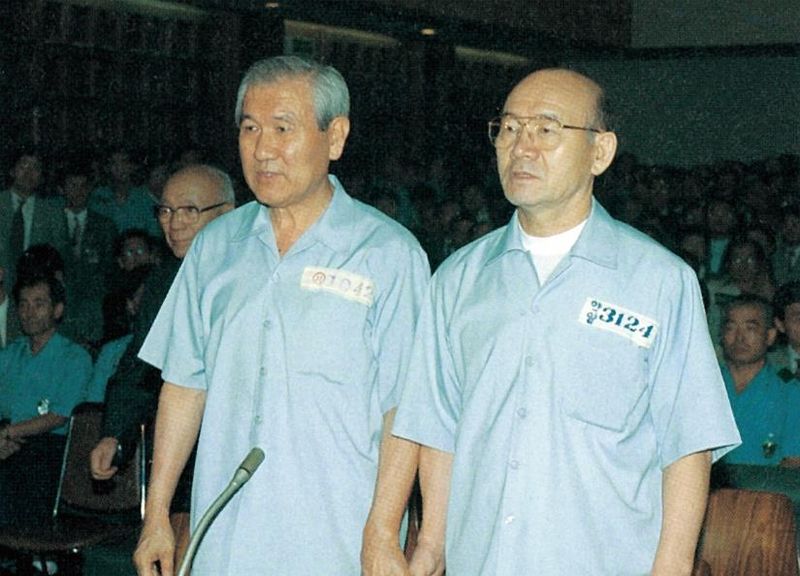
The Central Investigation Bureau was also renamed the Central Investigation Department and began in earnest to investigate cases ordered by the Blue House or the Prosecutor General. It uncovered major corruption scandals such as the financial fraud case involving Jang Yeong-ja and Lee Cheol-hee, as well as the Myeongseong case. Under the Roh Tae-woo administration, the introduction of a fixed term for the Prosecutor General appeared to guarantee neutrality, but the status and role of the prosecution did not change. Handling the Fifth Republic corruption cases, the Suseo case, the Yulgok Project corruption case, the December 12 coup investigation, the slush fund cases involving Chun Doo-hwan and Roh Tae-woo, and the Hanbo scandal, prosecutors enjoyed their peak. The term "prosecution republic" became commonplace.
Looking at these cases, it is true that the prosecution made a meaningful contribution to rooting out major corruption. At first glance, prosecutors appeared to wield a righteous sword. Emphasizing "investigations without sacred cows," they prided themselves on doing their job. By declaring a "war on crime" and cracking down on gangsters and drug offenders, they also projected the image of a top investigative agency focused on public safety and everyday life.
The prosecution suppressed student and labor movements, created a climate of public-security politics, and acted as a direct loyal force for regime survival. Investigations into politically ordered cases were routinely assigned to prosecutors. The alleged inducement of the Korea Minting and Security Printing Corporation strike and the "dress lobbying" scandal were also of this type. Accusations of targeted investigations and political prosecutors poured in. There were also internal rebellions within the prosecution. In early 1999, then Daegu High Prosecutors' Office chief Shim Jae-ryun, who was under pressure to resign over a farewell-money scandal, fired a direct shot at the leadership, saying, "Those who turned the prosecution into a handmaiden of political power are hiding their own shame while demanding only that junior prosecutors sacrifice themselves."
The prosecution's power, in collusion with the top leadership, came to be described as omnipotent and arrogant. It used illegal investigative methods, including torture, against forces that resisted power. So-called tailored investigations, unrelated-case investigations, and dragnet-style investigations were among them. Even in cases involving ordinary citizens, the prosecution's fierce authority was no different. There was even a case in which a suspect in an ordinary criminal matter was waterboarded, leading the Prosecutor General to resign.
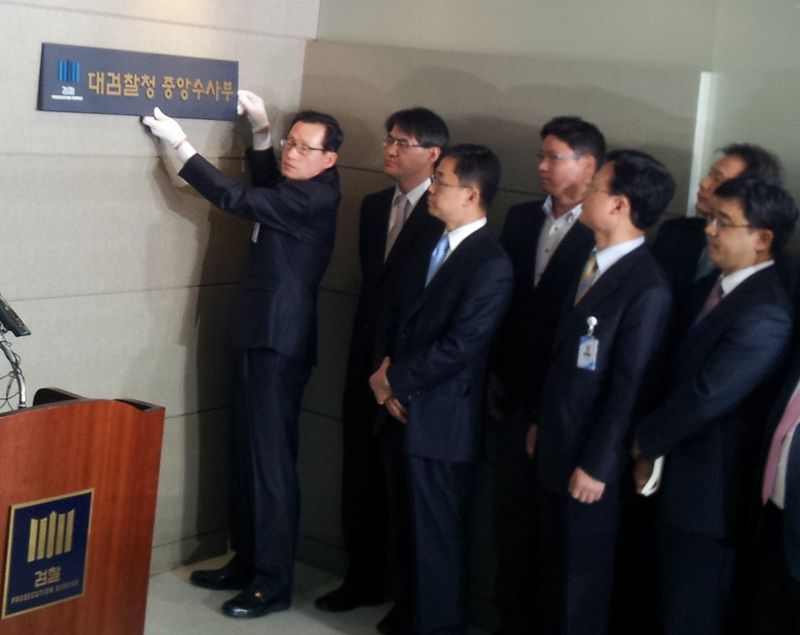
Calls began to grow for checks on the bloated power of a prosecution that held both investigative and prosecutorial authority. The special prosecutor system was introduced, and demands for prosecution reform and the abolition of the Central Investigation Department intensified. The investigation into the Park Yeon-cha scandal, which led to the death of former President Roh Moo-hyun, became the decisive trigger for abolishing the SPO's Central Investigation Department. In April 2013, the Central Investigation Department of the Supreme Prosecutors' Office, which had direct investigative authority, took down its signboard. A total of 31 people served as department heads, with Lee Jong-nam as the first and Kim Kyung-soo as the last.
Every administration has emphasized prosecutorial neutrality, but none put it into practice. The Moon Jae-in government was no different. It used prosecutors as the main force behind investigations into entrenched corruption and turned the prosecution into a pro-government organization. Prosecutors themselves also lost their balance, split by ideology, and followed the changing winds of power.
The police also helped sustain the regime alongside the prosecution. The torture death of Park Jong-chul and the sexual torture case at the Bucheon Police Station were both carried out by police. In investigations of political cases, the police were little more than a subordinate arm of the prosecution. The point was not to hand over investigative authority to the police because they were doing a good job and deserved independence. Even if the prosecution disappears, the police could easily become a second prosecution unless their independence is guaranteed. If supplementary investigative powers are also stripped away, the police could become a giant organization that replaces the prosecution. The Corruption Investigation Office for High-ranking Officials has been established, but it has produced no results in six years since its launch. The Serious Crime Investigation Agency would be created under the Ministry of the Interior and Safety, so it would not be an independent body and would remain within the influence of the administration. If it wanted to, it could easily carry out investigations ordered from the top, just like the SPO's Central Investigation Department once did.
Prosecutorial power became bloated because successive administrations failed to guarantee independence and neutrality and instead used it as a tool of governance. That is the core of the problem. Even if prosecutors are stripped of investigative authority and that power is handed to the police, prosecution reform centered on separating investigative and prosecutorial functions will lose its meaning if the administration simply uses the police to suit its own tastes. Even so, prosecutors retained formidable investigative capabilities. Even if they carried out targeted investigations, their contribution to rooting out major corruption cannot be denied. The question remains whether the police can really match the prosecution's ability to crack down on large-scale corruption.
[email protected] Reporter