"Profit-sharing drains company assets": shareholder group files complaint against Samsung Electronics, SK hynix chiefs and Labor Minister Kim Young-hoon
- Input
- 2026-07-22 13:02:14
- Updated
- 2026-07-22 13:02:14
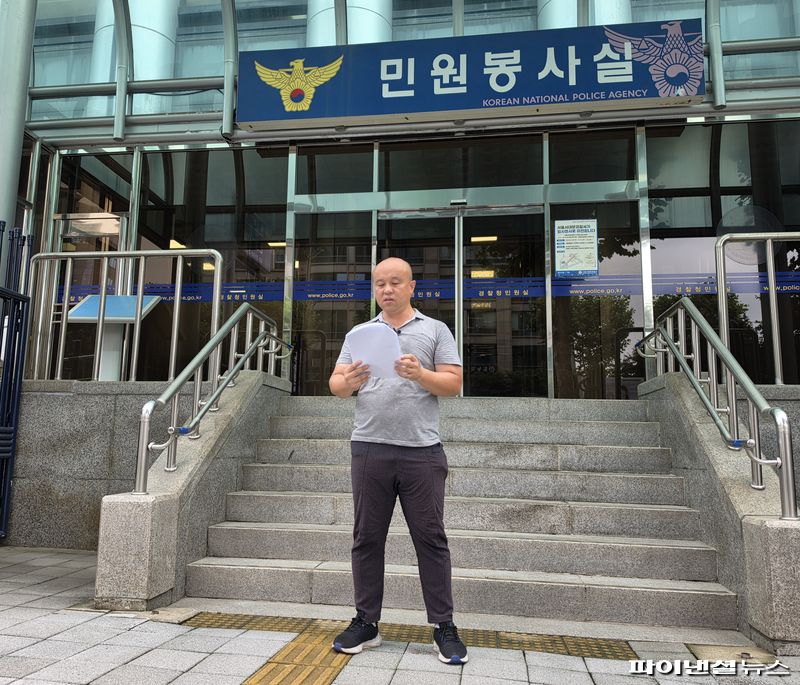
On the 22nd, Min Kyung-kwon, head of the Korea Shareholder Movement Headquarters, submitted a complaint to the National Office of Investigation against Samsung Electronics CEOs Jun Young-hyun and Roh Tae-moon, and SK hynix CEO Kwak Noh-jung, on charges of breach of trust under the Act on the Aggravated Punishment of Specific Economic Crimes. He also filed a complaint against Minister Kim with the Corruption Investigation Office for High-ranking Officials (CIO) on charges of abuse of authority and obstruction of the exercise of rights.
Earlier, Samsung Electronics labor and management agreed to keep the existing operating profit-sharing incentive (OPI) system while creating a special management performance bonus for the Device Solutions Division, using 10.5% of business performance as the funding source and placing no cap on the payout rate. The shareholder group said that if the existing 1.5% OPI funding is added, the total bonus pool amounts to about 12% of business performance.
SK hynix labor and management agreed to abolish the cap on profit-sharing (PS) payments, which had been set at 1,000% of base pay, and to apply a system that uses 10% of annual operating profit as the PS fund for the next 10 years.
The shareholder group stressed that performance bonuses linked to operating profit are not wages paid in return for labor, but rather a post hoc distribution of management results, and therefore cannot be the subject of a labor dispute. It also said a strike to force that demand would not qualify as a legitimate labor action.
Before submitting the complaint, Min held a press conference in front of the National Police Agency and said, "Profit distribution should be carried out in a way that is proposed by management and approved by the shareholders' meeting."
The shareholder group argued that Minister Kim pressured management into reaching an agreement during Samsung Electronics' wage negotiations on May 20 by using the union's announced deadline for a general strike as leverage. The tentative agreement was signed at the Gyeonggi District Employment and Labor Office at around 11:31 p.m., about 30 minutes before the general strike was set to begin.
Min said, "Instead of stopping a strike over demands that are not subject to labor disputes, Minister Kim pressured Samsung Electronics to sign the agreement," adding, "Investigators should look into how he intervened in the negotiations, the chain of instructions and reporting, whether there was interagency consultation, and whether there was an internal legal review."
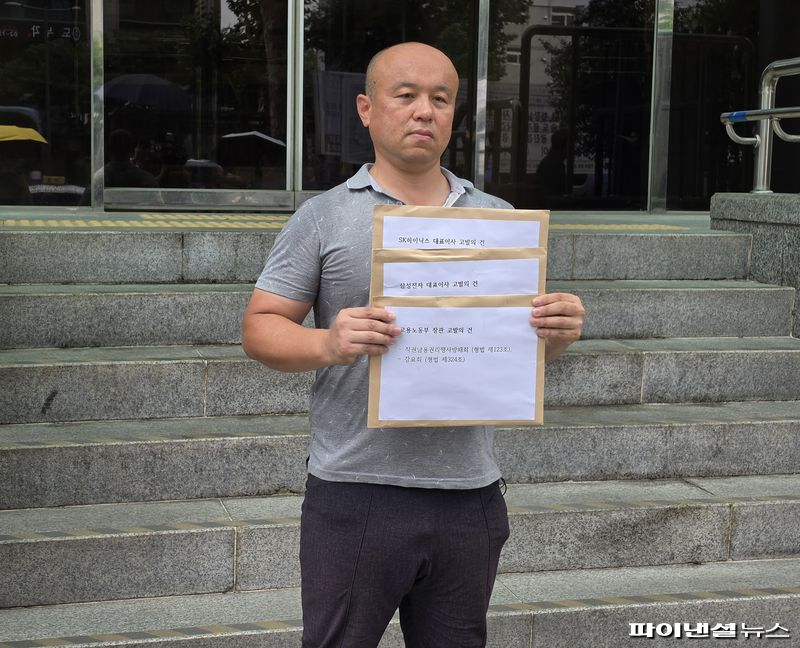
The complaint against the two Samsung Electronics CEOs focused on their responsibility in the process of concluding the agreement. The group argued that they introduced a bonus structure that drains company assets by accepting demands that could not be the subject of a labor dispute, without sufficient legal review. Min said, "Because an agreement that applies across the company cannot be made without the decision and approval of the CEOs, the two are co-principals," adding, "The annual benefit, worth trillions of won, clearly exceeds the 5 billion won threshold for aggravated punishment under the Act on the Aggravated Punishment of Specific Economic Crimes."
In Kwak's case, the complaint said he expanded the operating profit-linked bonus structure and implemented it without strike pressure, thereby violating his duties as CEO. Min said, "If operating profit this year exceeds 200 trillion won, the amount that flows out as bonuses alone is expected to surpass 20 trillion won," and added that he had asked investigators to determine whether there was a board resolution and legal review during the agreement process in September last year.
Meanwhile, President of the United States Lee Jae Myung said at the State Council of South Korea meeting the previous day, "The Yellow Envelope Act has expanded the scope of labor disputes, but won't disputes arise in the field over how that standard is applied?" He added, "Isn't whether something applies or not becoming a social issue, with disputes breaking out everywhere?" He also instructed the Ministry of Employment and Labor (MOEL) to "sort out the guidelines that correspond to the president or enforcement rules before they go to court. That is how social conflict can be reduced."
Min said, "I will do everything I can as the complainant," and added, "I found courage because the president spoke boldly yesterday."
[email protected] Park Seong-hyeon Reporter