Protect Your Scalp From UV Rays or Not? The Truth Behind the Mid-Summer Hat Debate [Hair Loss Inside by Kim Ji-seok]
- Input
- 2026-07-22 11:02:25
- Updated
- 2026-07-22 11:02:25
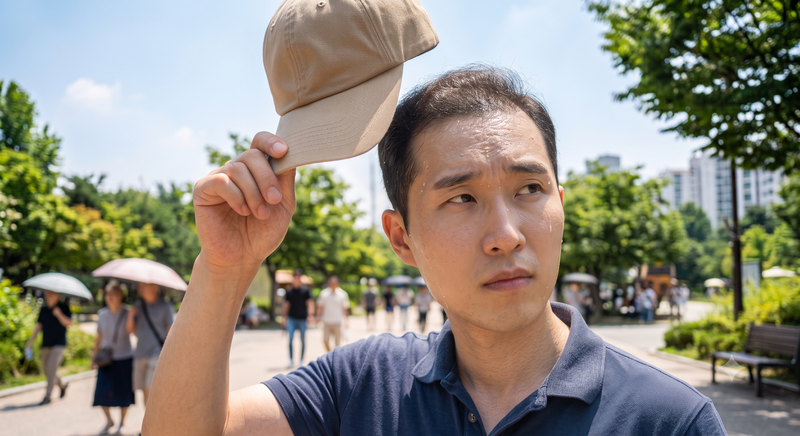
[Financial News] In the hot summer months, hats are a smart item that creates a bit of shade and blocks ultraviolet rays. But some people with hair loss avoid wearing them. They worry that frequent hat use prevents ventilation, worsens scalp conditions, and leads to hair loss. To put it simply, that is not true. For the scalp, UV rays are far more harmful than hats.
Does wearing a hat for long periods allow bacteria to grow on the scalp?
Many people say that wearing a hat for too long blocks airflow and causes scalp problems. The idea is that sweat builds up on the scalp, bacteria multiply, and this can lead to scalp inflammation and even hair loss. But from a medical standpoint, wearing a hat itself is not likely to cause hair loss. In summer, it is actually important to protect the scalp from UV rays, even if that means wearing a hat.
It is well known that ultraviolet rays are bad for the skin. UV exposure causes photoaging, leading to wrinkles, pigmentation, and other skin damage. The scalp is skin too. Repeated exposure increases oxidative stress in the scalp and triggers inflammation. The skin barrier is damaged. This is especially true if hair loss is already progressing, because more of the scalp is exposed to sunlight. In such cases, UV protection becomes even more important.
It is not only the scalp that suffers. Hair is damaged too. Hair is made of protein, and its color is determined by melanin pigment. UV rays break down both protein and pigment. That is why hair becomes dry and brittle after long exposure to sunlight.
Extra caution is needed if you are planning to travel to Southeast Asia or regions near the equator. Even with the same amount of time in the sun, UV intensity varies greatly depending on location. The closer you get to the equator, the more directly sunlight reaches the Earth's surface, making UV rays stronger and more intense.
When wearing a hat, ventilate it from time to time... and keep the scalp clean
So, are hats and hair loss completely unrelated? In fact, wearing a hat for long periods raises the scalp's temperature and humidity. In that environment, as patients worry, sebum production can increase and microorganisms such as bacteria and Malassezia can thrive. The scalp may become itchy and sensitive, and in severe cases, seborrheic dermatitis can develop or existing inflammation can worsen. However, these effects only worsen the scalp environment. They do not directly cause hair loss.
For that reason, hats should be used appropriately to block UV rays, and it is important to learn how to wear them properly. Proper use means choosing a hat made of breathable material and taking it off from time to time to let the scalp dry if you sweat heavily. Even if you are not sweating or feeling uncomfortable, it is best to remove the hat and let it air out at least every two hours. On days when you wear a hat, you should also make a habit of washing your hair before bed. Sweat and sebum trapped inside the hat must be washed away to maintain a healthy scalp environment.
In short, during the summer, even if you sweat a lot and feel uncomfortable, wearing a hat is still the better choice, even if you already have hair loss. Rather than wearing one all day, it is better to put it on when you are in places exposed to sunlight and take it off from time to time for ventilation if you need to wear it for long periods. After the day is over, washing your hair and keeping the scalp clean are important habits. Hats do not cause hair loss. Used properly, they can actually serve as a protective shield that helps prevent it.
/Kim Ji-seok, Chief Director of Busan Mammoth Hairline Clinic
[email protected] Kim Hyun-seon Reporter