If the Houthis' Saudi blockade becomes reality, 25% of global crude supply could be hit
- Input
- 2026-07-22 10:14:20
- Updated
- 2026-07-22 10:14:20
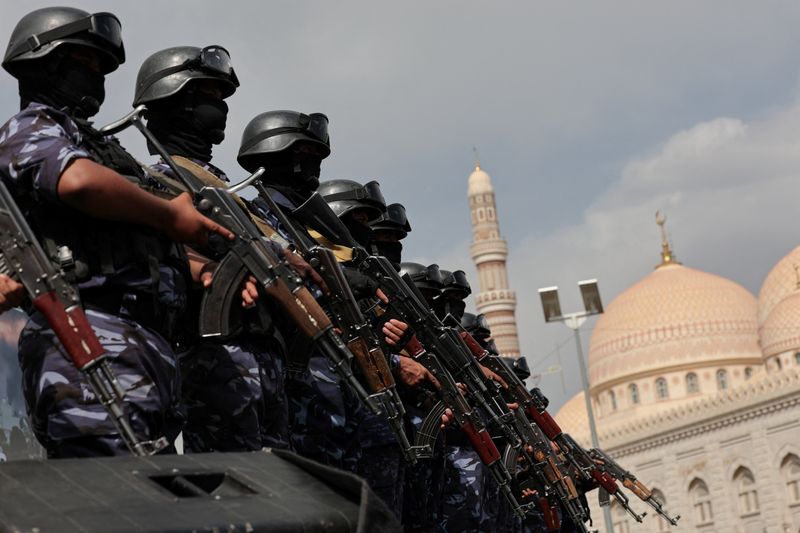
[Financial News] A warning has emerged that if the maritime blockade declared by the Iran-backed Houthi rebels in Yemen against Saudi Arabia becomes a reality, the global crude oil supply chain could face severe disruption.
On the 22nd local time, The Wall Street Journal (WSJ) reported that uncertainty in the global energy market is reaching extreme levels because of the Houthis' blockade threat.
According to shipping analytics firm Kpler, if the Strait of Hormuz remains unstable and the Bab-el-Mandeb Strait linking the Red Sea and the Arabian Sea also fails to function properly at the same time, about 25% of global crude oil supply could be directly affected.
The number of merchant ships passing through the Bab-el-Mandeb Strait currently averages about 45 a day, already far below the 65 to 72 daily crossings seen before October 2023, when Houthi attacks began in earnest.
Kpler said that if Ansar Allah (Houthis) carries out the blockade against Saudi Arabia as announced, traffic through the strait would fall to about half of current levels. If the target of the blockade is expanded, the decline would be even steeper.
In fact, ships are already turning back in the field. After the blockade declaration, two tankers carrying Saudi crude changed course while heading toward the Bab-el-Mandeb Strait and moved north toward the Suez Canal. A car carrier and a very large crude carrier sailing from the Gulf of Aden toward the Red Sea also reportedly turned around.
The blockade threat is especially serious because it would cut off Saudi Arabia's key alternative transport route.
To respond to disruptions in traffic through the Strait of Hormuz, Saudi Arabia has used its east-west pipeline to send crude to Yanbu Port on the Red Sea coast, then exported it to Asian markets via the Bab-el-Mandeb Strait. Crude loadings at Yanbu Port now stand at about 4 million barrels per day, nearly four times higher than before the war. Of that, about 2.5 million barrels move through the Bab-el-Mandeb Strait toward Asia.
Jorge León, head of geopolitical analysis at Rystad Energy, expressed concern, saying, "If the Bab-el-Mandeb Strait is also blocked, even the only export route that effectively replaced the Strait of Hormuz would come under threat."
To make matters worse, disruptions are also affecting Russia's crude export routes, adding further pressure to the global energy supply chain.
Recently, as Ukraine repeatedly carried out drone attacks near Novorossiysk, a major Russian Black Sea port, operations of the Caspian Pipeline Consortium pipeline, which transports Russian and Kazakh crude to the Black Sea, were reportedly affected.
With the threat of maritime blockades in the Middle East and attacks on energy infrastructure in Eastern Europe unfolding at the same time, volatility in international oil prices and instability in the global supply chain are expected to intensify for the time being.
[email protected] Yoon Jae-joon Reporter