University Professor Who Used Students' Papers to Help Daughter Enter Seoul National University School of Dentistry Gets Final 3.5-Year Prison Sentence
- Input
- 2026-07-22 10:27:20
- Updated
- 2026-07-22 10:27:20
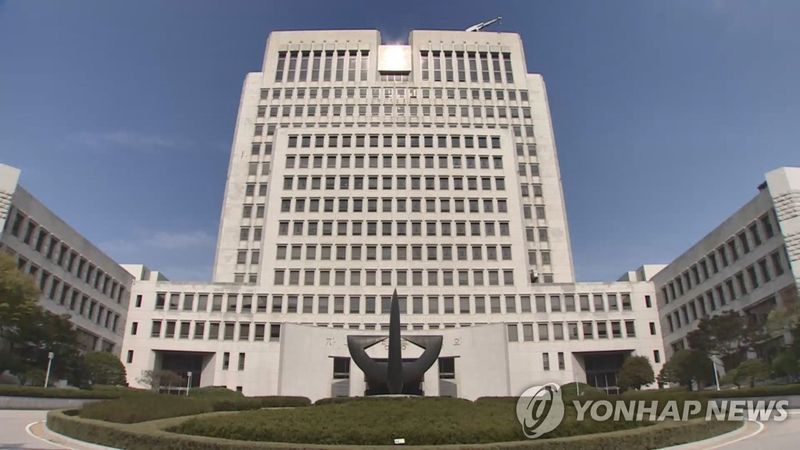
[Financial News] A professor who had students ghostwrite papers for his daughter’s admission to a school of dentistry and also embezzled research funds has received a final prison sentence from the Supreme Court of Korea.
SKKU pharmacy professor had graduate students write daughter’s report
According to Yonhap News Agency and Newsis on the 22nd, the First Petty Bench of the Supreme Court of Korea, presided over by Justice Chun Dae-yup, upheld the lower court’s sentence of three years and six months in prison for former SKKU College of Pharmacy professor A, 67, who was indicted on charges of obstruction of business and fraud.
B, 30, A’s daughter and a co-defendant, had her sentence of 10 months in prison, suspended for two years, upheld.
While serving as a professor at SKKU’s College of Pharmacy, A was brought to trial on charges of using graduate students to create award-winning records needed for B’s admission to college and graduate school.
Investigators found that in 2012, A instructed graduate students in his lab to conduct a 'stress comparison animal experiment' and write related reports in order to create award records needed for B’s college admission, when she was still in high school.
In July 2013, B submitted the final experimental report and research log prepared by the graduate students to an academic conference, and in August of that year she received the 'Outstanding Young Scholar Award,' which she used in her college admissions application. On that basis, B was ultimately admitted to a private university in Seoul through a special science talent admissions track for the 2014 academic year.
Later, in 2016, A directed his students to conduct animal experiments for his daughter’s research project as a college student, and the following year had them write a paper based on the results. During that process, A also instructed them to manipulate the paper’s experimental data so it would support the hypothesis.
B only observed the experiments two or three times and had her name listed on the research report. The paper was published in a Science Citation Index (SCI)-listed journal and was also submitted to various academic conferences, where it won awards. Based on the paper and her award record, B was admitted to Seoul National University School of Dentistry in 2018.
Separately, A was also charged with fraud for receiving about 229 million won in labor costs that should have been paid only to graduate students participating in a research project between June 2016 and December 2018, having them jointly manage the money in the lab, and using part of it for his own personal purposes.
A’s misconduct was uncovered through a special investigation conducted by the Ministry of Education of the Republic of Korea in January and February 2019.
Supreme Court says no error in lower ruling, rejects appeal... daughter’s admission also revoked
Both the trial court and the appeals court found A and his daughter guilty of the charges.
The trial court said, "The crimes gravely undermined fairness and public interest in college admissions," and added, "Given the enormous impact academic credentials have on social status, this is a serious crime that cannot be taken lightly." It sentenced A to three years and six months in prison and B to 10 months in prison, suspended for two years.
The appeals court also said, "The crimes committed by the two defendants undermined the education system and the system of fair competition," and noted that after the offenses, they tried to persuade graduate students to change their statements, threatened to file complaints against them, and even shifted blame to others, making their conduct highly blameworthy. It added, "As an act of betrayal against applicants, parents, and admissions-related institutions, it deserves severe punishment."
The Supreme Court also dismissed the appeal, saying there was no error such as violating logic or the rules of experience, exceeding the limits of free evaluation of evidence, misinterpreting the law, omitting a necessary finding, or failing to state reasons.
Meanwhile, A was dismissed from the university in June 2019, and Seoul National University revoked B’s admission to the School of Dentistry in August that year. B also filed a civil lawsuit against Seoul National University to challenge the revocation, but lost the case definitively in March last year.
[email protected] Kim Soo-yeon Reporter