After the Strait of Hormuz, the Red Sea Is Also Under Threat... Will Global Energy Supplies Be Blocked?
- Input
- 2026-07-22 14:36:39
- Updated
- 2026-07-22 14:36:39
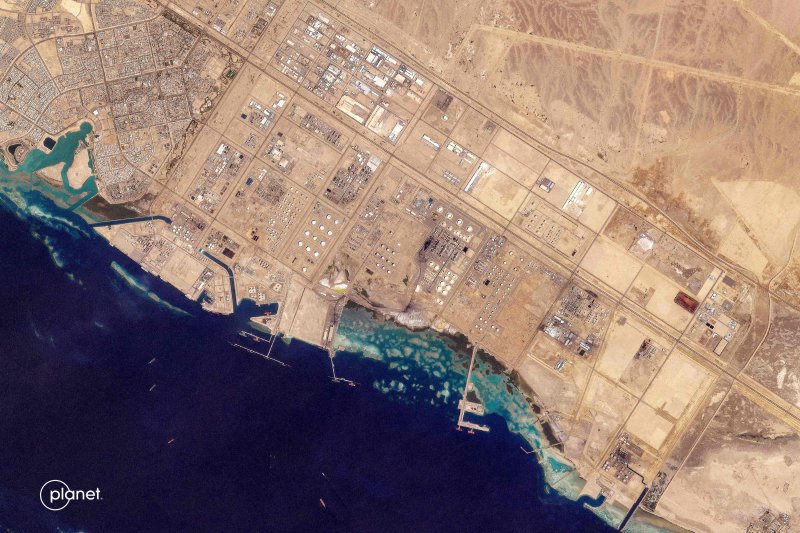
[Financial News] Global energy supply risks are rising as there are still no signs of easing military tensions in the Middle East.
The Houthi rebels in Yemen, an Iran-backed armed group, have warned that they will block the Red Sea. This has raised concerns that another major oil shipping route could be cut off, following the Strait of Hormuz.
According to foreign media reports, including the Financial Times (FT), on the 21st local time, Fatih Birol, secretary-general of the International Energy Agency (IEA), warned that "hostilities in the Middle East are directly threatening the Strait of Hormuz and key energy infrastructure" and that "the IEA is closely monitoring the impact of this situation on global energy security."
With disruptions around the Strait of Hormuz, a key crude oil shipping route, and threats to the Bab-el-Mandeb Strait, which connects to the Red Sea and has emerged as an alternative route, concerns over supply stability have reached a peak.
Goldman Sachs warned that if traffic through the Strait of Hormuz does not normalize soon, international oil prices could surge back into triple digits. Its analysts forecast that prices could rise above $120 per barrel in the fourth quarter of this year and average more than $100 next year if the disruption continues.
Secretary-General Birol also pointed to several positive factors that are helping ease the market shock for now.
He explained that crude oil exports from Gulf producers such as Saudi Arabia and the United Arab Emirates (UAE) are continuing through alternative routes, and that although export volumes from the Gulf region have fallen from their late-June peak, they remain well above the average recorded from early March to mid-June.
He added that higher crude exports from the United States, Brazil, Venezuela, and Kazakhstan are helping offset the supply shortfall.
China, a major oil consumer, has also helped ease supply pressure by cutting its crude imports by nearly 50% compared with before the war.
The IEA said it has released about 290 million barrels of the 400 million barrels of strategic reserves held by member countries into the market since March, and still has more than 1 billion barrels of emergency reserves, leaving room to respond to any further disruptions.
However, Birol stressed that it is too early to feel reassured. Crude oil supply itself remains relatively stable, but the market for refined fuels such as diesel and gasoline is tight because refinery operating rates have fallen.
The liquefied natural gas (LNG) market is facing similar difficulties. Increased LNG exports from the United States and Canada have offset about 70% of the losses caused by the inability to pass through the Strait of Hormuz, but if disruptions in the Gulf region continue for a prolonged period, they could hinder major countries such as Europe, which need to build up gas inventories ahead of the coming winter.
Meanwhile, the Houthi rebels have threatened a maritime blockade against Saudi Arabia, raising fears of serious disruptions to the global crude oil supply chain.
Shipping intelligence firm Kpler said that if the Bab-el-Mandeb Strait, which links the Red Sea and the Arabian Sea, also fails to function properly after the Strait of Hormuz, about 25% of global crude oil supply could be affected.
Jorge León, an analyst at energy consultancy Rystad Energy, warned that disruptions in Bab-el-Mandeb would threaten not only the transport of Saudi crude but also one of the few remaining routes that can serve as an alternative to the Strait of Hormuz. He said that if both shipping lanes are disrupted, oil prices could spike.
When traffic through the Strait of Hormuz was disrupted, Saudi Arabia has been sending crude through the East-West Crude Oil Pipeline to Yanbu Port on the Red Sea coast and then exporting it to Asian markets via the Bab-el-Mandeb Strait.
Crude loadings at Yanbu Port now stand at about 4 million barrels per day, nearly four times higher than before the war. About 2.5 million barrels of that volume are heading to Asia through the Bab-el-Mandeb Strait, so if that route is also blocked, crude supplies to Asian countries could take a major hit.
[email protected] Yoon Jae-joon Reporter