The main culprit behind KOSPI's 28% plunge in a month... It turned out to be this
- Input
- 2026-07-22 05:30:00
- Updated
- 2026-07-22 05:30:00
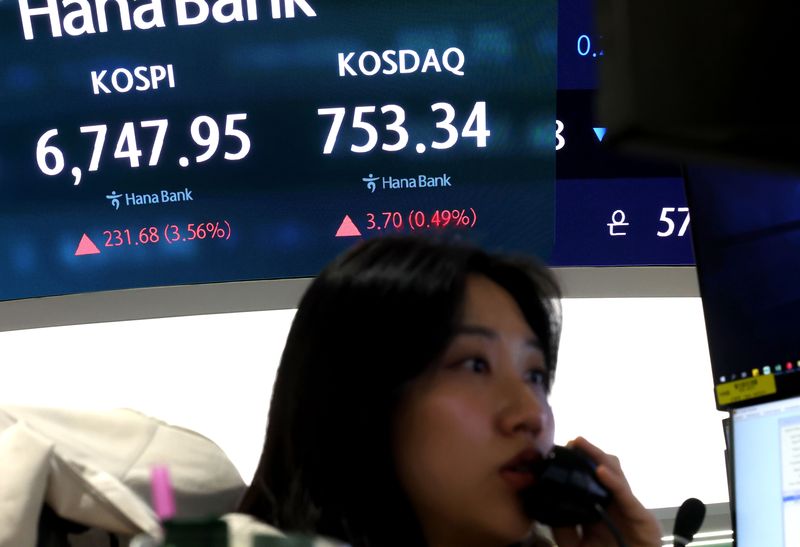
[Financial News] JPMorgan Chase, a global investment bank, said the unwinding of excessive leveraged bets that recently drove the sharp correction in the South Korean stock market has entered its final stage. As corporate fundamentals remain solid, it kept its overweight view on South Korean stocks and its 12-month KOSPI target of 12,500 points unchanged.
In a report titled "Trends in the Deleveraging Process in the South Korean Stock Market," JPMorgan Chase said on the 21st that "the fundamentals of the South Korean stock market remain solid, but an intense deleveraging process has dragged down share prices." It added that "the market's self-correcting mechanism, which helps it work off overheating, is now in action."
JPMorgan Chase identified leveraged ETFs and hedge fund position liquidations as the main reasons KOSPI fell about 28% from its June peak. It said that as the South Korean stock market rallied over the past year, borrowed money from retail investors and hedge funds poured in, and when the market turned lower, those positions were forcibly unwound, amplifying volatility.
Still, JPMorgan Chase said the deleveraging storm is now in its final phase.
Net assets in leveraged ETFs based on Korean assets shrank by nearly half, from $50 billion at the end of June to $26 billion recently. JPMorgan Chase said about 75% of the process of falling to what it considers a normal level of $18 billion has been completed, and that deleveraging by hedge funds is also more than 50% done.
It also said tighter regulations by the government, including a higher minimum deposit requirement starting in August and a halt to new listings of single-stock leveraged ETFs, are expected to help stabilize the market.
The analysis also suggested that massive foreign selling is nearing an end. Foreign investors have sold more than $110 billion net in the South Korean stock market this year, but about 90% of that was concentrated in memory semiconductor names such as Samsung Electronics and SK hynix. As the two companies' market capitalizations became too large, they exceeded their weight limits in the MSCI EM index, leading to mechanical reductions in exposure, it said.
However, recent price corrections have lowered their weights in the MSCI EM index, with Samsung Electronics falling from 9.5% to 7.5% and SK hynix from 8.3% to 5.7%, easing foreign investors' funding burden and selling pressure to a significant extent.
JPMorgan Chase pushed back against concerns in some quarters that demand for memory semiconductors is slowing. "This has not been confirmed in the actual market," it said, adding that end-demand remains firm, including investment in AI-related data centers.
Mixo Das, head of Korean equity strategy at JPMorgan Chase, said, "Along with the continued AI investment cycle, corporate governance improvements will emerge as a key momentum driver in the second half." He added, "We maintain our overweight view on South Korean stocks and our KOSPI target of 12,500."
[email protected] Moon Young-jin Reporter