In July, This Asset Rose Alone as Institutions and Foreign Investors Bought In... "Defensive Stocks Look Attractive Amid Volatility"
- Input
- 2026-07-22 06:00:00
- Updated
- 2026-07-22 06:00:00
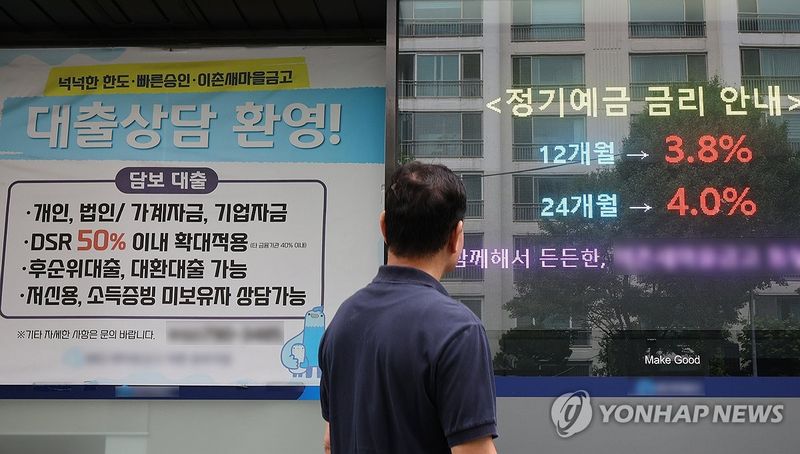
[Financial News] Financial stocks have recently shown strength in the domestic stock market. As volatility has widened, they have emerged as defensive stocks. Analysts say they could maintain a stable upward trend amid rate hikes and solid earnings.
According to the Korea Exchange on the 22nd, the KRX Bank index has risen 9.29% so far this month. That is the highest gain among the 36 KRX indices during the period. The KRX Bank index is made up of KB Financial Group, Shinhan Financial Group, Hana Financial Group, Woori Financial Group, and IBK.
Institutional buying was especially notable. So far this month, institutions have been net buyers of 656.3 billion won in KB Financial Group, 298.9 billion won in Shinhan Financial Group, 216.6 billion won in Hana Financial Group, 107.1 billion won in Meritz Financial Group, 76.4 billion won in Woori Financial Group, and 67.1 billion won in Korea Financial Group. Foreign investors also bought 60.7 billion won in KakaoBank, 24.9 billion won in IBK, and 22.1 billion won in K Bank.
The appeal of financial stocks appears to have increased as the domestic market entered a correction phase amid rising volatility. Compared with other sectors, financial stocks are seen as a response to heightened volatility because they actively pursue shareholder return policies. This month, the KOSPI (Korea Composite Stock Price Index) and KOSDAQ (Korean Securities Dealers Automated Quotations) have fallen 20.39% and 17.77%, respectively. The KOSPI 200 Volatility Index, which measures volatility, averaged 84.82 last month, but rose to 85.84 this month.
Analysts believe the growing likelihood of a benchmark rate hike will work in favor of bank stocks. They expect earnings growth to continue as interest rates rise.
The Monetary Policy Board of the Bank of Korea raised the benchmark rate from 2.50% to 2.75% on the 16th, citing price stability. It was the first monetary tightening shift in three years and six months, since January 2023. Hyun Song Shin, governor of the Bank of Korea, also left open the possibility of another hike this year, saying, "We will respond until inflation converges stably."
Kim Eun-gap, a researcher at Kiwoom Securities, said, "A benchmark rate hike and rising market rates create a favorable environment for banks' net interest income to increase." He added, "The rise in the deposit-loan spread based on bank balances cannot be said to be large, but since it has moved away from a long-term downtrend, it is a meaningful change in terms of boosting banks' interest income."
He continued, "While the KOSPI has recently become more volatile, bank stocks have shown a stable trend and are outperforming the KOSPI." He added, "Rising interest rates are clearly a factor that can highlight the relative investment appeal of bank stocks. We maintain our overweight recommendation."
Kim Jae-woo, a researcher at Samsung Securities, said, "The recent rise in bank stocks appears to stem from improved valuation appeal after several months of being left out of the rally, despite solid earnings." He forecast that "domestic banks, which begin reporting earnings this week, will also see higher net interest margins under the rate-hike trend, and growth in interest income will be accompanied by higher profit levels."
[email protected] Im Sang-hyeok Reporter