Canadian Prime Minister Says Trump’s 50% Tariff Is a Direct Violation of FTA, Ready for Talks
- Input
- 2026-07-21 16:37:01
- Updated
- 2026-07-21 16:37:01
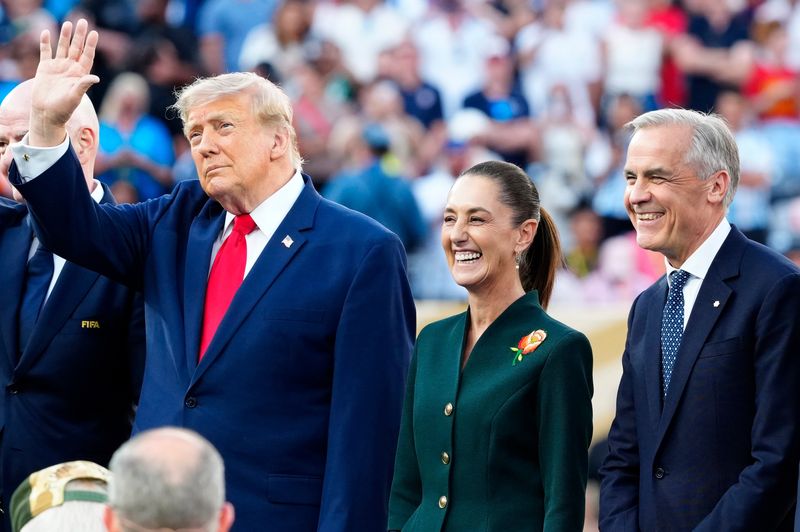
[Financial News] Canadian Prime Minister Mark Carney pushed back against the United States' 50% tariff move, calling it a violation of the trilateral free trade agreement (FTA). Carney, however, said he is willing to talk with the United States.
According to CBC, Carney said in a statement on the 20th, local time, that "the United States has repeatedly and directly violated the United States–Mexico–Canada Agreement (USMCA), and this latest move is another example of that unilateral trade action." He stressed that "the Canadian auto tariffs and other measures are violations of the USMCA." He added that Canada has previously come together to respond to "threats to Canadian sovereignty" and has acted to protect its economy and citizens.
The United States, Canada, and Mexico first dismantled tariff barriers by launching the North American Free Trade Agreement (NAFTA), a multilateral FTA involving the three countries, in 1992. During his first administration, President Donald Trump said NAFTA was unfavorable to the United States, ended the pact, and replaced it with a new trilateral FTA, the USMCA. The new framework took effect in 2020.
After beginning his second term last year, Trump also argued that the USMCA he helped create was unfavorable to the United States. Under the agreement, the three North American countries decided to review implementation every six years and determine whether to extend it. In an announcement on the 1st, the Trump administration said it would keep the USMCA in place until 2036 for now, while holding annual talks on extending it. It also warned that if no agreement is reached by 2036, the USMCA will end.
On the 20th, according to a White House announcement, Trump issued a presidential proclamation invoking Section 338 of the Tariff Act and said he would impose an additional 50% tariff on Canadian goods as punishment for Canada discriminating against U.S. products.
A Trump administration official claimed that Canadian imports of U.S. automobiles fell 22% year on year over the 12 months starting in April last year, citing Canada's tariffs and its suspension of sales of U.S. products. The official also said Canadian imports of U.S. liquor dropped 81% over the 12 months starting in March last year.
AP reported that the additional 50% tariff would apply to most Canadian products. In a separate announcement, the Office of the United States Trade Representative (USTR) said Canadian goods worth $20 billion, or about 29.5 trillion won, would be subject to the tariff. The new tariff will take effect on August 19, and items that were previously duty-free under the USMCA will also be subject to the levy.
Some foreign media outlets suspected that Trump pushed ahead with the measure to strengthen his leverage in the USMCA extension talks. In a statement on the 20th, Carney said, "The United States has been reshaping all trade relations, including the USMCA, over the past 18 months." He added, "Canada has put forward several detailed and comprehensive proposals to resolve this issue and modernize the USMCA." He emphasized, "We are ready to intensify those discussions in the coming weeks."
Carney noted that "these trade disputes have raised household costs, especially in the United States." He said, "Canada is ready to focus on unresolved issues with the United States for the mutual benefit of people in both countries." He added that "Canada will take whatever steps are necessary and continue working tirelessly to support workers, farmers, businesses, and families, and to strengthen its own capabilities under any circumstances."
[email protected] Park Jong-won Reporter