Abolition of the 4-Hour Daily Overtime Cap for Civil Servants... First Hour Deduction and 57-Hour Monthly Limit Remain
- Input
- 2026-07-21 15:05:45
- Updated
- 2026-07-21 15:05:45
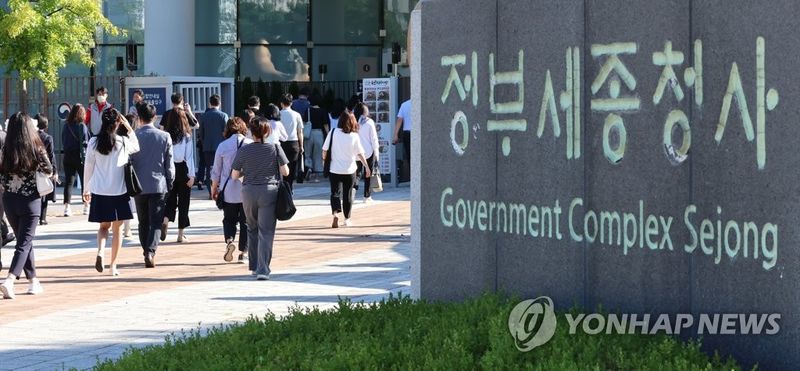
[Financial News] Civil servants will be able to receive overtime pay for the actual hours they work, even if they work more than four hours in a day. However, the monthly overtime limit eligible for compensation will remain at 57 hours, and the current rule that excludes the first hour after regular working hours from overtime pay calculations will stay in place. The government also decided to abolish the monthly 100-hour cap in cases of urgent issues, while strengthening disciplinary measures for fraudulent claims and management accountability.
The Ministry of Personnel Management and the Ministry of the Interior and Safety announced on the 21st that they had proposed revisions to the Ordinance on Allowances for Public Officials and the Ordinance on Allowances for Local Public Officials. The government plans to put the revisions into effect on Oct. 1 after review by MOLEG and deliberation by the State Council of South Korea.
Under the current system, civil servants can receive overtime pay for up to four hours a day, even if their actual overtime exceeds that amount. Once the revised rules take effect, the daily cap will be removed, and compensation will be based on actual working hours. The so-called "one-hour deduction," which excludes the first hour immediately after regular working hours from overtime, will remain unchanged.
For example, if a civil servant works from 9 a.m. to 6 p.m. and then continues working until midnight, the actual additional work time is six hours. But after excluding the first hour, five hours will be recognized. Previously, only four hours were counted because of the daily cap. Under the revised rules, five hours will be eligible for overtime pay.
The 57-hour monthly overtime cap, including weekend work, will remain in place. Kim Seong-hoon, deputy minister at the Ministry of Personnel Management, explained, "We kept the monthly cap to reflect the reality that work can pile up during certain periods, while preventing long working hours from becoming routine and protecting civil servants' right to rest."
The monthly 100-hour cap, which applies in emergencies such as disasters, diplomacy, and economic crises, will be lifted as an exception. Kim said, "In response to the recent crisis in the Middle East, the average monthly overtime for about 30 employees at MOTIE exceeded 130 hours, and the response team at the Ministry of Finance and Economy was also working an average of 104 to 105 hours a month."
A new "overtime compensation allowance" will also be introduced for national civil servants at Grade 4 who do not hold director-level posts. If a Grade 4 official designated in advance by the head of each ministry works more than 25 overtime hours in a month, they will receive a separate compensation allowance for the hours beyond 25.
At present, Grade 4 civil servants receive management allowances and are generally excluded from overtime pay. However, concerns have been raised that multi-track Grade 4 officials at central government ministries handle practical work until promotion to director-level posts without receiving additional compensation for overtime.
The exact size of the additional budget has not been disclosed. A Ministry of Personnel Management official said, "It is difficult to determine in advance who will be eligible for the compensation allowance and how much actual overtime they will work," adding, "For now, we expect the costs can be covered within each ministry's existing personnel budget." If personnel funds are insufficient, the government plans to consult further with fiscal authorities.
Penalties for fraudulent claims will be strengthened. Under the current rules, a disciplinary review request is mandatory only after a person fraudulently receives overtime pay twice or more. Going forward, however, disciplinary action must be requested even after a single case if the fraudulent amount is at least 500,000 won.
The threshold for harsher disciplinary action will also be lowered from the current 1 million won to 500,000 won. The guidelines will also specify that fraudulent overtime pay is grounds for holding supervisors and managers accountable, and that agency heads may file criminal complaints in cases of intentional fraud. In addition, the electronic personnel management system will be improved so that actual clock-in and clock-out times, as well as overtime status, can be checked more easily.
Kim Seong-hoon, deputy minister at the Ministry of Personnel Management, said, "This improvement is not about treating long working hours as normal for civil servants, but about fairly compensating them for the time they had to work." He added, "We will keep the 57-hour monthly cap and strengthen responsibility for overtime management to reduce unnecessary overtime."
[email protected] Lee Bo-mi Reporter