U.S. 10% Global Tariff Set to End as Trump Weighs New Tariff Measures
- Input
- 2026-07-21 13:11:29
- Updated
- 2026-07-21 13:11:29
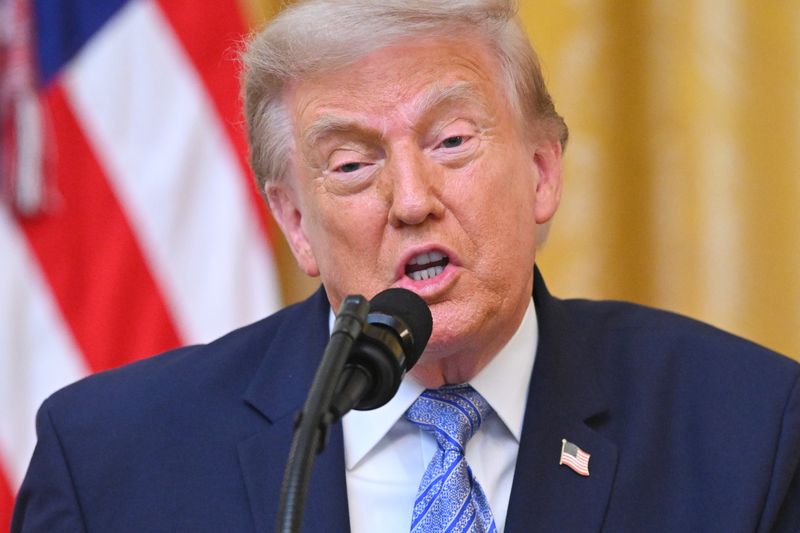
[Financial News] As the United States' 10% global tariff is set to expire on the 24th local time, the Trump administration is rolling out a series of new tariff measures to replace it. With an announcement of tariffs under Section 301 of the Trade Act of 1974, which also includes South Korea among the countries under investigation, expected soon, the administration is also introducing incentives that cut aluminum tariffs in half for companies investing in production facilities in the United States and threatening an additional 50% tariff on Canada. The move signals a broader shift toward a differentiated tariff system by country and product.
The 10% global tariff, imposed under Section 122 of the Trade Act of 1974, will expire on the 24th. It had been applied temporarily for 150 days after the Supreme Court of the United States (SCOTUS) ruled in February that reciprocal tariffs were unlawful.
Accordingly, the Office of the United States Trade Representative (USTR) is preparing new tariffs under Section 301 of the Trade Act of 1974. Since March, USTR has been investigating countries over issues such as overproduction and forced labor, and South Korea has been included in both probes.
In the forced-labor case, a plan to impose tariffs of 10% to 12.5% on South Korean products was disclosed early last month, and a public hearing has already been held, leaving only the final announcement. By contrast, no tariff proposal has yet been announced for the overproduction case. Given the announcement and hearing process, a final decision before the 24th appears unlikely.
Market watchers expect the forced-labor tariff to be finalized as early as this week, in line with the end of the global tariff. If an overproduction tariff is added later, the two would be combined. For South Korea, the announced 12.5% forced-labor tariff could be supplemented by an additional overproduction tariff.
Attention is also focused on whether the '15% cap' reached in the Korea-U.S. trade talks will actually remain in place. The effective tariff burden on South Korean products could change depending on the level of the overproduction tariff.
Trump also unveiled tariff incentives for companies investing in production facilities in the United States. He signed a proclamation that would cut Section 232 tariffs in half on imported aluminum corresponding to the output of companies that build or expand primary aluminum production facilities in the United States.
The current tariff on aluminum imports is 50%, but companies approved to invest in U.S. production facilities will pay only 25% on imported volumes up to their expected annual output.
The measure reflects a recommendation from Commerce Secretary Howard Lutnick. Lutnick said that domestic production capacity for primary aluminum, which is essential to the U.S. economy and defense industry, is insufficient, and that incentives for companies investing in production facilities are needed. The recent rise in aluminum prices amid instability in the Middle East and the growing need to secure supply chains for military materials also appear to have influenced the decision.
Trump also signed a proclamation imposing an additional 50% tariff on some Canadian products, saying that Canada had treated U.S. goods unfairly.
As the Trump administration rapidly moves away from a uniform global tariff and toward a tailored system by country and product, trade uncertainty is expected to rise again for South Korea and other major trading partners.
[email protected] Kim Kyung-min Reporter