Samsung Electronics to Launch a Robot Organization Directly Under the CEO, Accelerating Its Robotics Business Push
- Input
- 2026-07-21 10:00:00
- Updated
- 2026-07-21 10:00:00
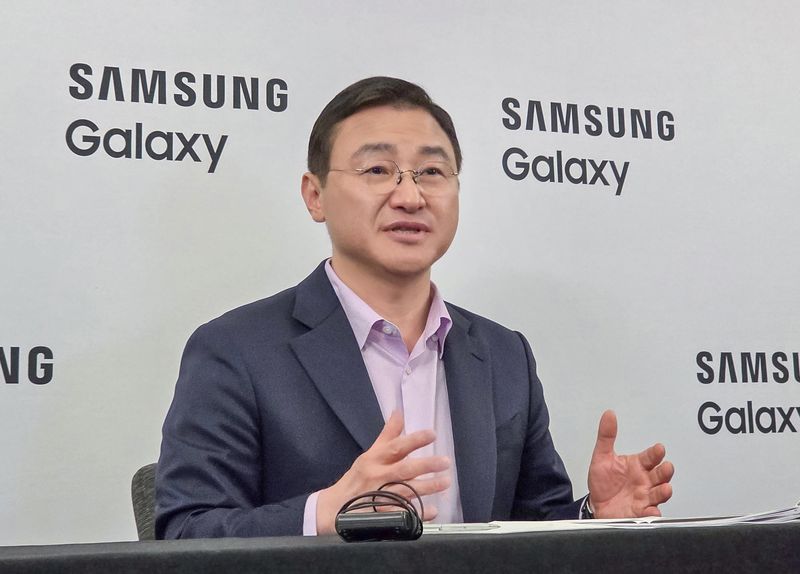
[Financial News] Samsung Electronics will nurture robots as a key pillar of its future growth engine and establish a new CEO-directly reporting organization, the Robotics eXperience (RX) Business Promotion Office, to secure competitiveness in next-generation businesses. Through the new unit, Samsung Electronics plans to bring together its robotics capabilities and technological strengths accumulated across the company, and build an integrated system that covers everything from mid- to long-term robot strategy and core technology development to commercialization, with the goal of creating new business opportunities in earnest.
A large number of robotics experts join the team
According to Samsung Electronics on the 21st, the RX Business Promotion Office, which reports directly to CEO and DX Division head Roh Tae-moon, will use the Seoul R&D Campus in Umyeon-dong as its main base. It will consolidate the workplaces of robotics personnel, provide a collaborative environment, and continue investing in office and laboratory infrastructure needed for robot development and commercialization.
To strengthen data utilization, a core source of robot competitiveness, the company will also build a data factory at the Gumi Plant. This will lay the groundwork for faster deployment of robots in the field, while close collaboration with research teams at the Seoul R&D Campus will advance robot intelligence and control.
In particular, Samsung plans to maintain global research hubs in the United States, China and Japan, where robotics technology is advancing rapidly. By leveraging local specialized technologies and ecosystems, and actively recruiting top talent, the company aims to further strengthen its technological competitiveness.
Lee Dong-geon, vice president of Samsung Electronics' planning team, who previously led robotics strategy at Hyundai Motor Group, including the operating direction of Boston Dynamics, has been named head of the Robotics Strategy Team in the reorganization. He will oversee the mid- to long-term roadmap for the robotics business. In addition, Kim Hyun-jin, a Seoul National University professor recognized as a world-class scholar in intelligent autonomous robotic systems and robot control, and Kim Eui-gyeom, an Ajou University professor known for producing globally top-tier research results in areas such as robot hands, are expected to join the RX Business Promotion Office.
Samsung Electronics plans to recruit additional top experts in each field to build up its robotics commercialization capabilities from a mid- to long-term perspective. The RX Business Promotion Office, launched under the direct control of the CEO, is expected to speed up technology development and respond swiftly to market changes, creating differentiated robot experiences and new business opportunities.
Robot learning data is being accumulated across affiliates

Samsung Electronics' approach to robot commercialization is to verify the technology in manufacturing sites first and then gradually expand into the market. At the shareholders' meeting in March, Roh Tae-moon said the company would secure core competitiveness in areas such as robot AI hand technology. He also outlined a plan to first deploy manufacturing humanoids on production lines to accumulate data, then develop them into high-intelligence, multipurpose humanoids, and eventually expand from business-to-business (B2B) to business-to-consumer (B2C) once the capabilities mature. Park Soon-cheol, chief financial officer, said during a recent earnings conference call that the company is strengthening its ability to internalize core robot components and develop customized parts tailored to its own robots. He also presented plans for investment and cooperation with promising domestic robotics AI platform companies.
This strategy is most clearly reflected in the AI-driven factory plan. Samsung Electronics is pushing AI transformation and greater use of robots such as humanoids as a core pillar of its future preparation. In March, it announced that all of its domestic and overseas production plants would be converted into AI-driven factories by 2030. The plan calls for introducing Digital Twin-based simulations across the entire process, from materials intake to production and shipment, and gradually deploying humanoid manufacturing robots such as quality, production and logistics AI agents, as well as Operating Bots, logistics robots and assembly robots.
The 2,655 trillion won investment announced by Samsung at the end of June also includes future manufacturing infrastructure for the DX Division, such as a mass-production line for humanoid robots, a global mother factory for smartphones, and a Digital Twin-based innovation hub for home appliances.
The key is not merely placing robots on the factory floor, but improving their performance by repeatedly training them with data gathered from actual processes. Samsung Electronics plans to reflect data accumulated through tasks such as material transport, assembly and equipment control in training, gradually enhancing manipulation precision and task versatility. Because Samsung Electronics operates a wide range of manufacturing sites, including semiconductors, smartphones and home appliances, it is expected to secure more diverse process data than any other company. Beyond Samsung Electronics, affiliates such as Samsung Display Co., Ltd., Samsung Electro-Mechanics, Samsung SDI, Samsung Heavy Industries and Samsung E&A also operate manufacturing sites spanning displays, electronic components, batteries, shipbuilding and plants. This is expected to give the group an advantage in developing robots that can function in any environment, beyond those optimized for specific processes.
Robot-related capabilities are also being built up simultaneously across the group. Samsung SDI unveiled SolidStack, a solid-state battery prototype for humanoid robots, while Samsung Electronics already has industry-leading hardware technology and AI software and semiconductor capabilities. Combined with its experience in applying AI to everyday devices such as smartphones, home appliances and TVs, the company is seen as well positioned to develop general-purpose robots that can be used in a wide range of settings.
[email protected] Im Su-bin Reporter