New UK Prime Minister Burnham Takes Office, Vows to Revive the Economy and Restore Political Stability with a 10-Year Plan
- Input
- 2026-07-21 06:59:29
- Updated
- 2026-07-21 06:59:29
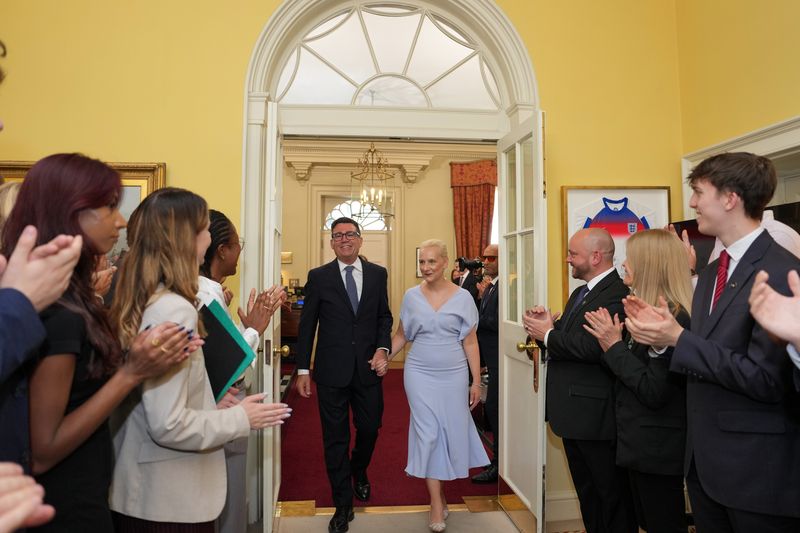
[Financial News] Andy Burnham officially took office on the 20th local time and pledged a "10-year plan" to restore political stability and revive the economy.
At the same time, he acknowledged that six British leaders before him over the past decade had set the same goal, but ultimately failed.
AP and other foreign media reported that, shortly after receiving his formal appointment from King Charles III at Buckingham Palace in London, Prime Minister Burnham delivered his first speech outside 10 Downing Street and promised to ease the cost-of-living burden on ordinary people, decentralize power to local regions, revitalize industry, and end rough sleeping among the homeless.
He also said he would act as a kind of "circuit breaker" for the UK system, which he said had moved in the wrong direction since the 1980s, when public services were privatized and local governments began to weaken.
Burnham said, "We will take power back from here and send it to every region across the country," adding, "In doing so, we will build a new economy that allows local areas to do more and places the essentials of life under strong public control so that they become affordable again for the public."
He added that he was "keenly aware" of how often the door of the prime minister's residence he had just walked through had changed in recent years. Burnham said, "This is a moment that calls for reflection and renewed resolve," and added, "Politicians of our generation must step up and meet new challenges. We must show the world that the UK can be stable again, and our task is to make politics work properly."
Burnham became the UK's seventh prime minister since 2016. He was elected as the new leader of the center-left ruling Labour Party on the 17th, succeeding former Prime Minister Starmer, who had announced his resignation last month.
Starmer took office after a landslide victory in the general election two years ago, but he was forced to step down before completing his term amid mounting pressure from his party over a series of policy missteps and reversals. Under the UK's parliamentary system, the ruling party can replace its prime minister, who is also the party leader, without holding a new general election. The next general election can be delayed until 2029, but an early election could be called if Burnham chooses to do so.
Tim Bale, a political science professor at Queen Mary University of London, said Labour chose Burnham to "inject a positive mindset, hope, a sense of purpose, and direction." Bale added, "Burnham sees not only Keir Starmer but also the country as having gone in the wrong direction over the past 40 years, and he is signaling a major break from that past. However, in terms of specific policy, it is still unclear where he will spend and how much he will raise in taxes."
One of Burnham's biggest tasks on his first day in office was forming his cabinet. John Healey, the former defense secretary, was unexpectedly appointed to the key post of finance minister. Healey had resigned only weeks earlier after clashing with the previous government over the defense budget, making his appointment as finance minister an unusual choice.
Healey will succeed former minister Rachel Reeves, who designed former Prime Minister Keir Starmer's economic policy but was blamed for missteps that contributed to falling approval ratings. David Lammy, who had served as deputy prime minister, also left the cabinet.
Edward Miliband, the energy secretary, was moved to the foreign secretary post. He will replace Yvette Cooper, who was transferred to health secretary. Although the health secretary role is seen as a demotion, it is also regarded as a crucial post for Labour's efforts to win another term in power. Home Secretary Shabana Mahmood was retained.
[email protected] Yoon Jae-jun Reporter