"Mediating Countries Push New U.S.-Iran Ceasefire Proposal" ... Insurance for Iranian Route Through the Strait of Hormuz Is Cheaper
- Input
- 2026-07-21 04:09:22
- Updated
- 2026-07-21 04:09:22
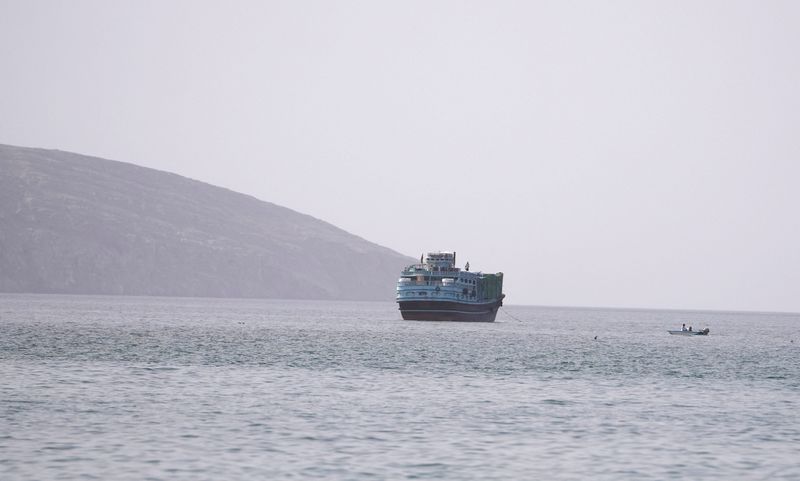
As the U.S.-Iran ceasefire memorandum has effectively been torn up and the Strait of Hormuz has once again been blocked in practice, mediating countries are pushing a new ceasefire proposal between the two sides.
Concerns that the current standoff could harden into sustained low-intensity military clashes in the Strait of Hormuz and the Gulf region, rather than a full-scale war, are prompting mediators to move quickly.
Traffic in the Strait of Hormuz falls to 10 ships a day
The United States has carried out airstrikes on Iran for nine consecutive days, and Iran has retaliated by striking U.S. Arab allies such as Kuwait and Bahrain. In addition, two more ships were hit in the Strait of Hormuz on the 20th local time.
U.S. President Donald Trump declared, in response to the deaths of U.S. service members, "Every time Iran kills our troops, they will pay back many times over."
According to Kpler, the average number of ships passing through the Strait of Hormuz on June 17 and 18 was just 10 per day.
To make matters worse, Houthi rebels in Yemen, backed by Iran, declared on the 20th that they would block Saudi maritime routes through the Bab-el-Mandeb Strait. The strait is the gateway to the Red Sea and the Suez Canal.
New ceasefire proposal under review
The Wall Street Journal (WSJ) reported on the 20th that mediating countries, including Qatar, are working to reach a new ceasefire agreement.
Qatar has proposed an initial 10-day ceasefire to ease tensions, along with an end to restrictions on passage through the Strait of Hormuz. However, sources said it was unclear whether both sides were ready to accept a new ceasefire proposal.
Other temporary ceasefire proposals recently presented to Iran have been met with silence from the Islamic Revolutionary Guard Corps (IRGC), other sources said.
U.S. Secretary of State Marco Rubio said as he departed after a visit to the Philippines that Iran had signaled through mediators that it was willing to talk. Esmail Baghaei Hamaneh, a spokesman for Iran's Foreign Ministry, also said mediators were working hard to prevent further escalation and were putting forward various proposals to Iran. He added that officials are now trying to determine whether the issue can be resolved through diplomacy.
The key issue is control over the Strait of Hormuz
Diplomatic efforts are nevertheless running into trouble because of a dispute between the United States and Iran over the Strait of Hormuz.
Iran argues that a memorandum signed by President Trump a month ago gives it the right to control the reopening of the Strait of Hormuz and therefore to collect transit fees. The United States, however, says no transit fees should be charged and is helping ships pass along the Omani coast rather than through Iranian waters.
Umer Karim, a Gulf security researcher at the University of Birmingham, said, "Given the absence of Iran's supreme leader and the Iranian side's insistence on controlling the Strait of Hormuz, mediation has become almost impossible."
Earlier this month, Iran began attacking ships using the Omani waterway in the Strait of Hormuz. The United States responded with retaliatory airstrikes, and after the two sides exchanged blows, the ceasefire ultimately collapsed. The Strait of Hormuz has effectively been blocked again. It is now believed that only ships sailing "in secret" with their Automatic Identification System (AIS) turned off, or vessels paying transit fees to Iran and using the Iranian route, are able to pass through.
According to maritime security firm Vanguard, the tanker Cabo Malaias, operated by Greek shipping giant Dynacom Tankers, was hit on the night of the 19th off northwestern Oman. Another maritime security firm, Ambrey, said the vessel caught fire after being struck by an unidentified object on a U.S.-protected sea lane off the Omani coast. The crew abandoned ship and was rescued by a tugboat.
Insurance premiums are cheaper on the Iranian route
As ships come under attack, oil supplies through the Strait of Hormuz continue to decline.
Steve Gordon of maritime data provider Clarkson Research said oil and natural gas supplies from the Gulf region continue to fall, adding that average crude shipments through the Strait of Hormuz over the past week came to just 1.5 million barrels per day. According to Gordon, the figure was 10 million barrels per day earlier this month and 15 million barrels per day before the war.
Marcus Baker, global head of shipping and cargo at insurance broker Marsh, warned that "the attack map shows strike locations spread across the entire area" and that there is "no safe place" in the Strait of Hormuz.
Baker said insurance premiums are rising as a result, explaining that ships using the Iranian route pay less, while vessels on the Omani route pay more. That is because Iran is mainly attacking ships using the Omani route.
Baker emphasized, "It is paradoxical, but that is what is actually happening right now."
[email protected] Song Kyung-jae Reporter