"Korean Stock Market Is Tough"...Foreign Investors Dumped 40 Trillion Won. What Did They Sell and Buy Instead? [Theme+]
- Input
- 2026-07-21 07:35:12
- Updated
- 2026-07-21 07:35:12
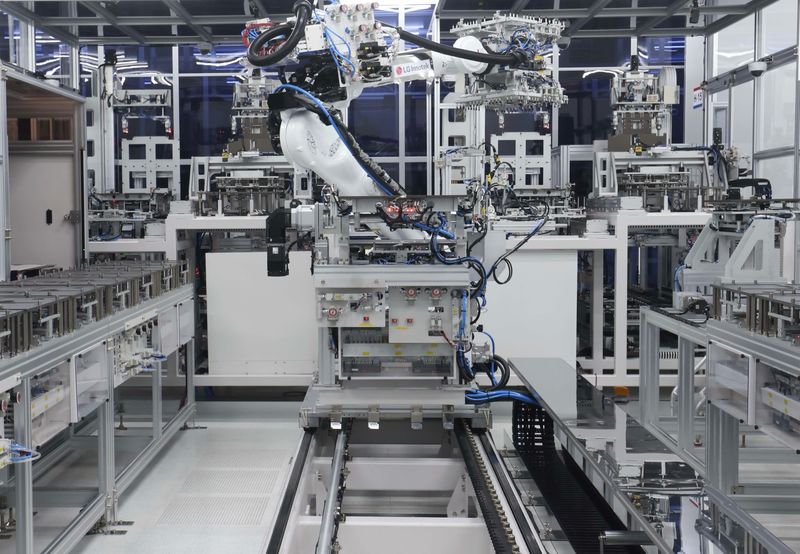
[Financial News] Foreign investors sold more than 40 trillion won worth of stocks on KOSPI over the past month. While they sharply reduced holdings in Samsung Electronics and SK hynix, they bought LG Innotek, Samsung Electro-Mechanics, and Hanmi Semiconductor, signaling a rotation within the semiconductor value chain.
According to the Korea Exchange on the 21st, foreign investors posted net sales of 40.2009 trillion won on KOSPI from the 19th of last month to the 20th of this month. Over the same period, retail investors bought a net 36.8882 trillion won, absorbing most of the foreign selling. Institutions bought a net 1.9983 trillion won.
The selling trend continued into July. From the 1st through the previous day, foreign investors sold a net 11.6356 trillion won. Retail investors, by contrast, bought 10.6516 trillion won. The sharp decline, which pushed KOSPI below the 7,000 level, is being seen as a case in which foreign selling added downward pressure to the index.
Over the past month, the top foreign net sale was SK hynix at 22.4255 trillion won, followed by Samsung Electronics at 15.4322 trillion won. Combined, the two stocks accounted for 37.8577 trillion won, or about 94% of total foreign net selling. That suggests the selling was concentrated in Samsung Electronics and SK hynix rather than spreading across the broader market.
On the other hand, the top net purchases included LG Innotek (925.6 billion won), Samsung Electro-Mechanics (715.2 billion won), Hanmi Semiconductor (592.6 billion won), and DB HiTek (310 billion won).
The interpretation is that foreign investors have not abandoned the Korean stock market itself. Instead, they appear to be reshaping their portfolios by reducing exposure to Samsung Electronics and SK hynix, which led the AI rally, and shifting into other semiconductor and IT component stocks.
Byun Jun-ho, a researcher at IBK Securities, said, "Foreign net selling since the start of the year has reached about 160 trillion won, the largest on record, but it is largely driven by profit-taking after the sharp gains in large-cap stocks such as Samsung Electronics and SK hynix." He added, "Since fundamental changes have been limited enough that the market would not justify such a steep drop, it is reasonable to view this as a supply-demand effect caused by excessive returns."
This year’s foreign net selling amounts to 3.1% of average market capitalization, the highest level since the 2008 Global Financial Crisis. Foreign net selling over the past 60 days has also reached about 2% of market capitalization, which, excluding the financial crisis and COVID-19, places it in a historically oversold range.
Byun said, "Recent foreign selling appears to have largely reflected concerns that the AI and semiconductor sentiment has peaked." He added, "Additional selling may continue, but in the short term the scale is likely to shrink, and there is also a chance that the stock market could rebound after the end of July."
Still, he maintained a cautious view over the medium to long term. He noted that the leading economic index, the OECD leading indicator, and export growth are all likely to enter a peak-out phase from the second half of the year, while next year’s gross domestic product growth is also expected to slow from this year’s pace.
Byun said, "Because foreign investors are currently oversold in the short term, additional selling pressure is expected to be limited. However, for foreign investors who trade with a longer horizon, factors that could lead to further selling may continue to emerge through the second half of this year and into next year."
[email protected] Choi Du-seon Reporter