Leveraged overseas-stock investors hit hard by higher deposit requirements [Aftermath of leverage measures]
- Input
- 2026-07-20 18:33:45
- Updated
- 2026-07-20 18:33:45
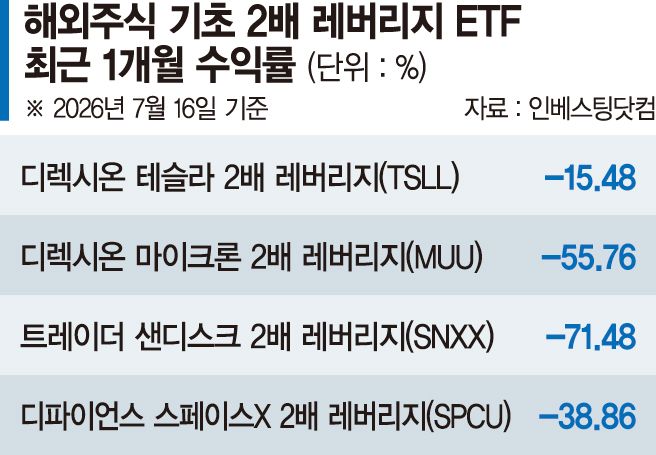
According to the financial investment industry on the 20th, financial authorities will raise the base deposit for single-stock leveraged products from KRW 10 million to KRW 30 million starting next month. The same rule will also apply to single-stock leveraged products based on overseas equities. As a result, investors who want to bet on leveraged products tied to overseas names such as Tesla, Micron, and SanDisk Corporation will need to deposit at least KRW 30 million in cash into their securities accounts.
The decision to raise the entry barrier for overseas products as well was intended to prevent the so-called balloon effect. In a briefing on the 16th, a capital markets official at the FSC explained, "The reason overseas single-stock leverage products such as Tesla were included is that the concentrated risk is the same, with no diversification effect." The official added, "If only domestic products are regulated, funds could flow into overseas products, creating a balloon effect, and we are trying to prevent that."
However, among investors in overseas single-stock leverage products, the measure is being viewed as a regulation that effectively blocks opportunities for additional buying.
Volatility in these products has widened sharply this year, pushing many investors into losses. Rather than selling, investors who have seen their losses deepen have relied on a so-called averaging-down strategy, buying more whenever prices fall to lower their average purchase price. But starting next month, they will have to meet the KRW 30 million base deposit requirement to keep investing.
The most widely held overseas single-stock leveraged exchange-traded fund (ETF) among domestic investors is the Direxion Daily TSLA Bull 1.5X Shares (TSLL), which has fallen more than 37% so far this year. Over the past month alone, it has dropped 15.48%. Even as the stock price plunged, investors continued to increase their holdings through additional buying rather than selling. According to KSD, the value of TSLL held by domestic investors stood at USD 1.608 billion, or about KRW 2.4 trillion, as of the 16th. On online investment communities, reactions such as "They said they were trying to curb volatility in the domestic market, so why are they blocking leveraged U.S. products too?" and "Now we can't even average down to reduce losses" have been pouring in.
In the securities industry, there is skepticism about how much impact the higher deposit threshold for overseas single-stock leverage products will have on easing market volatility. Lee Sang-heon, a researcher at iM Securities, said, "The essence of the single-stock leverage measure is how much it can reduce volatility in the domestic stock market, which has been amplified by trading concentration in top-cap names such as Samsung Electronics and SK hynix." He added, "Regulating overseas leverage products such as Tesla on the grounds that funds could move abroad does not match the cause of the problem with the remedy."
Still, some say the move could help curb excessive leverage investing to a certain extent. An ETF researcher at one securities firm said, "If the rules had been applied only to domestic products, investor demand would have shifted to overseas leverage products." The researcher added, "Applying the same standard to both domestic and overseas products is meaningful in that it reminds investors of the risks of leverage investing."
[email protected] Park Ji-yeon Reporter