Where Is Korean Football Headed After Both Its Leader and Coach Depart? [2026 FIFA World Cup Wrap-Up]
- Input
- 2026-07-20 18:31:34
- Updated
- 2026-07-20 18:31:34
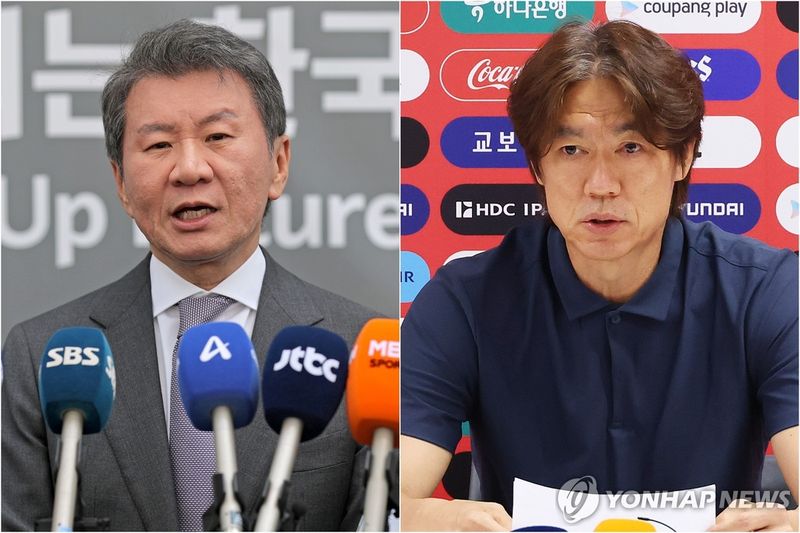
Coach Hong Myung-bo was unable to erase the nightmare from 12 years ago. At a press conference in Zapopan, Mexico, on the 29th of last month, the day after elimination from the group stage was confirmed, he officially announced his resignation as head coach of the national team.
The results were dismal. Korea opened strongly with a 2-1 comeback win over the Czech Republic in its first match, but then fell in back-to-back defeats against Mexico, 0-1, and South Africa, 0-1.
Hoping for a wild-card berth as one of the top eight third-place teams, Korea kept calculating every possible scenario until the end. In the end, however, it missed out on a place in the round of 32 after results in other groups went against it. The final ranking was 34th. Under the old 32-team format, it would not even have reached the main tournament. Hong returned to the bench 12 years later, seeking redemption after the 2014 World Cup in Brazil, but despite a relatively favorable group draw, he left in disgrace once again with a record of just 1 win, 1 draw and 4 losses.
The collapse of the coach was soon followed by the departure of the leadership. Jung Mong-gyu, who had long steered the major currents of Korean football, also resigned abruptly after an executive meeting on the 6th. He took office as the 52nd president in January 2013 and led the KFA for 13 years and five months, rising to a fourth term. In the end, however, he could not escape responsibility for the poor World Cup performance and the controversies that had accumulated over the years, and he stepped down.
Jung had originally planned to step down after the World Cup ended, but he brought forward his resignation in light of the rapidly intensifying criticism and the urgent need to normalize the organization. During his tenure, Korea qualified for 11 consecutive World Cups, but the process of selecting coaches drew accusations of unfairness, and a special audit by the Ministry of Culture, Sports and Tourism added to the string of setbacks, leaving a bitter final chapter.
Having lost both its leader and its coach, Korean football now faces a severe test of reform.
The 2026 FIFA World Cup, which ended with the worst record in team history, is sending a strong warning about the breakdown of Korean football's overall system. To win back the trust of fans who have sunk to rock bottom and achieve a genuine rebound, a thorough investigation into the causes and transparent reform are more urgent than ever.