After DeepSeek and Kimi, Qwen Is Next: Chinese AI Models Rapidly Close in on U.S. Rivals
- Input
- 2026-07-20 18:30:20
- Updated
- 2026-07-20 18:30:20
According to the South China Morning Post (SCMP) on the 20th, Alibaba Group previewed the next version of its AI model, Qwen, called Qwen 3.8 Max, on social media the previous day.
■ Qwen 3.8 Max: Some even claim it ranks second in the world
Alibaba Group described the new model as a massive AI system with 240 trillion parameters, calling it "one of the most powerful AI models currently available." The company also claimed that its performance ranks second in the world, behind Anthropic's Claude Pebble 5. However, it did not disclose key technical details such as the number of parameters actually used during inference or the model architecture.
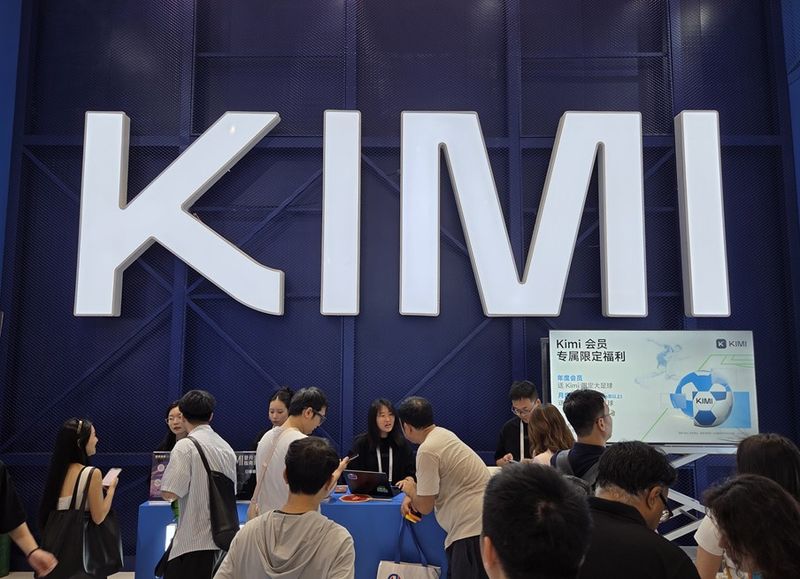
Qwen 3.8 Max has more parameters than DeepSeek's V4 Pro, which has 160 trillion, and the GLM-5 series from Zhipu (Z.ai), which has 74.4 trillion. The announcement came shortly after Kimi K3, unveiled by Moonshot AI on the 17th, drew global attention from the AI industry. Moonshot AI claimed that Kimi K3 outperformed Claude Pebble 5 and GPT-5.6 Sol in some benchmarks.
Alibaba Group plans to release Qwen 3.8 Max as an open-weight model soon. Open-weight means the model's learned weights are made public so developers can modify and use the model, although it differs from fully open-source software.
The SCMP said the announcement "shows that major Chinese AI companies are accelerating their efforts to narrow the technology gap with U.S. Big Tech."
■ Moonshot AI aims for a Hong Kong listing by year-end or next January
Meanwhile, Moonshot AI, the artificial intelligence startup that shook Wall Street last week with the release of Kimi K3, is seeking a listing in Hong Kong within six months.
According to foreign media reports on the 19th local time, Moonshot AI recently distributed a resolution to shareholders seeking approval for a Hong Kong listing. The start of this notification process is interpreted as meaning that a listing could take place within six months.
Moonshot has been considering a Hong Kong listing since earlier this year and has been in talks with China International Capital Corporation (CICC) and Goldman Sachs about underwriting the offering. The company reportedly concluded that the timing was right after its annual recurring revenue (ARR) reached $300 million, or about 450 billion won, in June. In April, ARR stood at $200 million, or about 300 billion won.
Demand for Kimi K3, unveiled by Moonshot on the 17th, surged within 48 hours of launch. Moonshot said on the day that it had temporarily suspended new subscriptions, adding that it would prioritize computing resources for existing members. Since the launch of Kimi K3, Moonshot's daily sales are said to have increased by at least sixfold.
Foreign media reported that, as with last year's "DeepSeek shock," doubts have again deepened over whether Silicon Valley's massive AI investments will deliver matching results, and confidence in U.S. AI leadership has also begun to crack.
Moonshot had long been overshadowed by DeepSeek, but it has been regarded as one of the leaders in China's AI industry alongside Qwen, MiniMax Group Inc and Z.AI. Its push for an IPO is taking place as the Chinese government steps up support for the domestic AI industry, while Xi Jinping, President of China, recently praised China's low-cost AI achievements and called for an open international technology order.
[email protected] Kim Kyung-min Reporter