"Samsung Electro-Mechanics to Be Biggest Beneficiary of AI Server Supply Crunch; MLCC and FC-BGA Valuations Set to Rise" - Hana Securities
- Input
- 2026-07-21 06:00:00
- Updated
- 2026-07-21 06:00:00
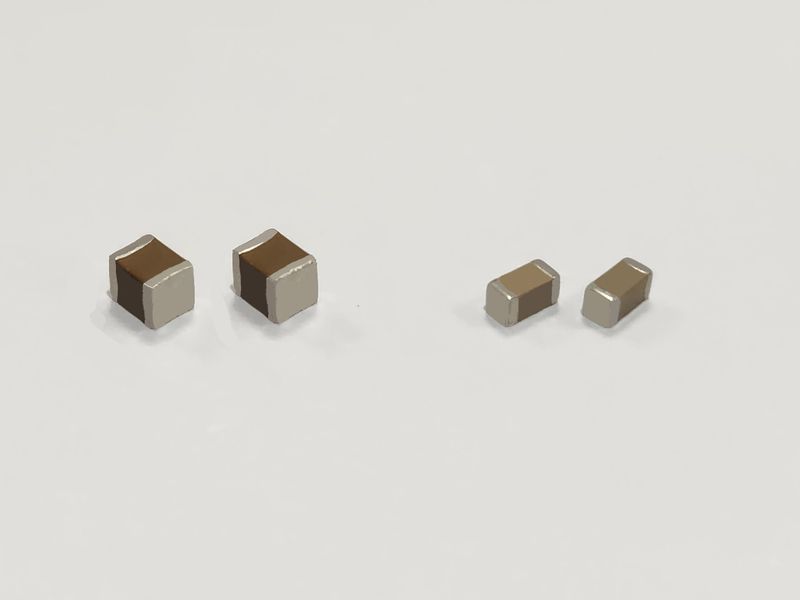
[Financial News] As AI servers become more powerful, a prolonged shortage is expected for key components such as Multilayer Ceramic Capacitor (MLCC) and Flip-Chip Ball Grid Array (FC-BGA). Demand is rising rapidly as investment in AI data centers expands, but supply is unlikely to keep up because manufacturing is becoming more difficult and capacity expansion remains limited.
According to Hana Securities on the 21st, the markets for AI server MLCCs and FC-BGAs supplied by Samsung Electro-Mechanics are likely to remain in structural shortage. Demand for high-spec components is rising quickly as AI servers become more advanced, while the pace of capacity expansion remains constrained.
Kim Min-kyung, a researcher at Hana Securities, said, "As solid demand centered on AI servers continues, shortages in both MLCC and FC-BGA are likely to last longer than expected."
The MLCC market is also seen as having limited room for supply expansion despite high utilization rates at major manufacturers. Murata Manufacturing Co., Ltd. and Samsung Electro-Mechanics have both kept MLCC utilization above 90% for four straight quarters, but the incentive to make large-scale ahead-of-time investments is limited because profitability is already strong.
At the same time, demand for high-capacity, highly reliable MLCCs is steadily increasing as AI servers consume more power. As companies prioritize production capacity for high-value-added products used in AI servers, the effective supply capacity for general-purpose MLCCs is actually shrinking.
Industry watchers expect MLCC supply and demand to tighten further as NVIDIA's next-generation AI platform, Rubin GPU architecture, is launched and new smartphone models are released in the second half of the year. Given the strong pricing power of AI data center customers, MLCC profitability could also exceed previous record levels.
FC-BGA is also expected to face difficulty in expanding supply. As AI accelerators become more powerful, package substrate areas are growing larger, and the rise in High Bandwidth Memory interfaces and the spread of chiplet architectures are driving faster increases in substrate size and layer count.
According to TSMC's advanced packaging CoWoS roadmap, interposer area is set to expand from 5.5 times this year to 14 times by 2028. As a result, package substrates are also expected to become larger and more advanced at a faster pace.
These changes are significantly raising manufacturing difficulty, and even with capacity expansions by global substrate makers, actual supply growth is expected to remain limited.
Kim said, "As AI semiconductors become more advanced, the technical barriers for both MLCC and FC-BGA are rising rapidly," adding that "the supply shortage cycle is likely to last longer than expected."
[email protected] Lee Dong-hyuk Reporter